Best of China in 2 weeks
I went to China in April of this year and had the most wonderful experience! I will share my itinerary and the highlights of this trip. If you’ve ever thought about visiting this country, do it!
I did a private tour with 4 people total and stayed at 5-star hotels. We customized the tour ourselves with a great travel agency called Travel China Guide. This agency was good at communication and offered the best price we could find. We asked for an active schedule to see as much as we could in 14 days. Some people may prefer a slower pace but we were happy with our itinerary. The dates we went were April 17 until April 30. The weather was ideal and not too hot or cold. We did have a couple of rainy days but it was sunny for the most part. We even got to see some gorgeous cherry blossoms in Beijing.
TRIP SUMMARY
- Day 1: Arrival in Beijing
- Day 2: Beijing
- Day 3: Beijing – Xi’an
- Day 4: Xi’an
- Day 5: Xi’an – Chengdu
- Day 6: Chengdu – Guilin
- Day 7: Guilin – Longsheng – Guilin
- Day 8: Guilin – Yangshuo
- Day 9: Yangshuo – Xingping – Guilin
- Day 10: Yangshuo – Guilin – Zhangjiajie
- Day 11: Zhangjiajie
- Day 12: Zhangjiajie – Shanghai
- Day 13: Shanghai
- Day 14: Departure from Shanghai
HOTEL SUMMARY
- Beijing – Sofitel – 2 nights
- Xi’An – Wyndham Grand Xian South – 2 nights
- Chengdu – Grand Hyatt Chengdu – 1 night
- Guilin – Shangri-La Hotel – 2 nights
- Yangshuo – Green Lotus Hotel – 1 night
- Guilin – Shangri-La Hotel – 1 night
- Zhangjiajie – Neodalle Zhangjiajie Wulingyuan – 2 nights
- Shanghai – Radisson Blu Hotel Shanghai New World – 2 nights
TRANSPORTATION SUMMARY
- First class high speed train to Xi’An – 5.5 hours
- First class high speed train to Chengdu – 4 hours
- Economy class flight to Guilin – 1.5 hours
- First class high speed train to Zhangjiajie – 7.5 hours
- Economy class flight to Shanghai – 2 hours
Beijing
Tian’anmen Square
Tian’anmen Square is the largest city square in the centre of Beijing, named after the Tiananmen (literally, Gate of Heavenly Peace) which sits to its north, separating it from the Forbidden City. It has great cultural significance as it was the site of several key events in Chinese history. As the world’s largest city square and enduring symbol of China’s national pride, it is surrounded by many imposing buildings including the Heavenly Gate (entry to the Forbidden City), Museums, government buildings and Chairman Mao’s Mausoleum.
This was our first tour of the trip, and we were quite amazed at the crowds. The line was very long but moved quickly enough. It was very hard to get pictures without people in the background. Our local guide explained the history of this famous square.
Forbidden City & Gardens
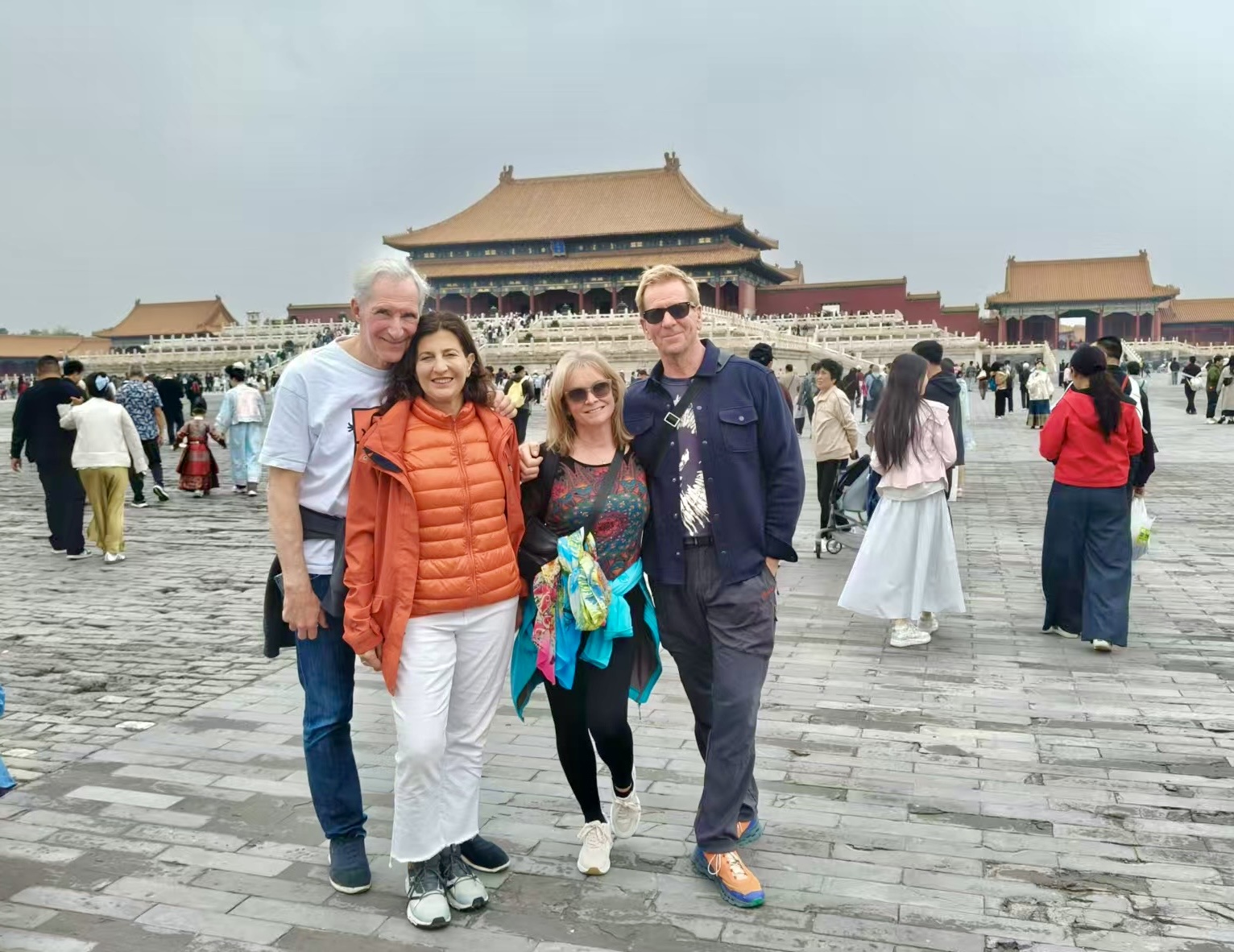
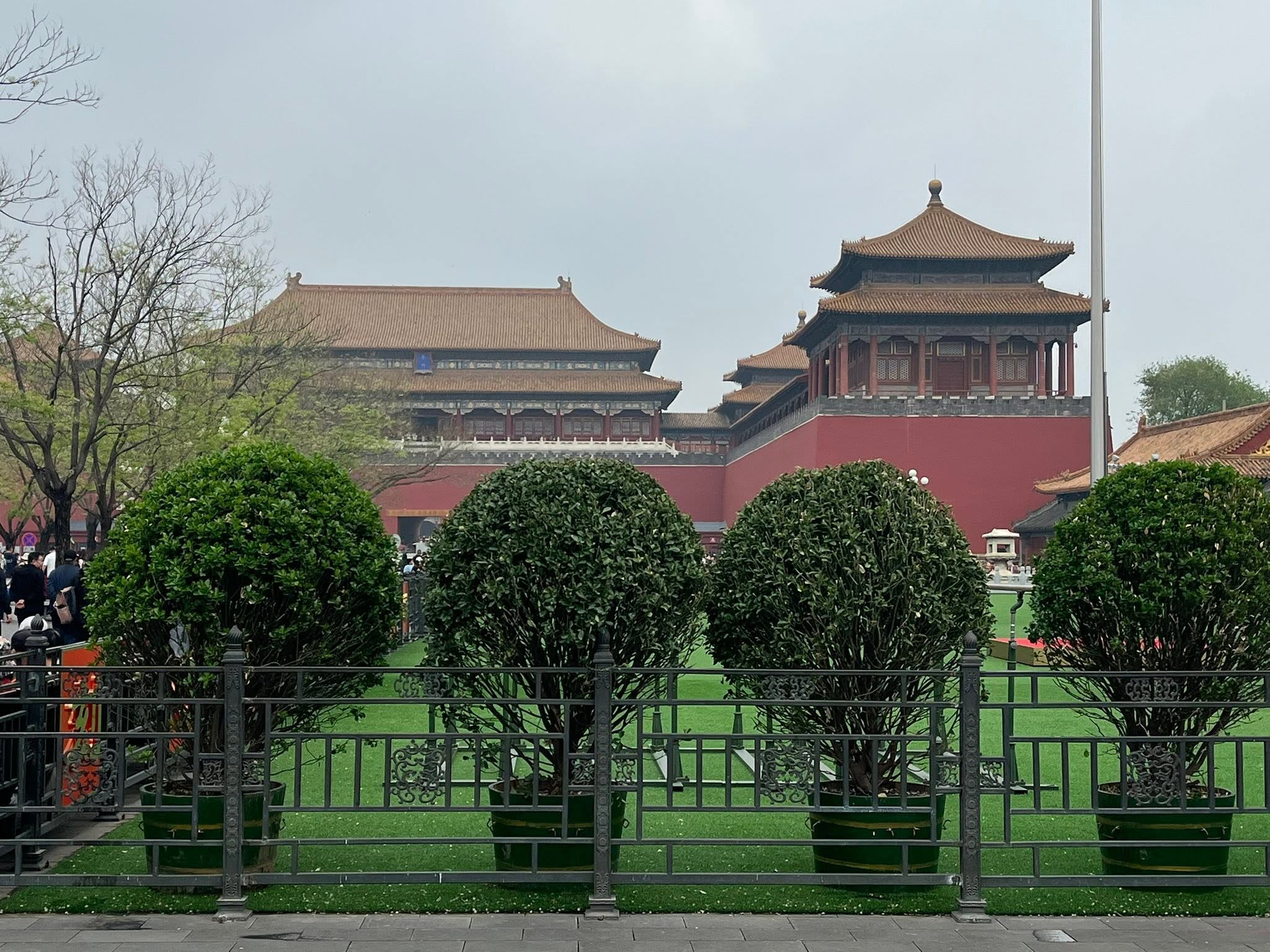
The Forbidden City is a massive 15th-century imperial palace complex that served as the political and ceremonial center of the Ming and Qing dynasties for nearly 500 years. Spanning 72 hectares, the walled and moated site includes 980 surviving buildings and now operates as the Palace Museum.
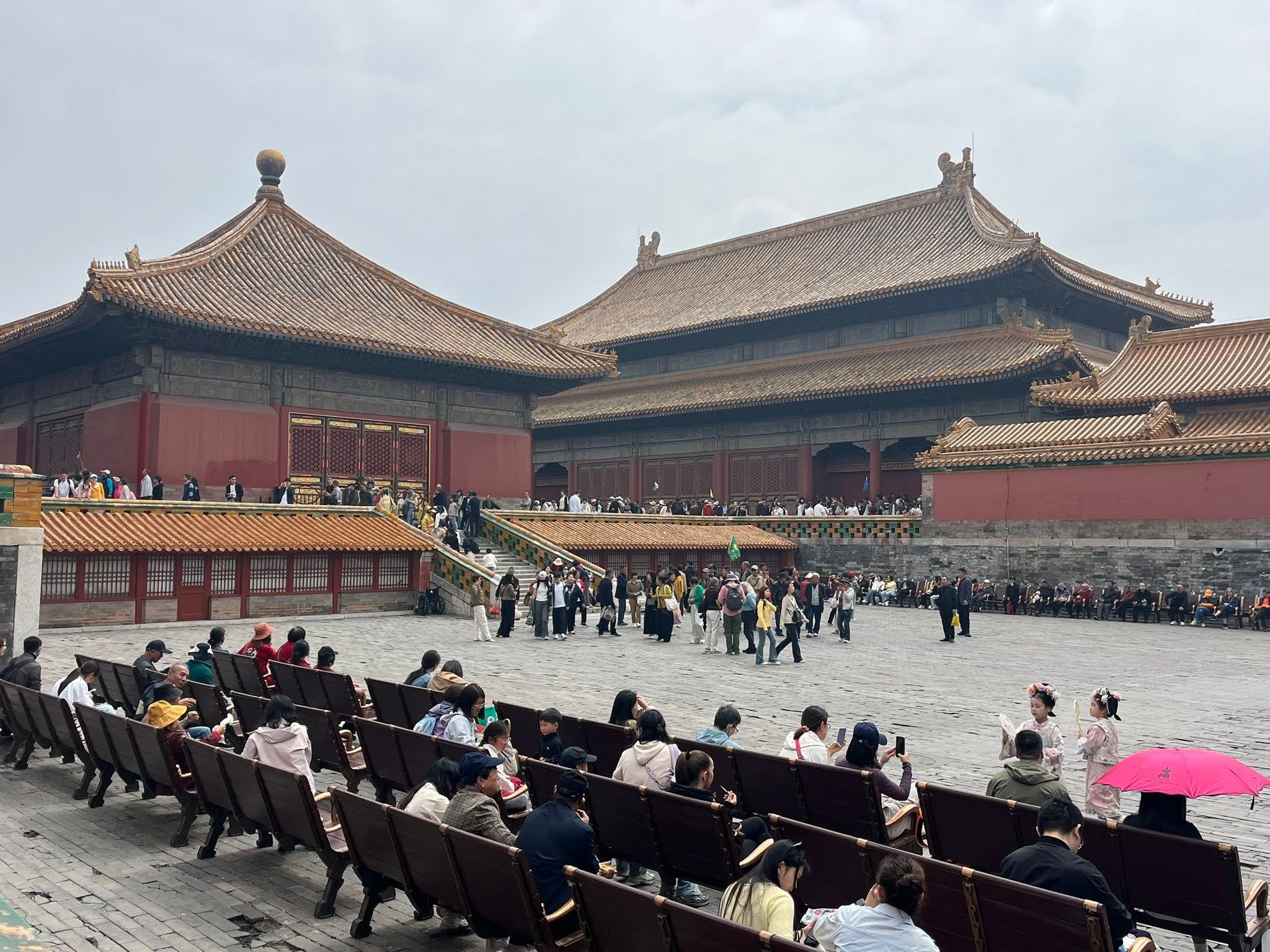
It took a while to walk through the massive area of the Forbidden City. It was only a one-way direction until we reached the gardens at the end.
Yonghe (Lama) Tibetan Buddhist Temple
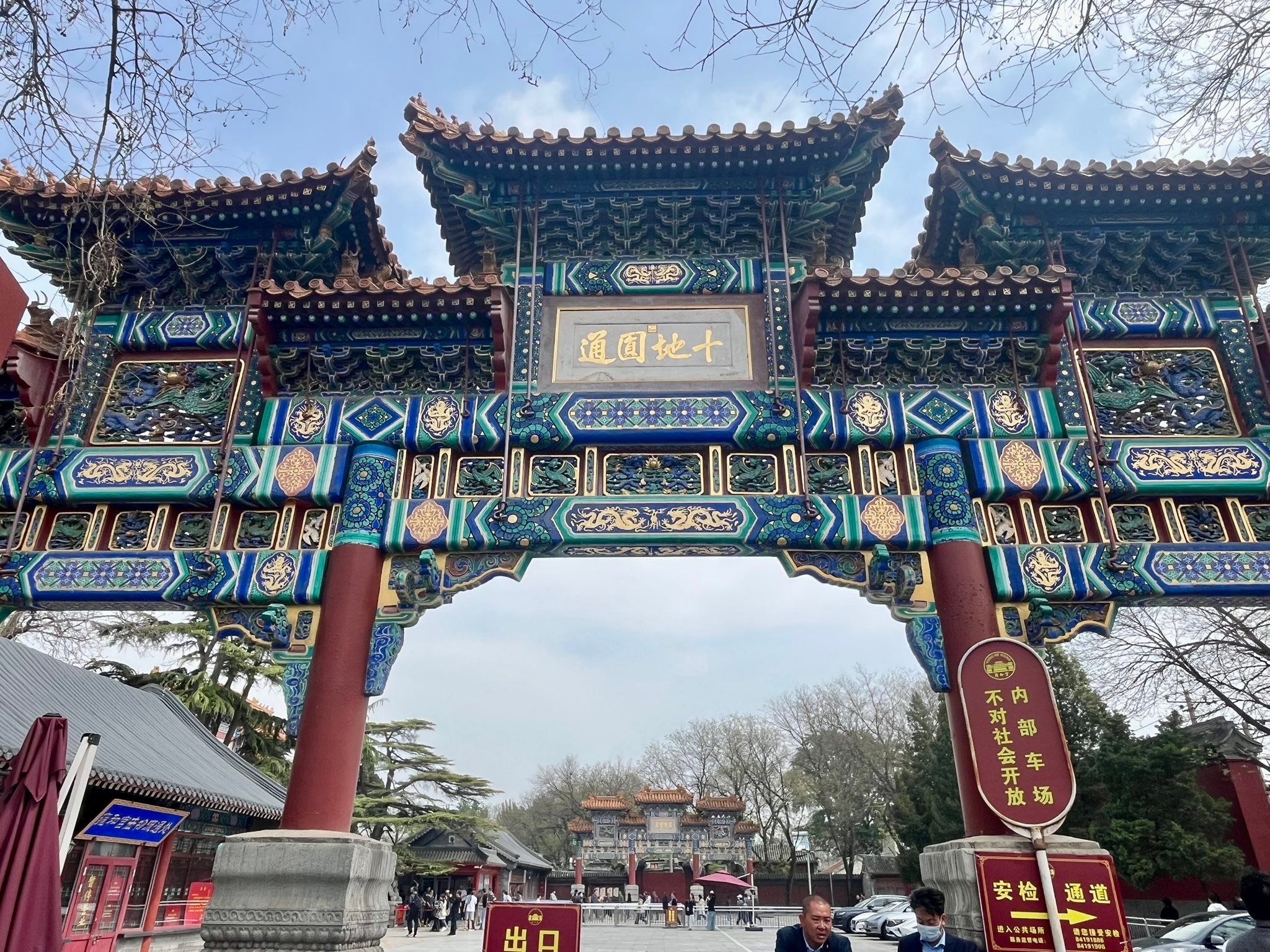
Lama Temple, also called Yonghe Temple or Yonghe Lamasery, is a national key Buddhist temple in the Han nationality area. The buildings are a combination of Han and Tibetan styles.
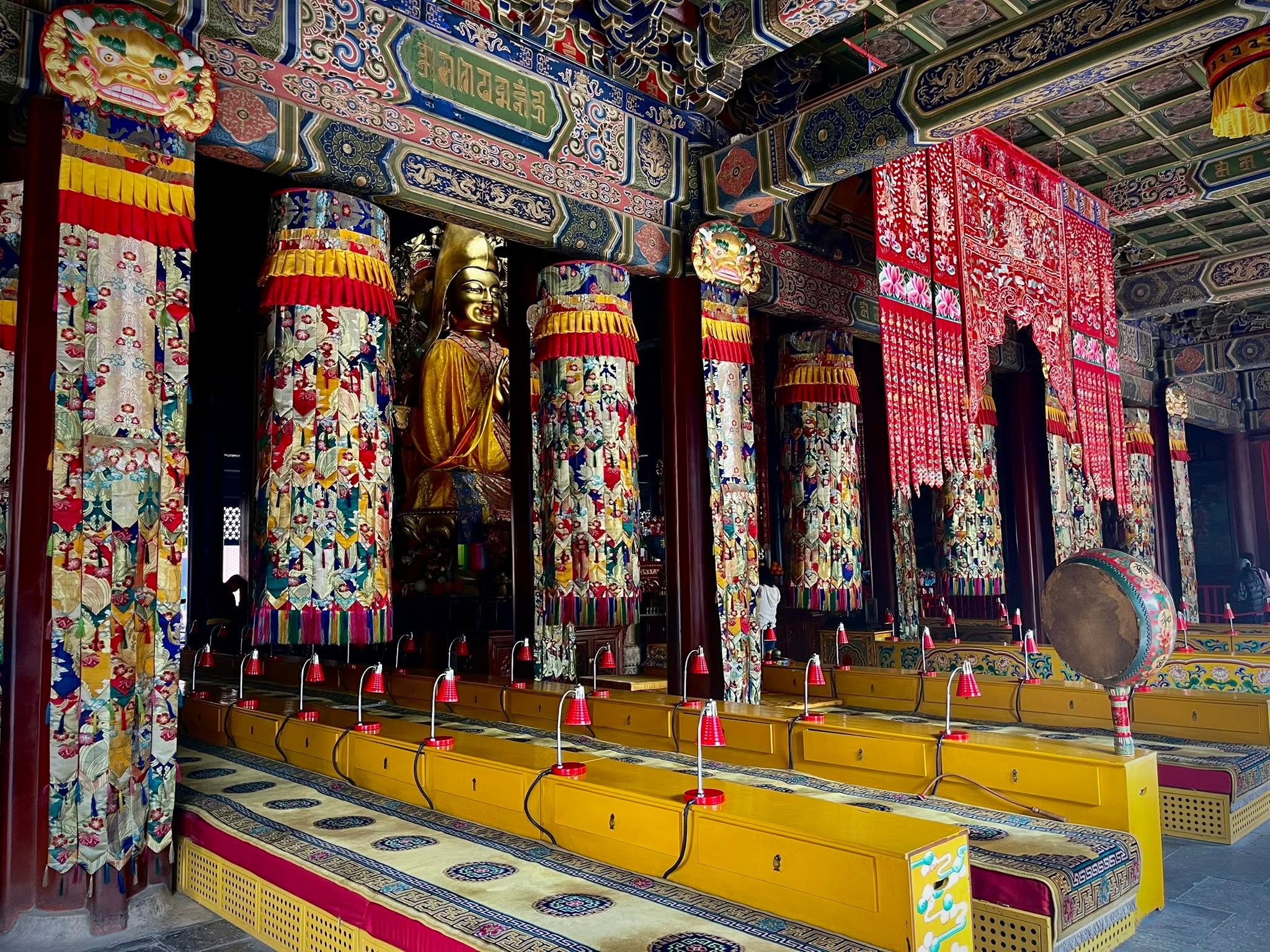
Building work on the Yonghe Temple started in 1694 during the Qing dynasty on the site where originally stood an official residence for court eunuchs of the Ming dynasty. It was then converted into the residence of Yinzhen (Prince Yong), the fourth son of the Kangxi Emperor.
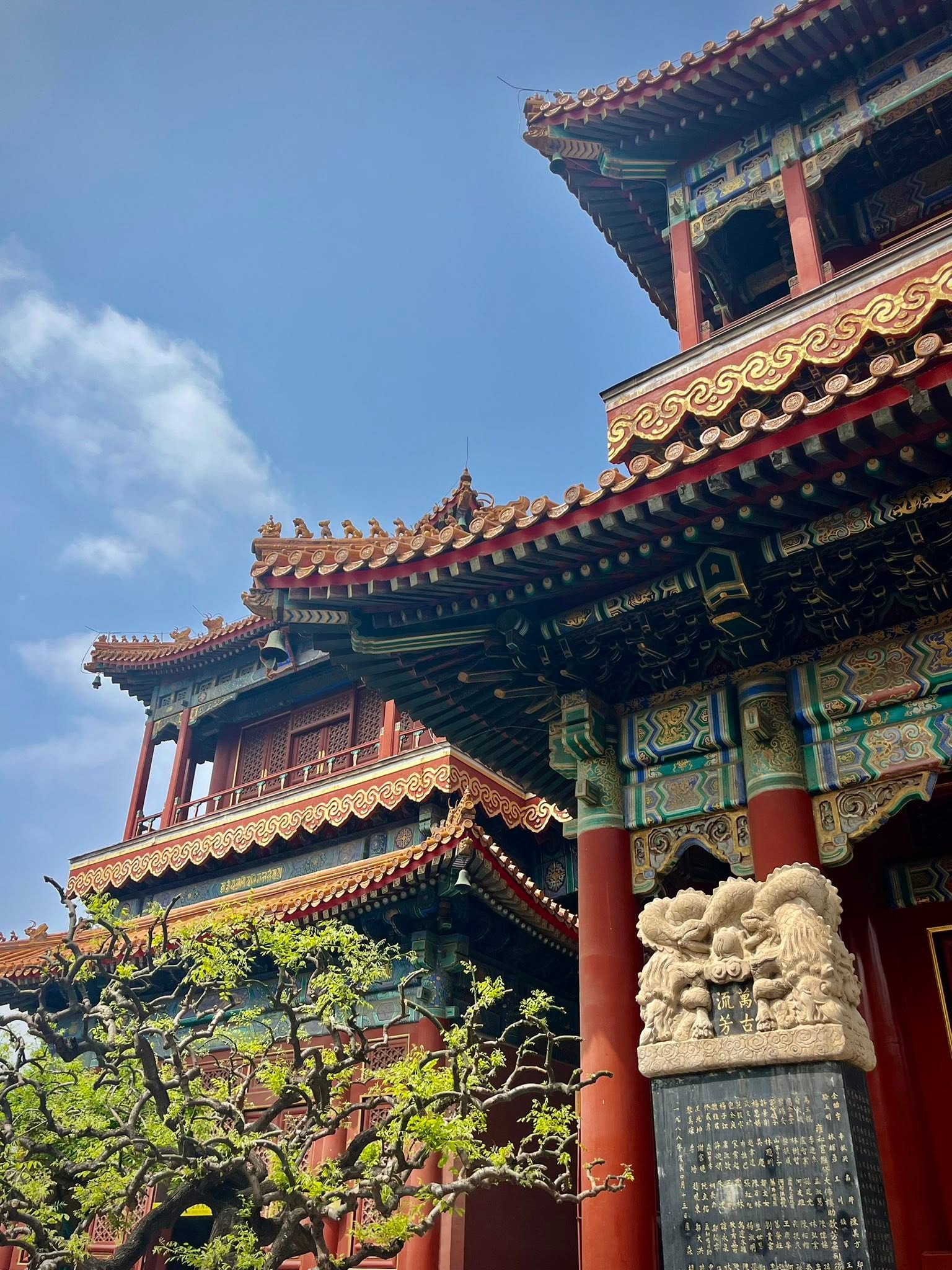
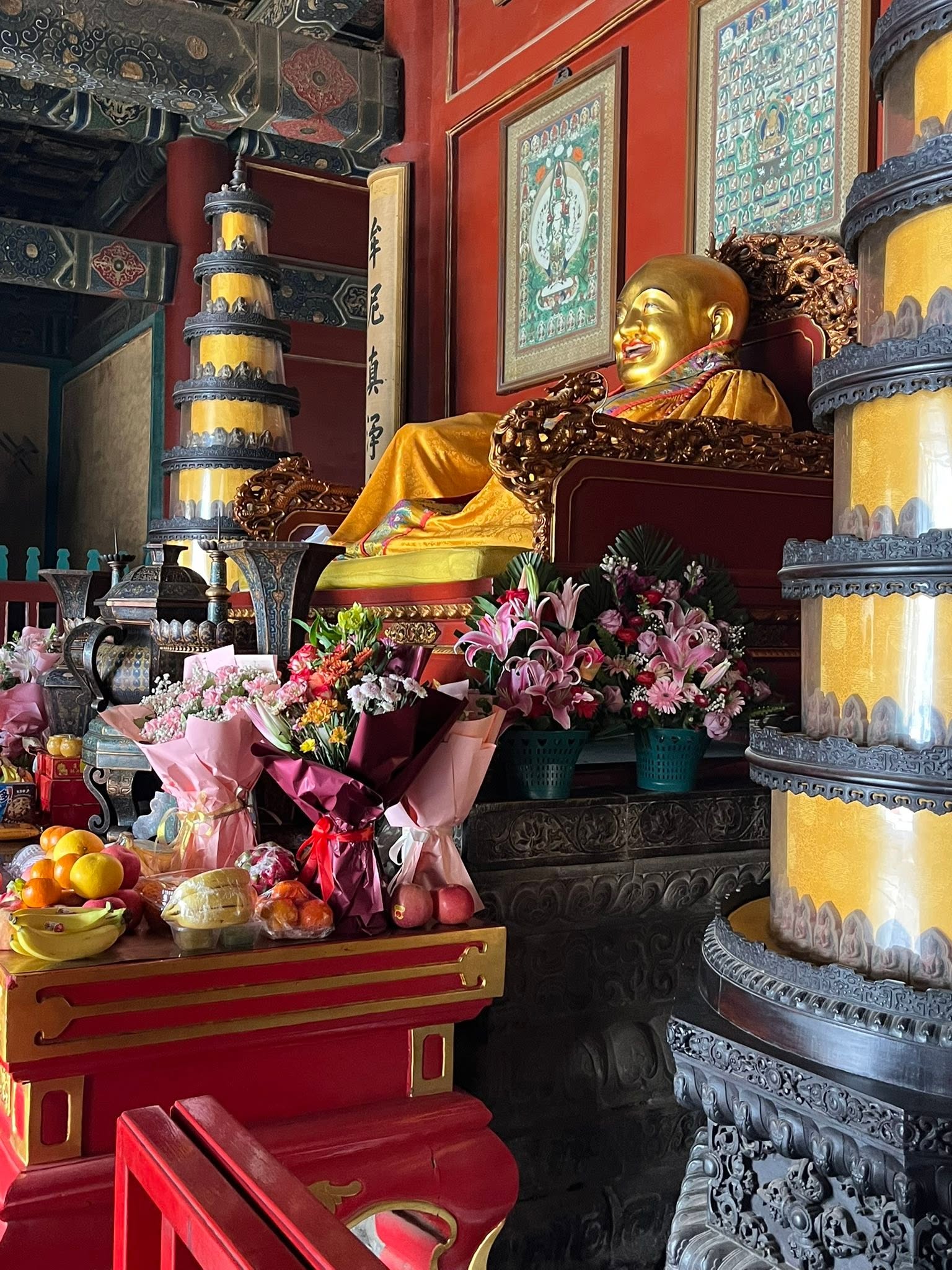
In this temple, we saw many people taking offered incense sticks and performing a special movement. The “incense movement” is a traditional physical ritual and respectful etiquette of burning and offering incense sticks to pray for health, wealth, and fortune. It is a deeply active spiritual practice where visitors line up in courtyards to present smoke offerings to the Buddhas.
Temple of Heaven
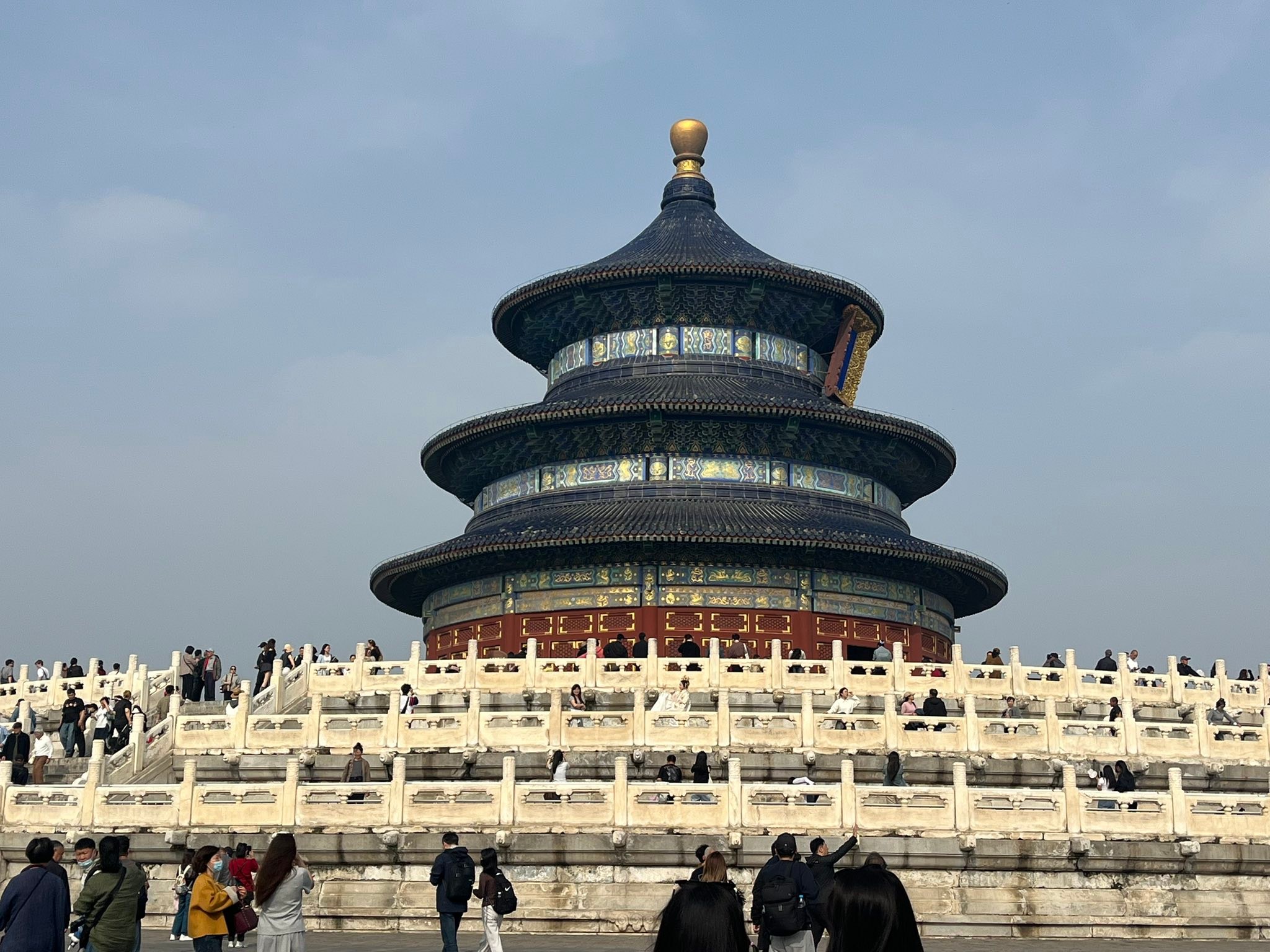
Built in 1420 during the Ming dynasty, the Temple of Heaven is a complex of Taoist buildings where emperors of the Ming and Qing dynasties visited for annual ceremonies to pray for good harvests. The park covers an area of 273 hectares in the south of Central Beijing.
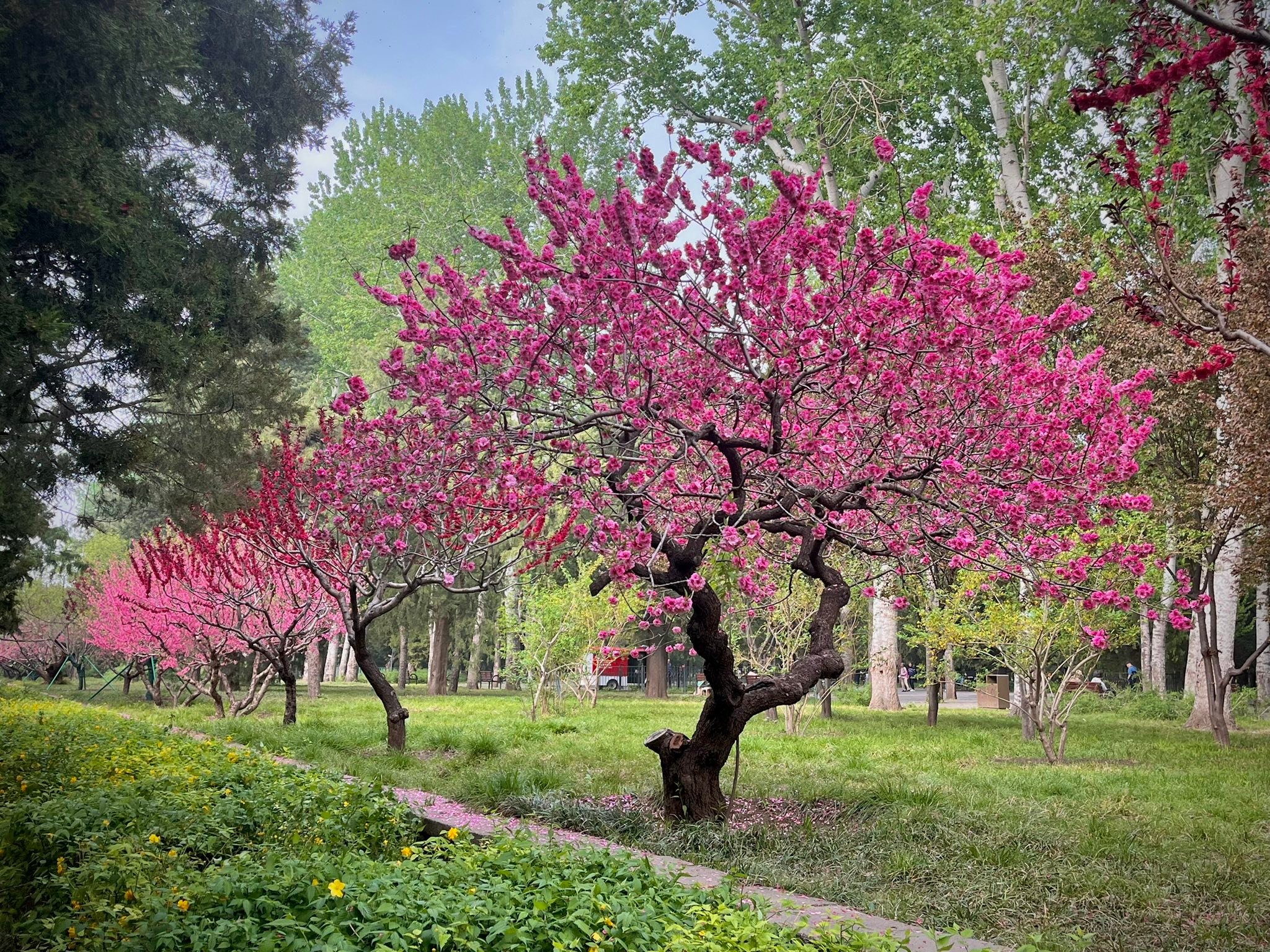
The park surrounding this temple was very nice with many cherry blossom trees.
Rickshaw Ride in Hutong Alley
One morning we were taken to the Hutong Alley area where we did a pleasant 30-minute rickshaw ride in the old town, narrow streets, and along the river. It was great fun!
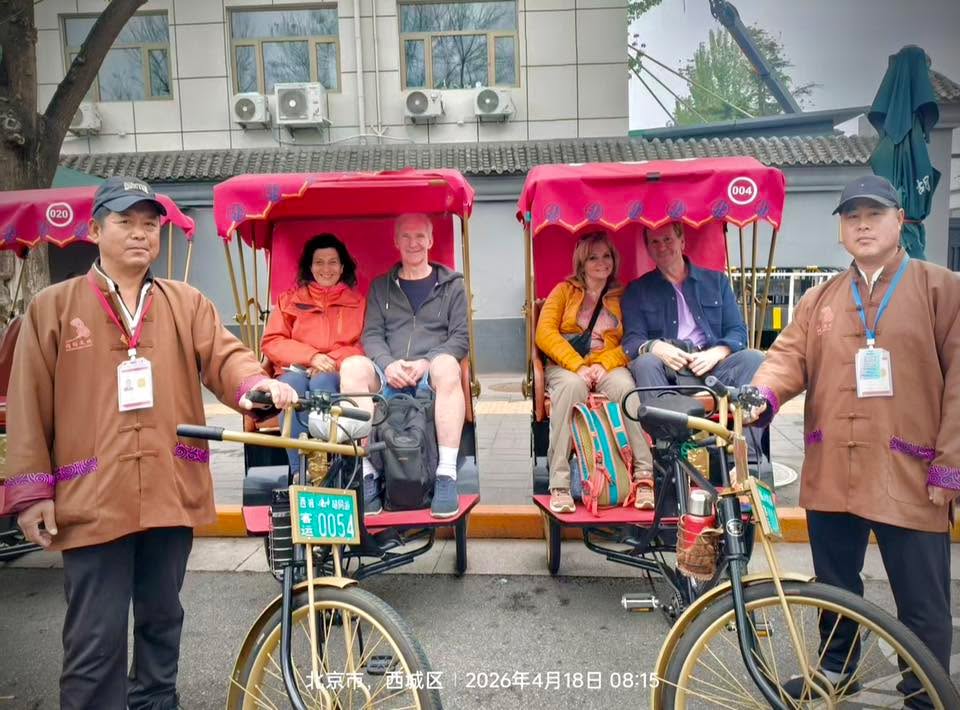
Hutongs are ancient narrow alleyways most famously in Beijing, formed by rows of traditional courtyard residences called siheyuan. Originating from the 13th-centry Mongol Yuan dynasty, the word “hutong” comes from the Mongolian term for a water well.
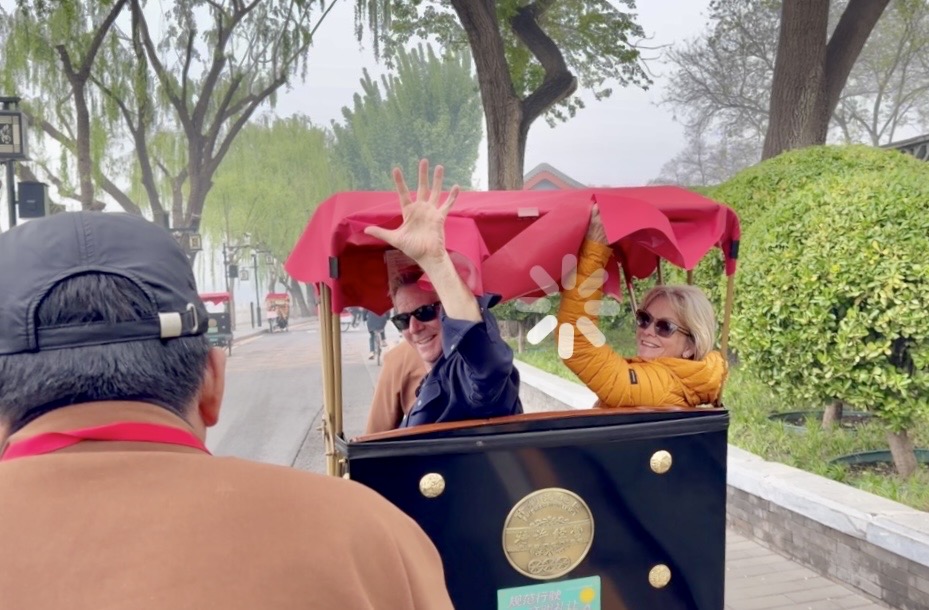
During the years 1911 to 1949, wars and poverty caused many grand courtyard homes to fall into disrepair and transform from single-family elite compounds into multi-family shared rentals. Rapid city growth and modernization in the 20th century led to the destruction of thousands of historic hutongs to make way for wide roads and high-rises.
Eagle’s Nest & Olympic Park
Located at the north end of the central axis of Beijing City, with a large area of 1215 hectares, the Olympic Park contains the National Museum, exhibition area, Olympic Village and Olympic competition avenues. Approximately 31 venues were used in the Beijing Olympics, including National Stadium, the Bird’s Nest and National Aquatics Center. It was the venue for the 2008 summer Olympic Games and 2022 winter Olympic Games.
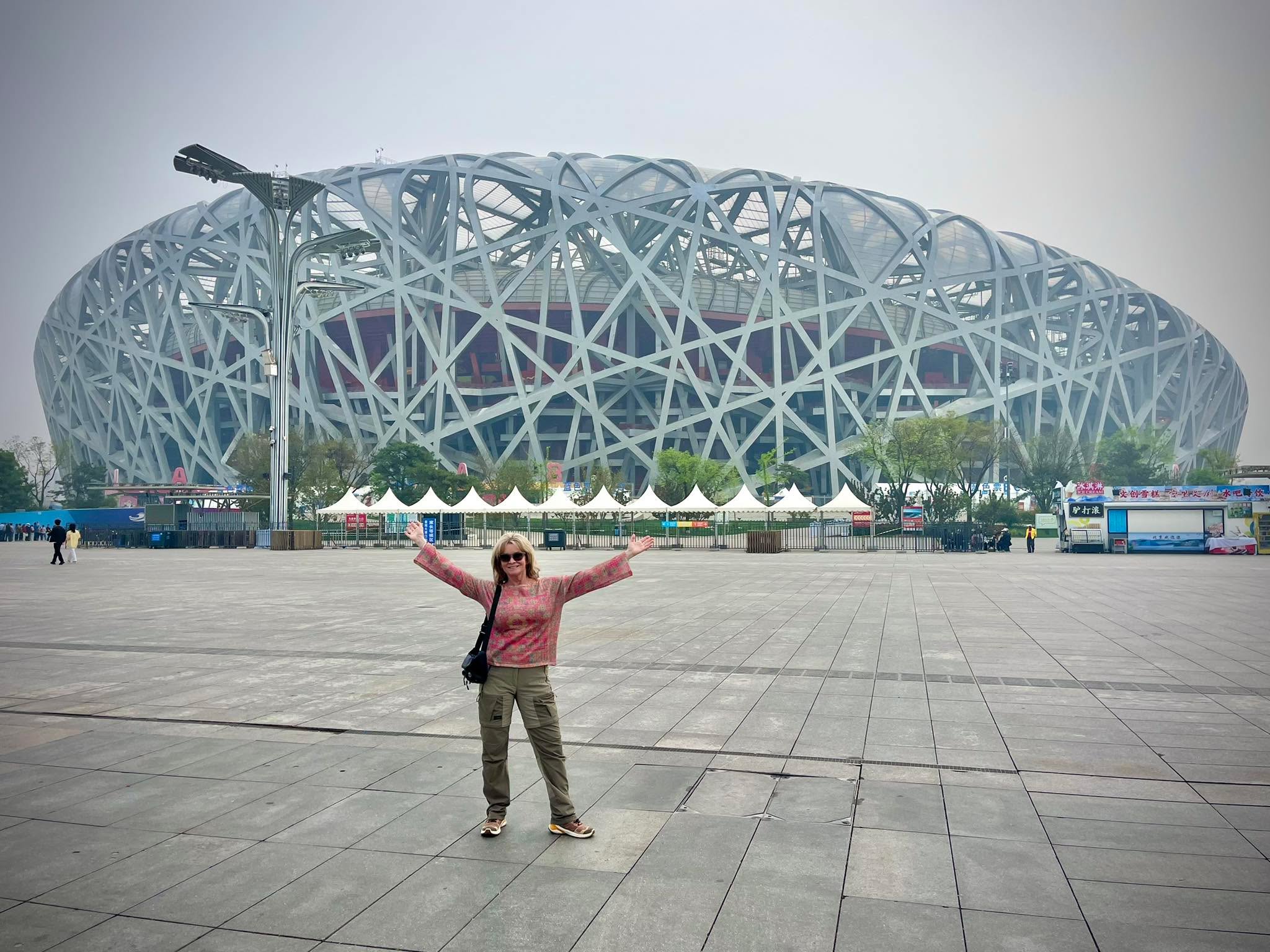
We walked around the fascinating Eagle’s Nest stadium and even took a peek inside.
Great Wall Mutianyu
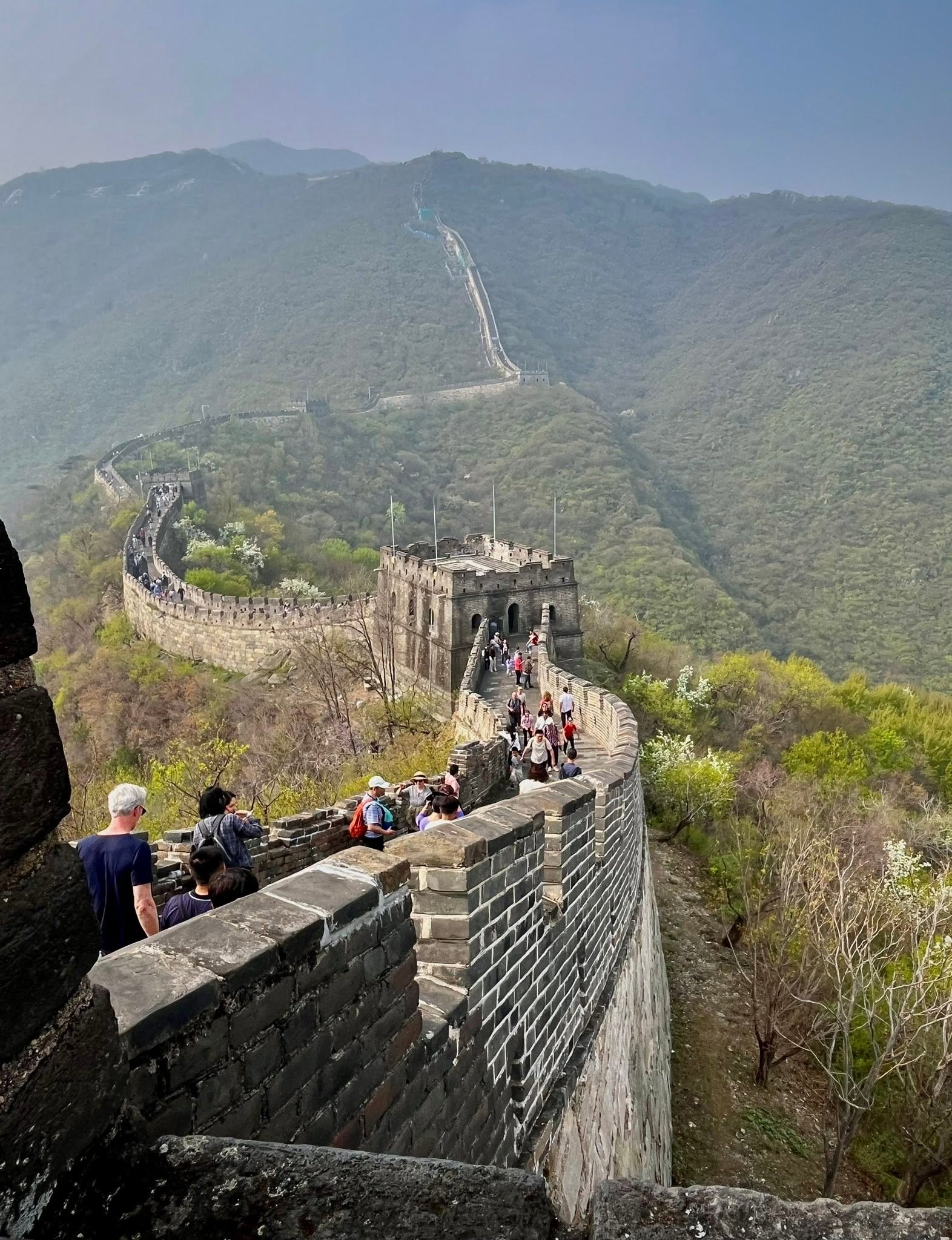
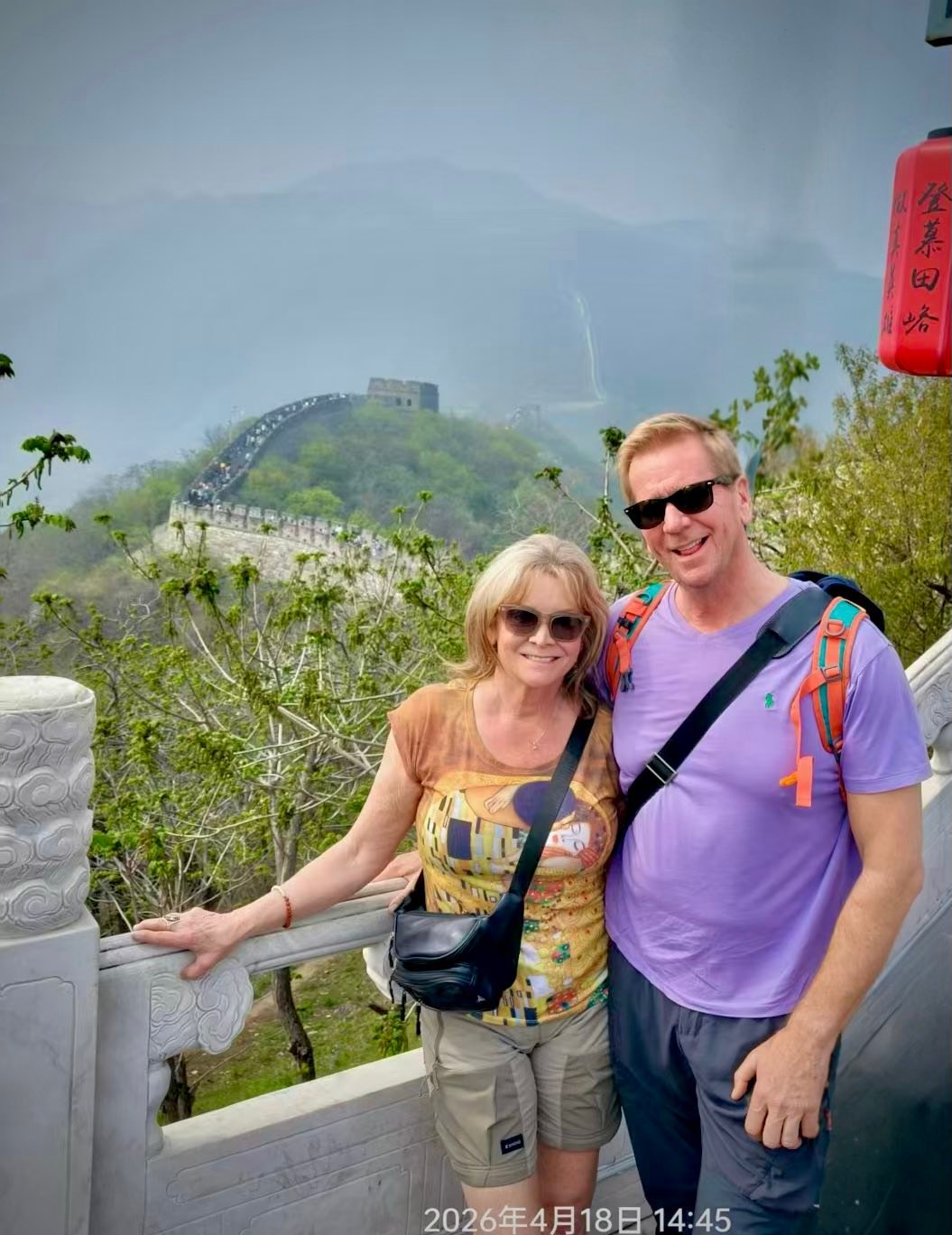
On our second day in Beijing, we were taken to the Mutianyu Great Wall, 70 kilometers (43.4 miles) northeast of the city. The wall was built using slabs and gray bricks. This section was initially constructed 1,400 years ago during the Northern and Southern Dynasties (420-589) and was later repaired, renovated, and expanded in the Ming Dynasty (1404). The elevation at Mutianyu Pass is 486 meters, while the highest point on the mountain exceeds 1,000 meters above sea level.
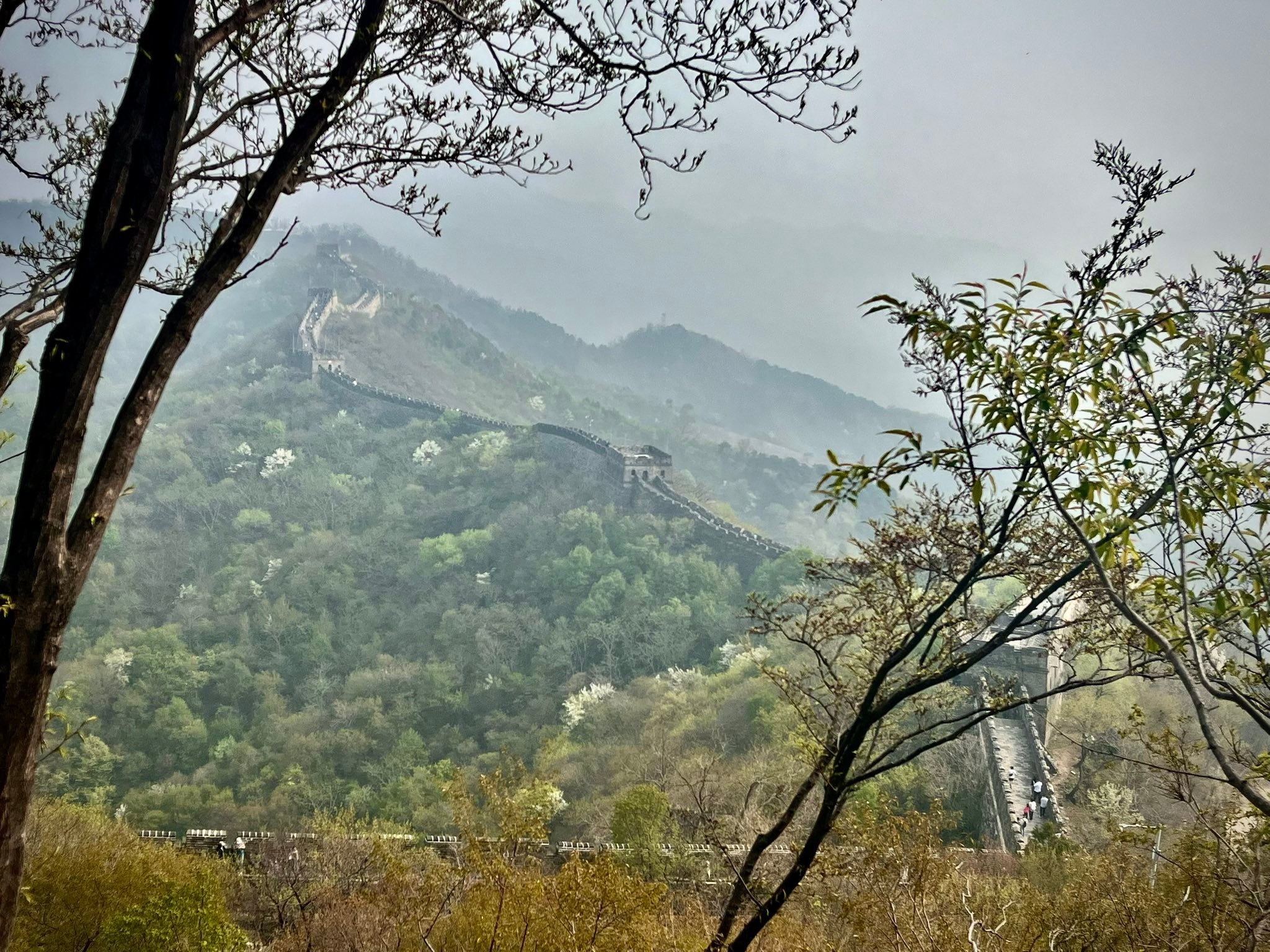
We took the gondola up to the wall where we walked one hour to the highest point accessible. It was quite steep in some areas, and we worked up a sweat. I was happy that it wasn’t too crowded. Even though it was a hazy day, it was great to experience the Great Wall.
Summer Palace
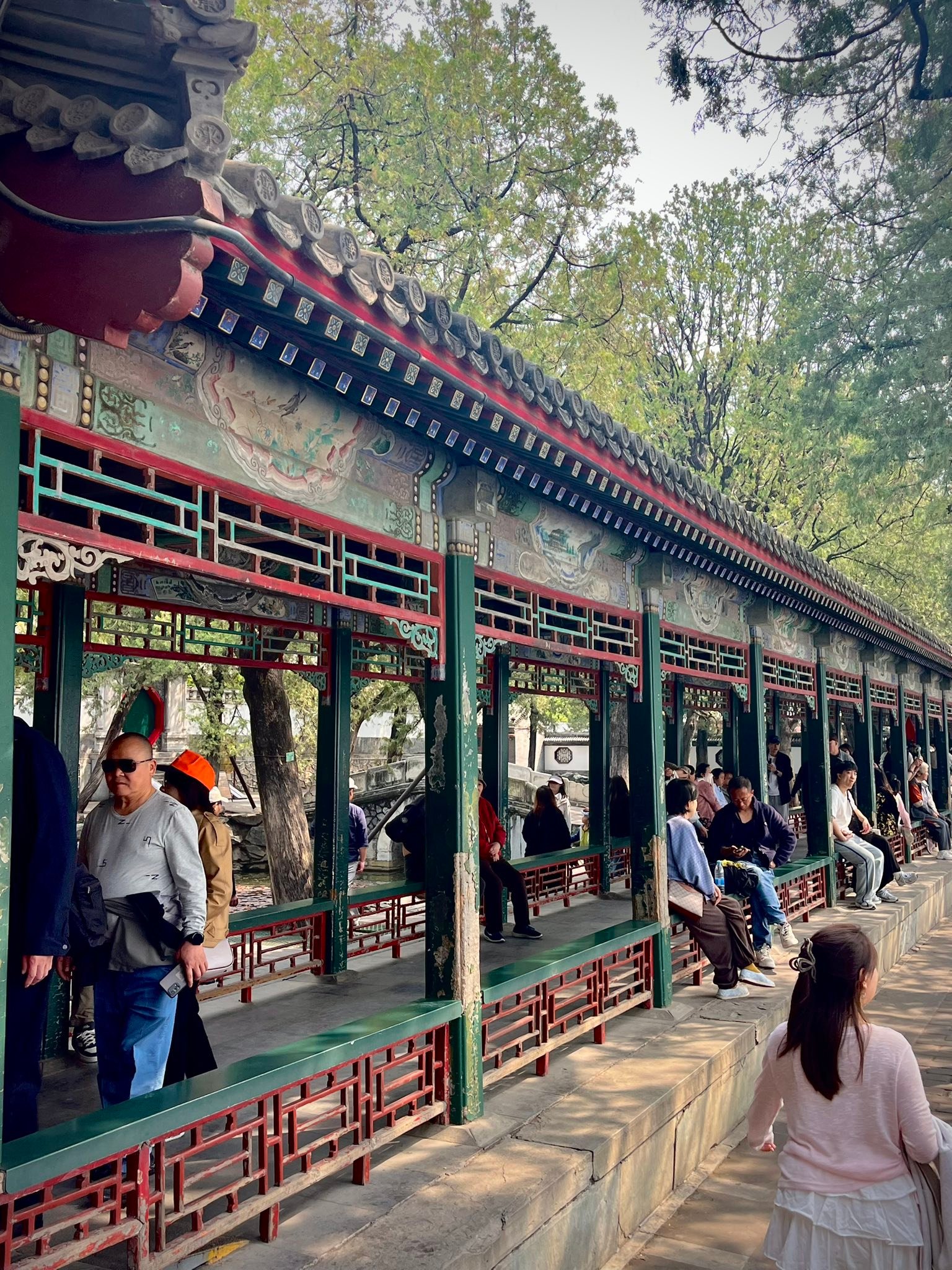
Situated in the northwest of Beijing, the Summer Palace is 9 miles (15 kilometers) from the downtown area. It is the largest and best-preserved royal park in China. The Palace greatly influences Chinese horticulture and landscape, with its famous natural views and cultural interest, and has long been recognized as ‘The Museum of Royal Gardens’.
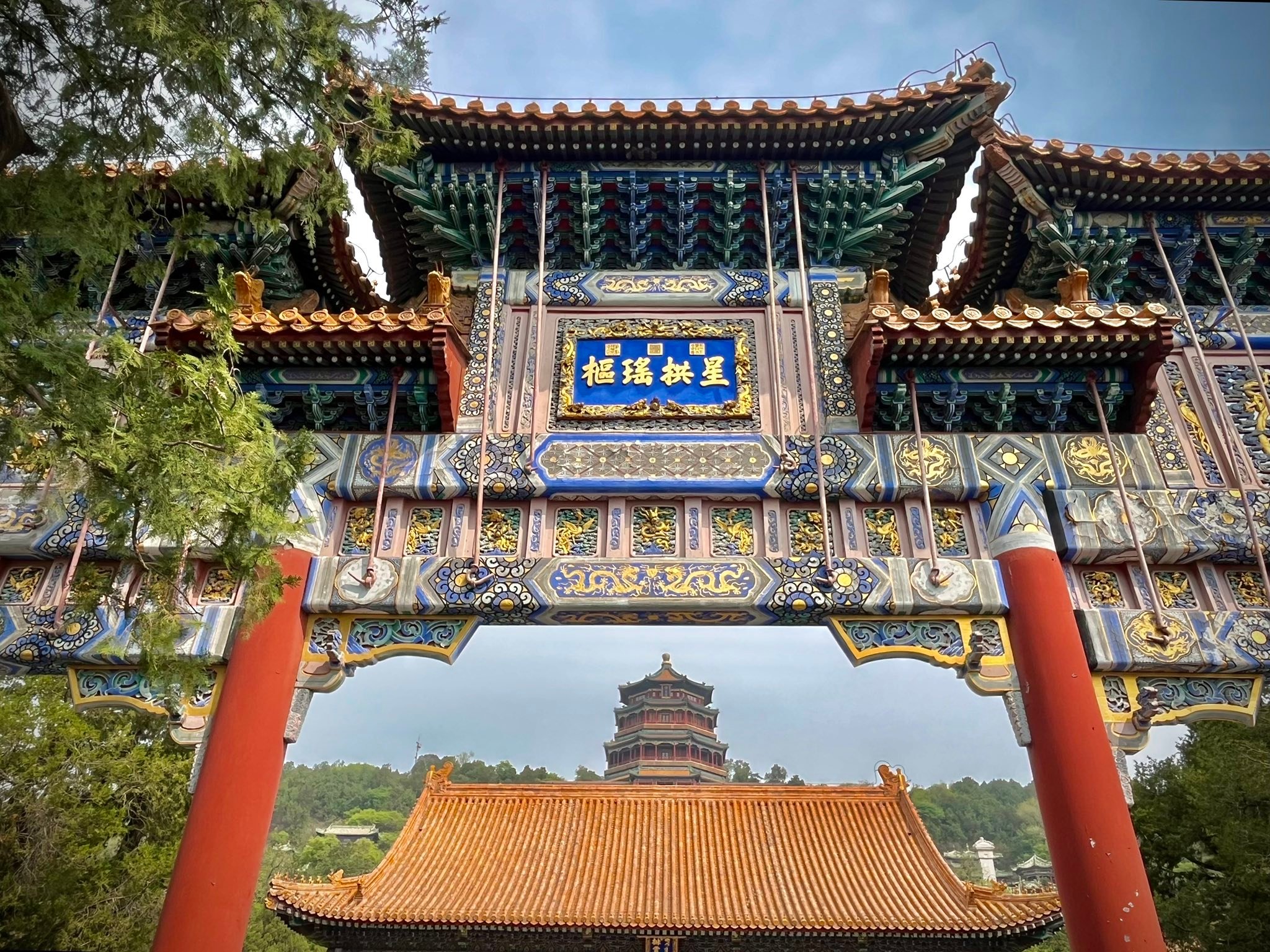
We spent a couple of hours walking around the gardens and learning about the history. The Summer Palace was first built in 1750 by the Qianlong Emperor as a garden for his mother. It was destroyed by foreign wars and rebuilt by Empress Dowager Cixi, and named Yiheyuan. It became a UNESCO World Heritage Site in 1998.
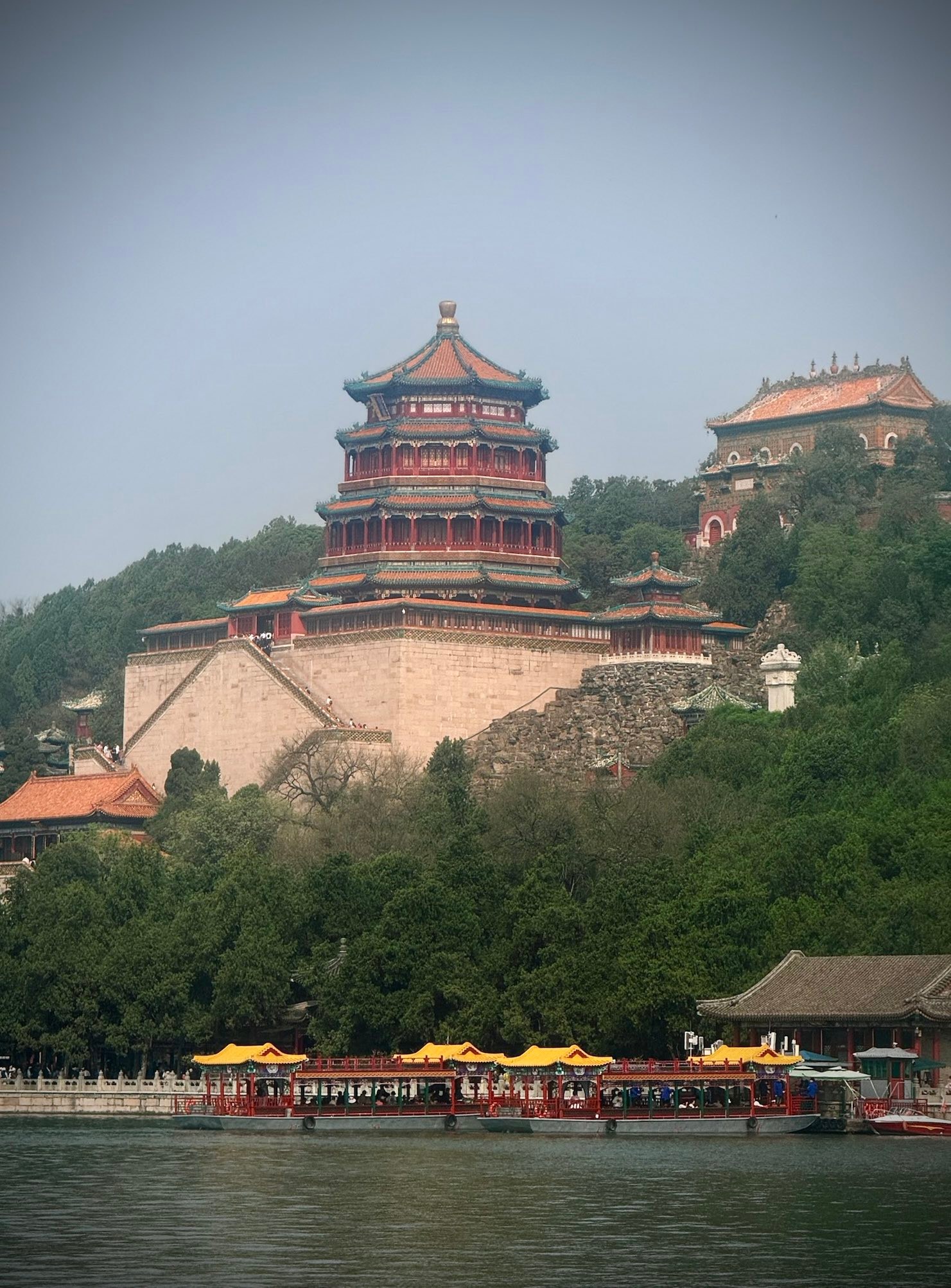
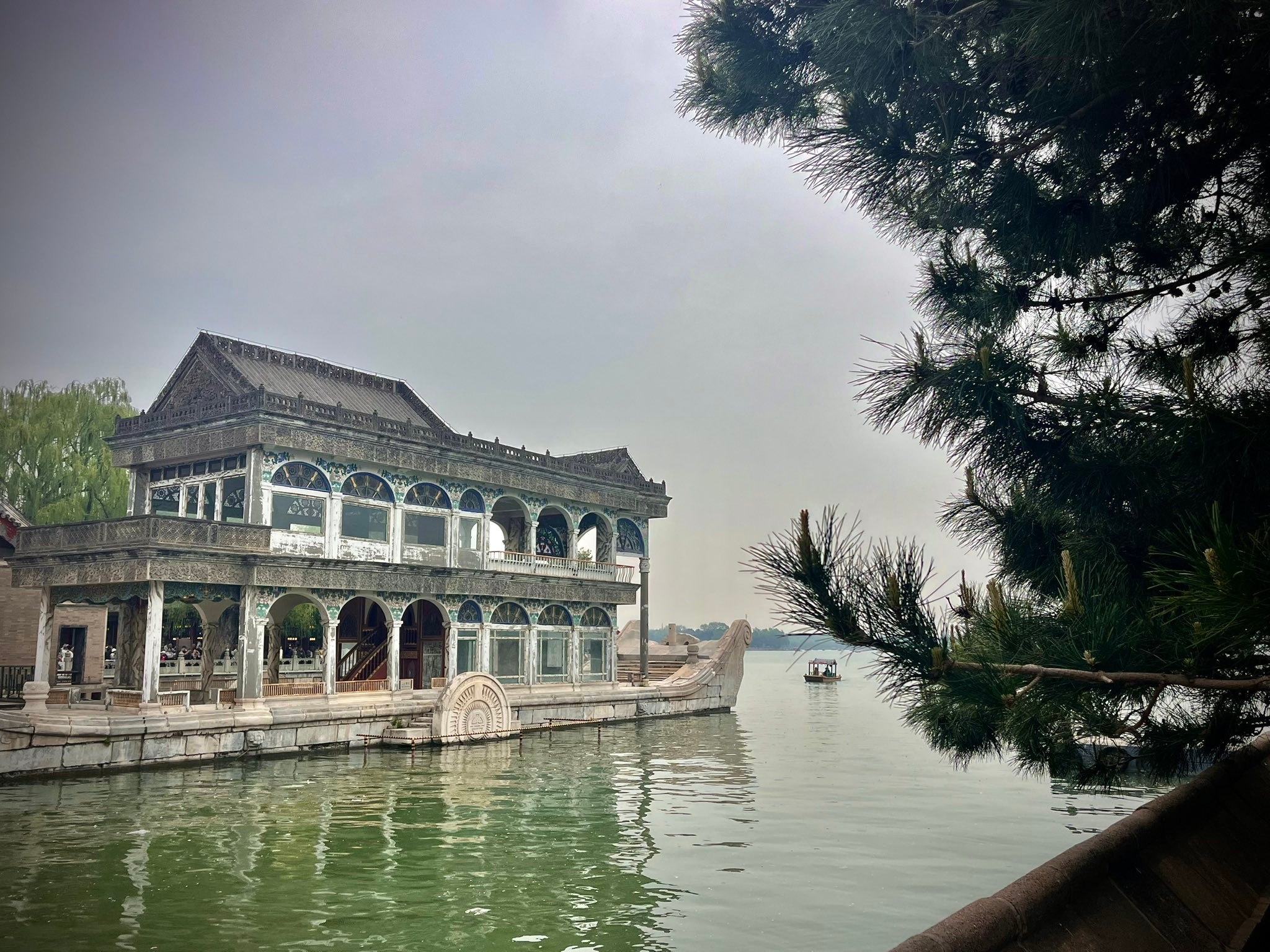
You could spend a whole day here walking around, visiting the buildings, and taking a boat ride. The Marble Boat (shown below) is a 36-meter-long lakeside pavilion at Beijing’s Summer Palace. Built in 1755 by the Qianlong Emperor, its stone base symbolizes a stable dynasty. Destroyed in 1860, it was rebuilt in 1893 under Empress Dowager Cixi with a Western paddle-wheel design.
Xi’An
After our first few days in Beijing, our next destination was the city of Xi’An via a high-speed train that took five hours. Train travel in China is very efficient. We had first class seats which were a big nice and roomier.
Terracotta Warriors
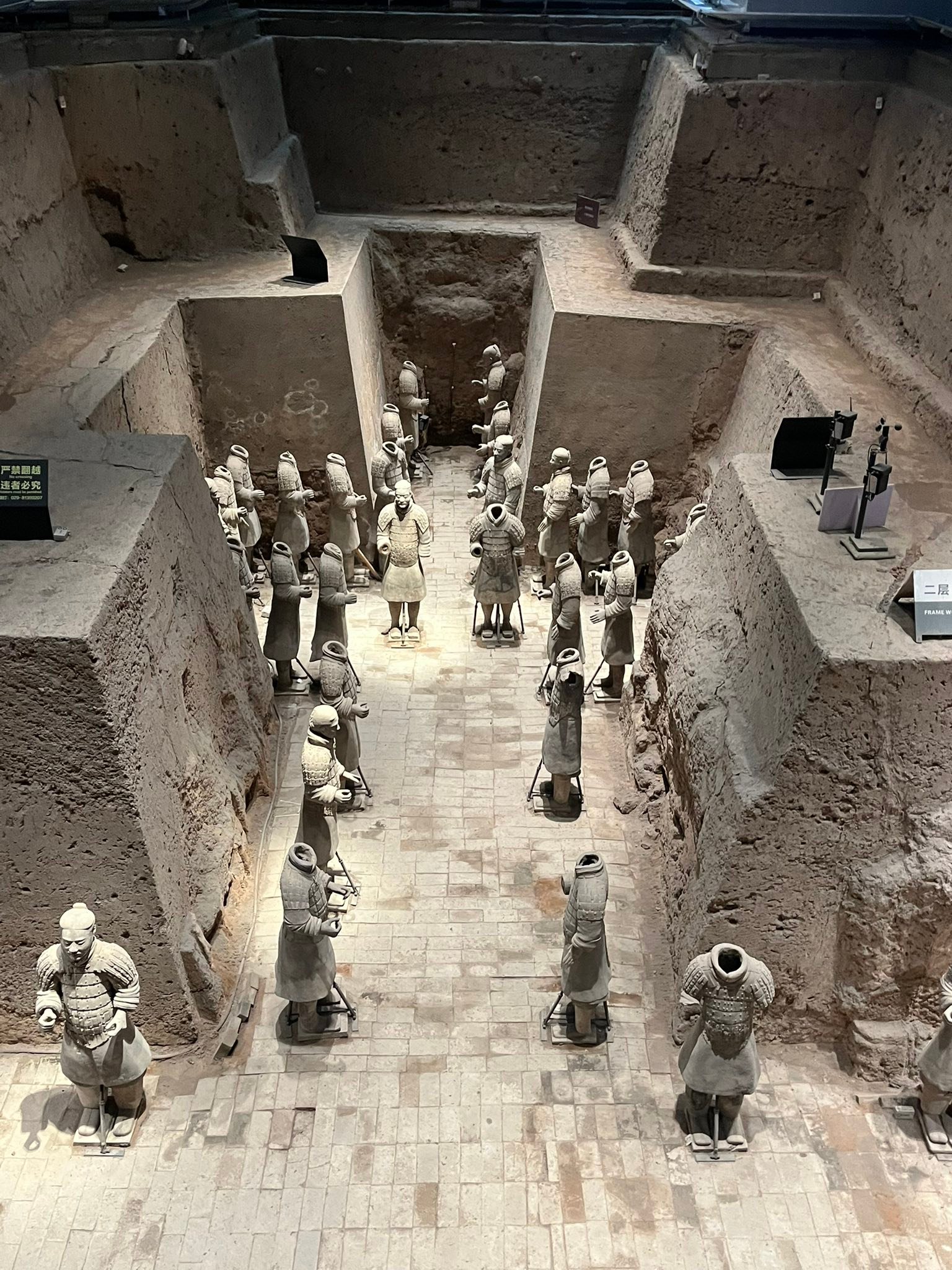
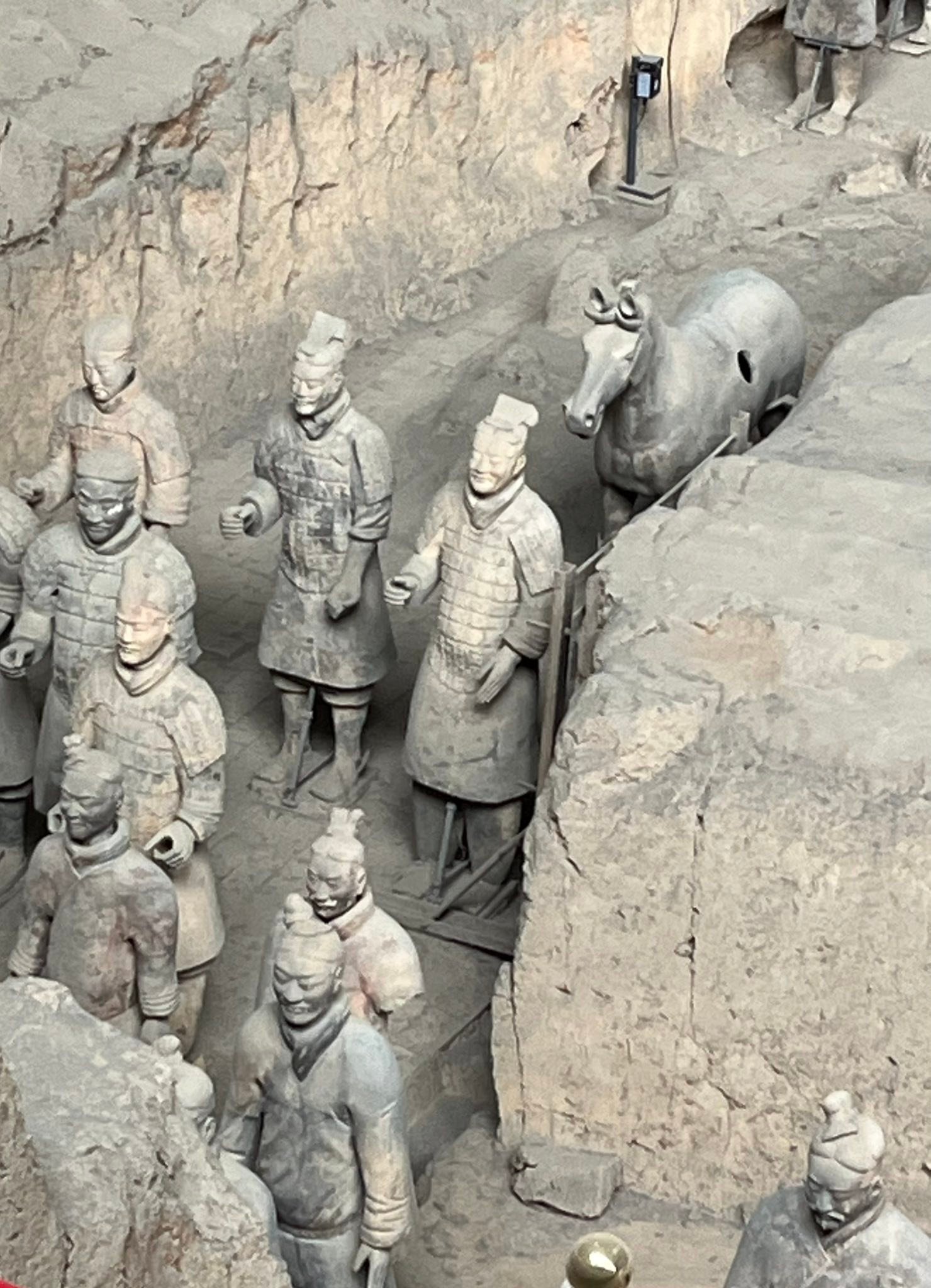
Accidentally discovered in 1974, this incredible army of over 7,000 soldiers, archers, horses, and chariots, arranged in full battle array, was meant to guard Emperor Qin’s tomb since 210 BC. Each figure is unique, and painstaking repair and excavation work continues in the three pits, protected inside huge hangars.
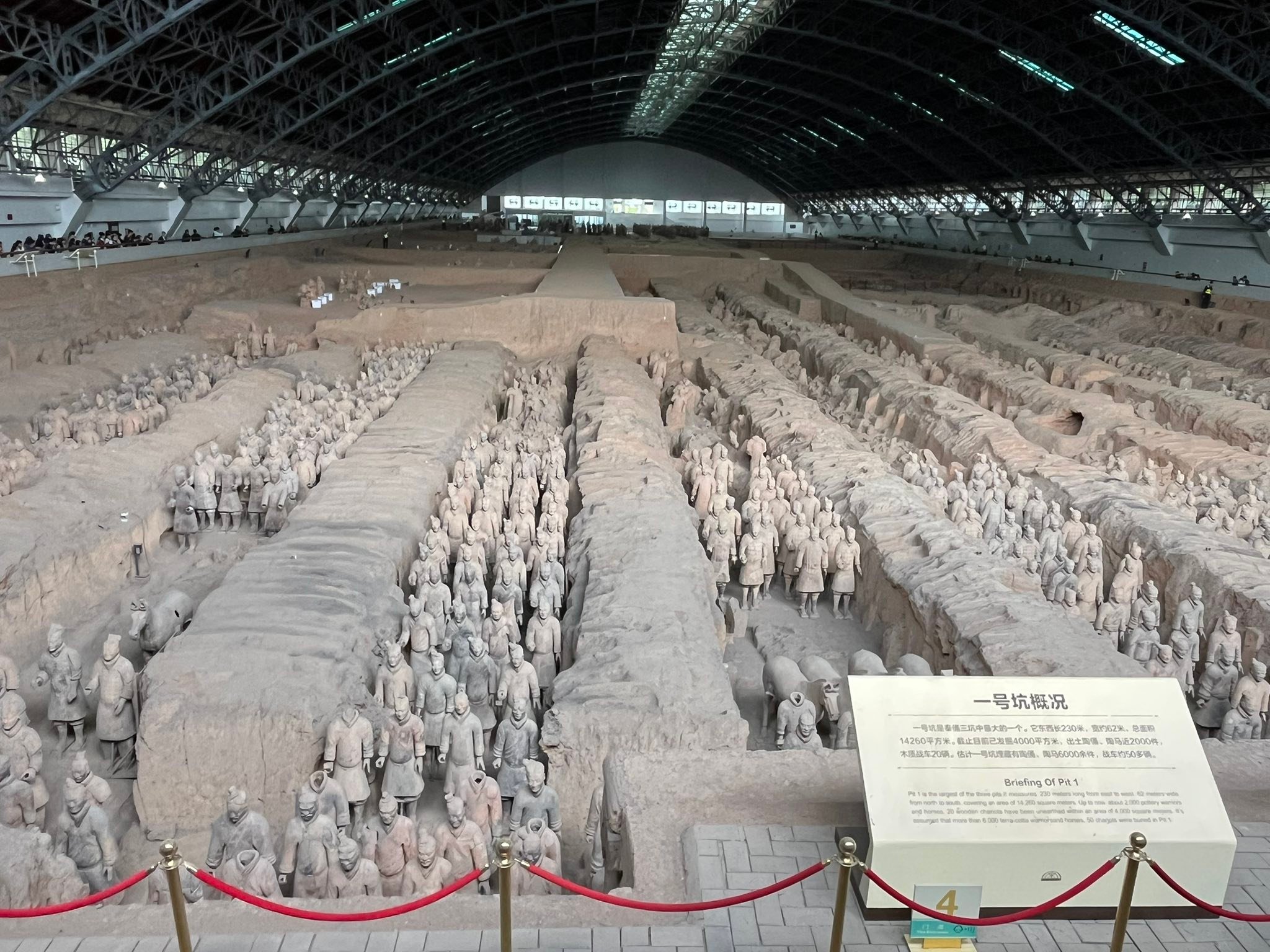
Our local tour guide in Xi’An took us through all of the areas. This was just amazing to see and a real highlight of the trip.
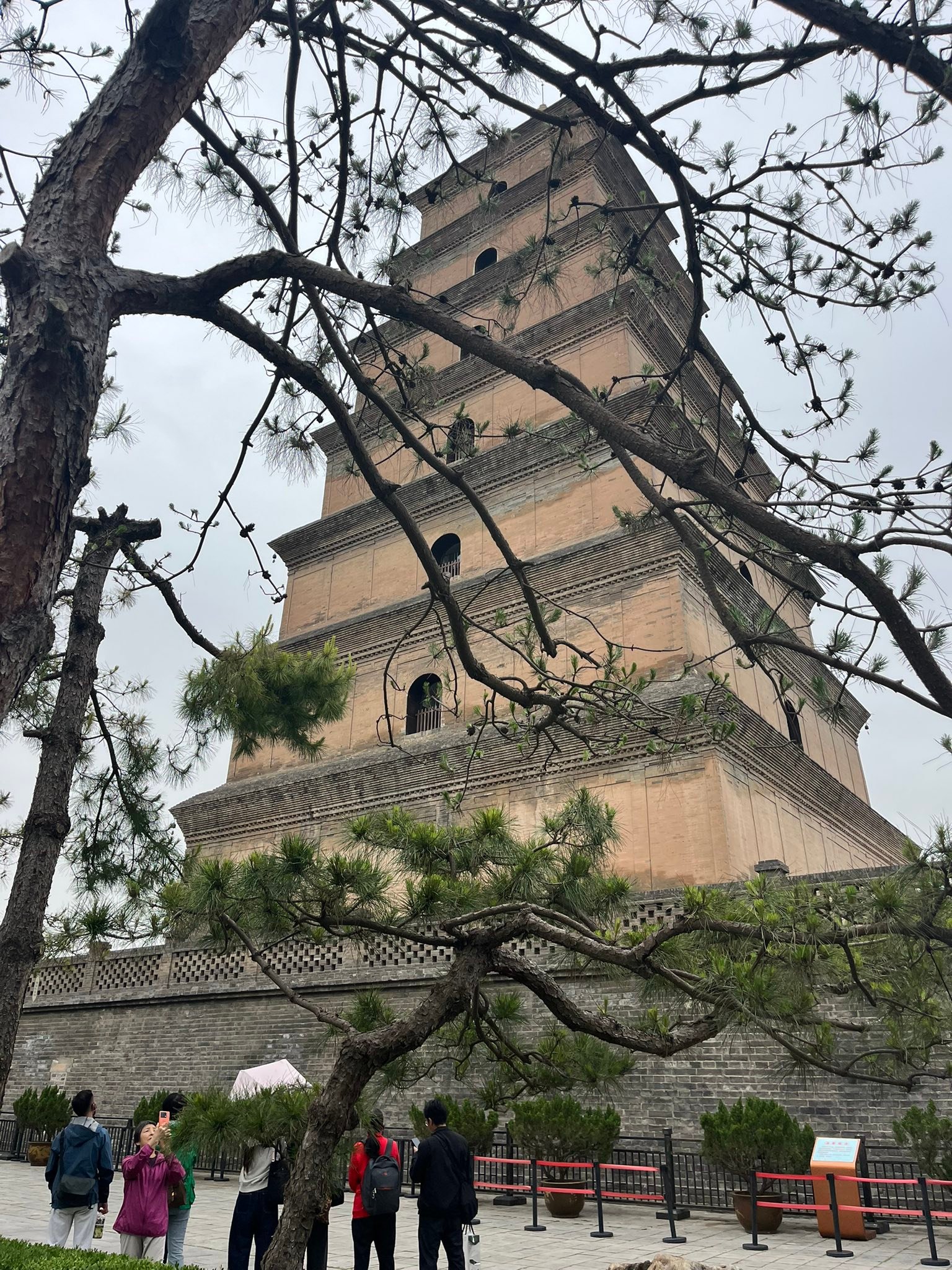
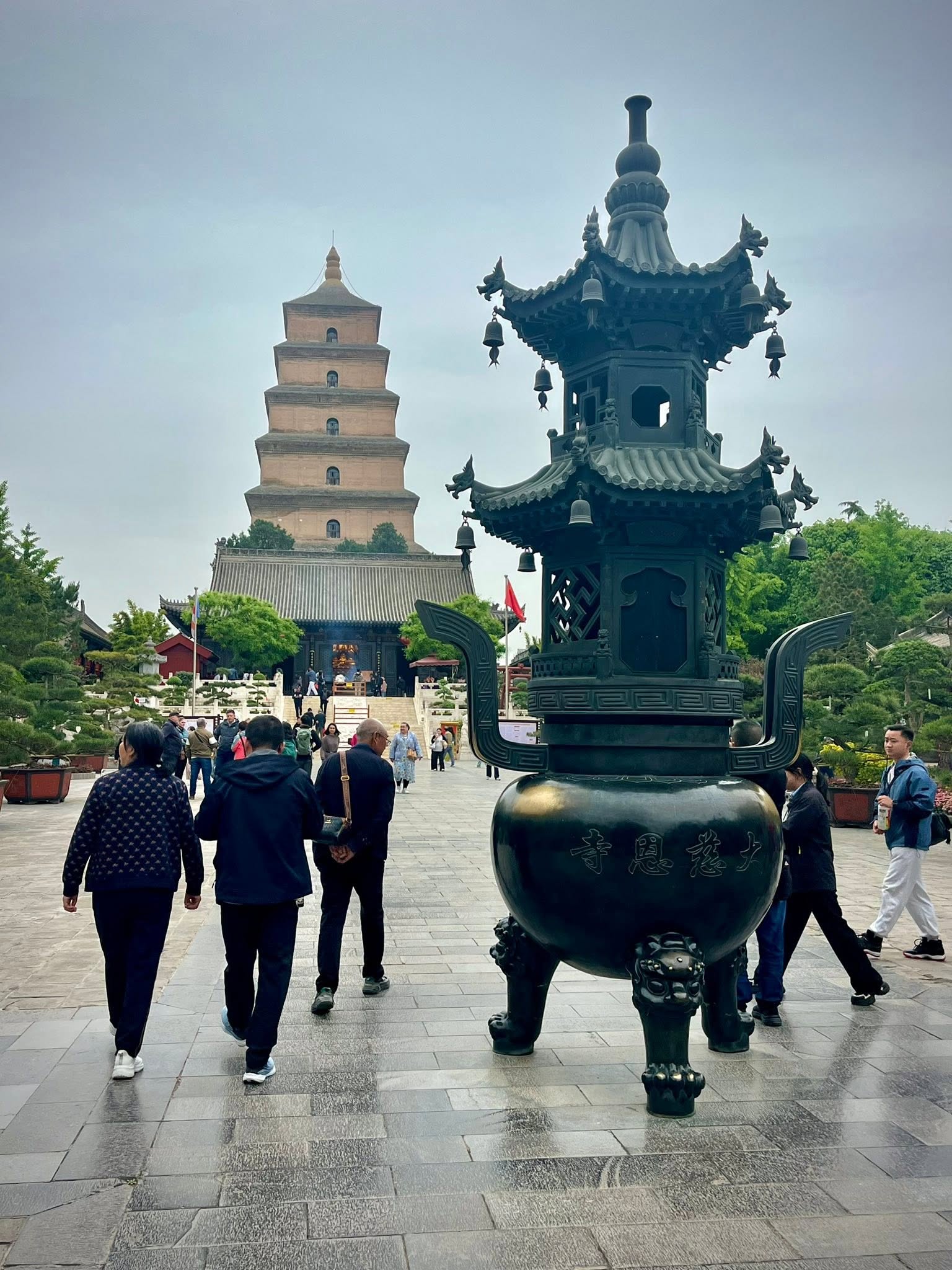
Big Wild Goose Pagoda
The Pagoda was built in the 7th century to house the Buddhist materials that Xuanzang (Tripitaka) brought back from his epic journey to India. The Temple complex has several large halls with some great Buddhist statues and murals.
Xi’An City Wall
The walls, ramparts, gates and watchtowers form one of the oldest and most complete city defenses around. Built in the 13th century on the foundations of the original Tang Forbidden City surrounding the city centre, it is a major landmark, and the best preserved, as well as the oldest and largest of the city defense systems in China. The perimeter of the City Wall is 13.74 km.
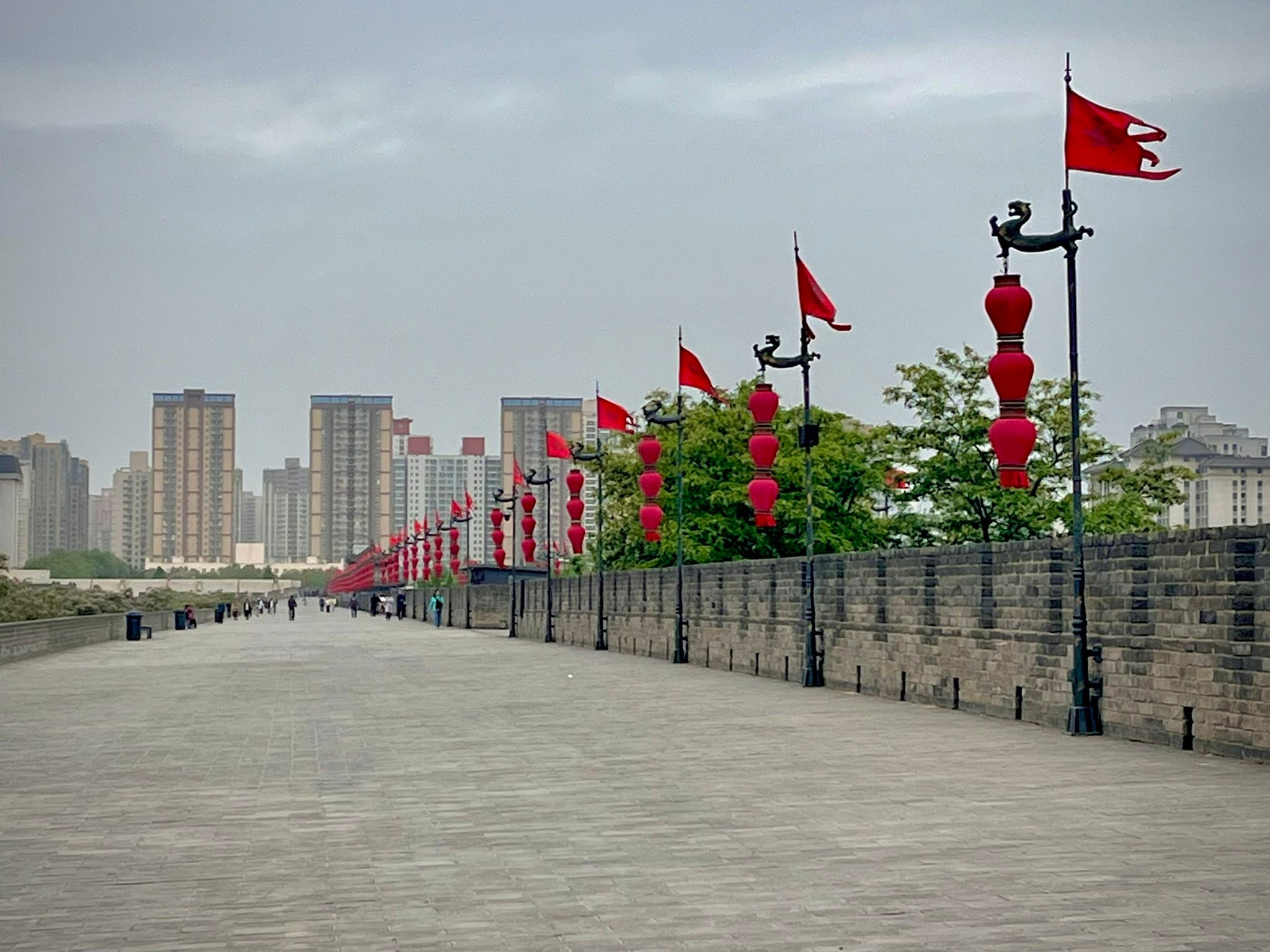
Many people rent bikes to go around the wall. We only walked a portion of it. There were many women dressed up in traditional dresses having their photo made.
Muslim Quarter
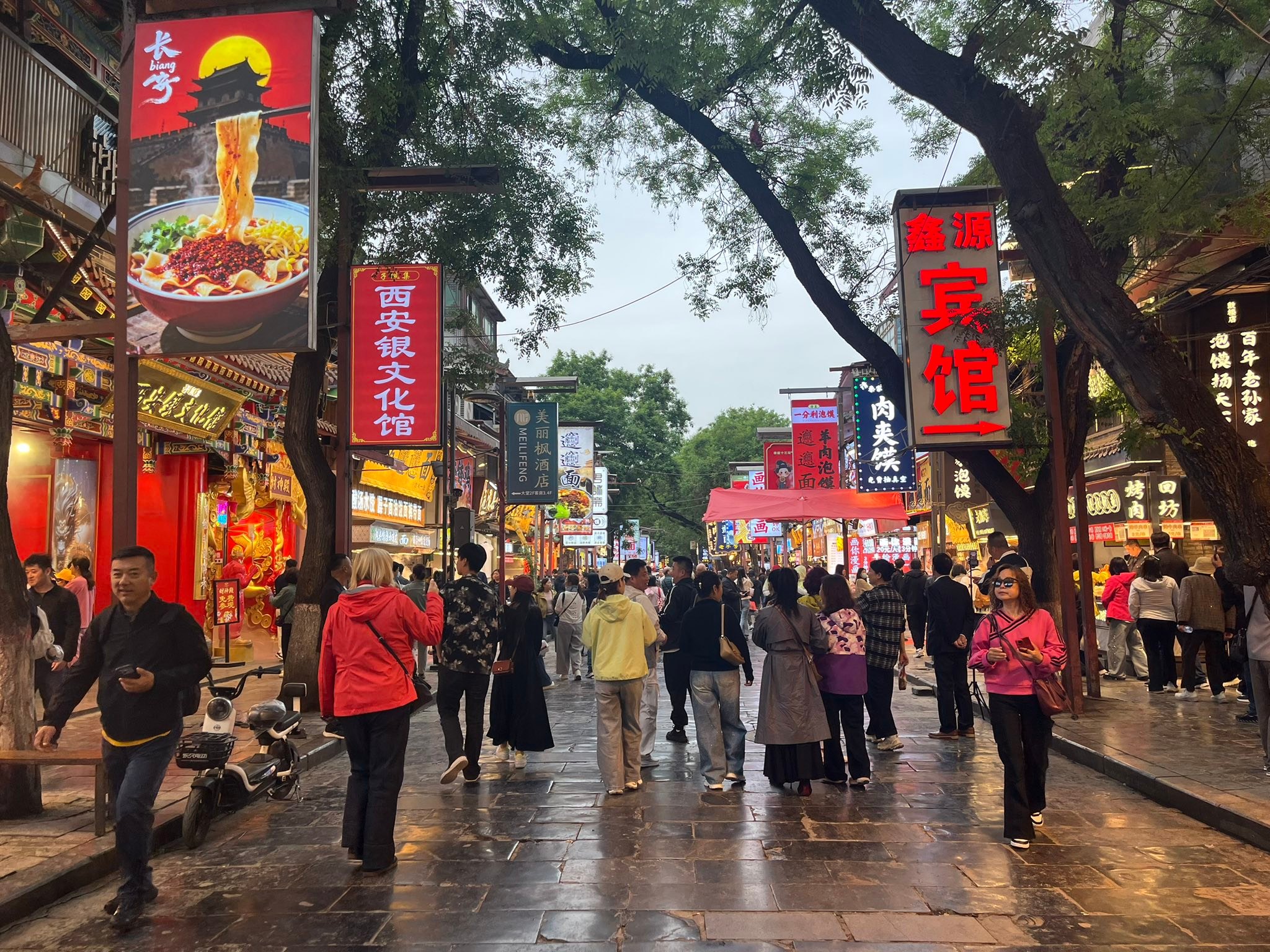
Muslim Quarter Market is a vibrant, century-old, 1km+, night market near the Drum Tower in Xi’an, famous for its extensive, authentic Halal street food and buzzing, densely packed, lively atmosphere. This was a cool place to see and is what I imagined China to be like with all the colorful street signs.
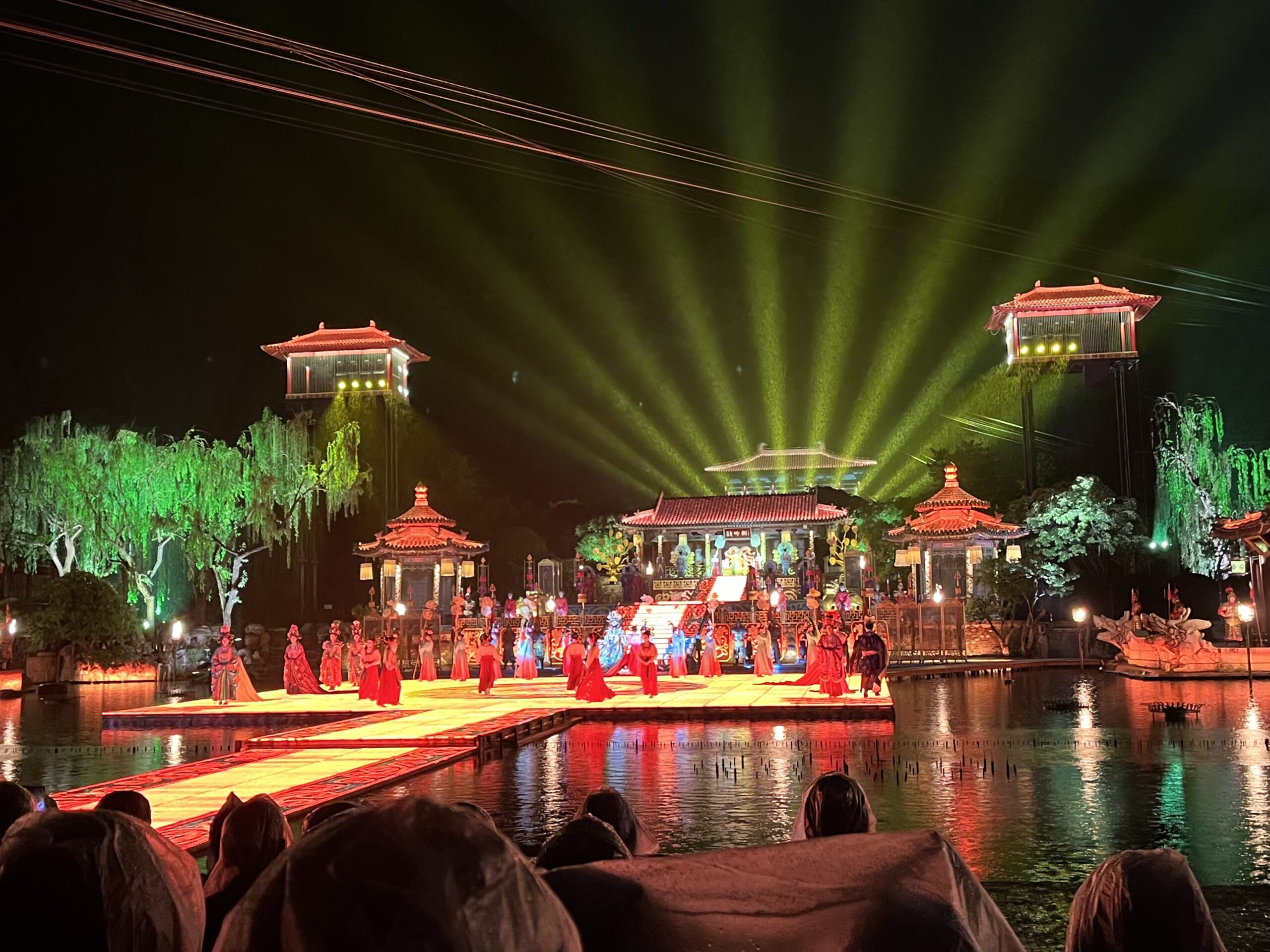
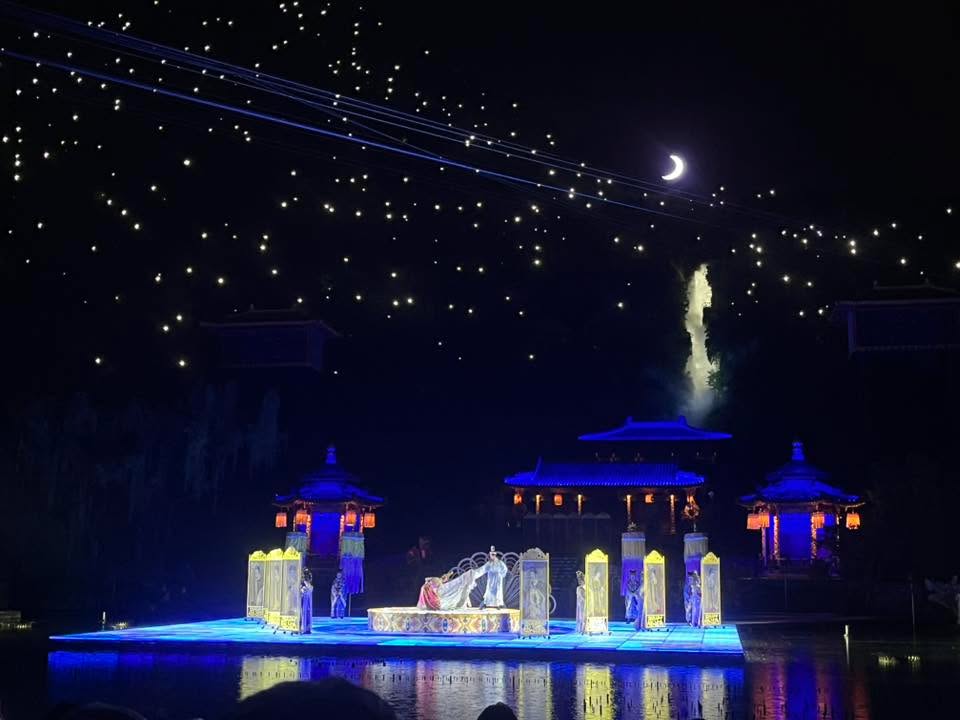
‘Song of Everlasting Sorrow’ Show
Although it wasn’t included in our itinerary, we decided to add this show to our program. It was truly fascinating to see this outdoor show on the water. It rained lightly the whole time, but they gave out rain ponchos to wear. I would highly recommend seeing this show as it was the best of several shows we saw in China.
Chengdu
After seeing the highlights of Xi’An, we took another high-speed train for four hours to reach Chengdu. Our next local guide met us at the train station. We added Chengdu to our itinerary so that we could especially see the pandas.
Du Fu Thatched Cottage
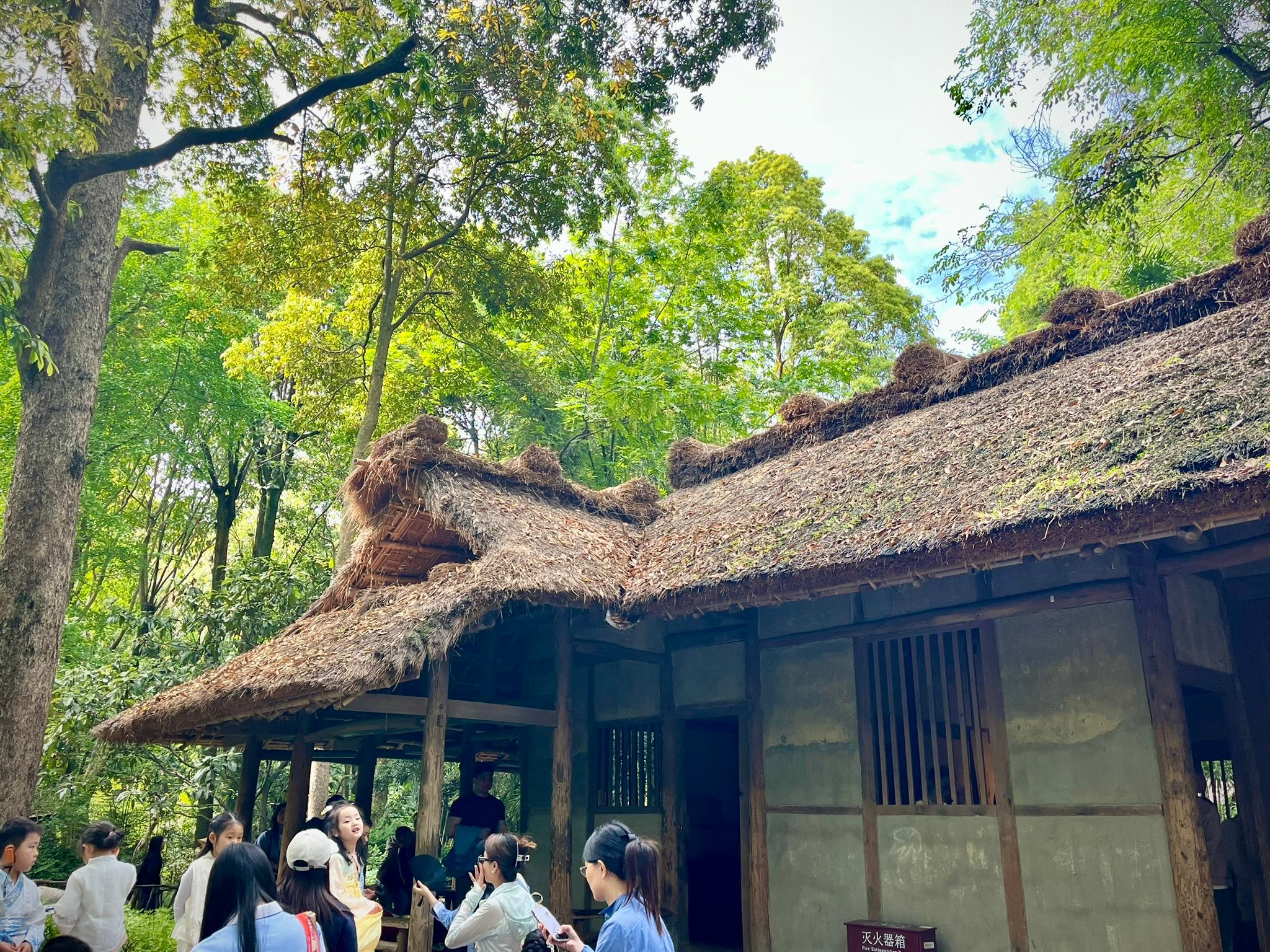
Our first site to visit was the Du Fu Thatched Cottage with a museum and park in honor of Du Fu who is one of the most outstanding Chinese poets of Tang Dynasty. In 759 AD, the great Tang Dynasty poet Du Fu built a small rustic home beside Flower Rinsing Creek in Chengdu, Sichuan, to escape the An Shi Rebellion. He lived there for nearly four years, writing more than 240 poems.
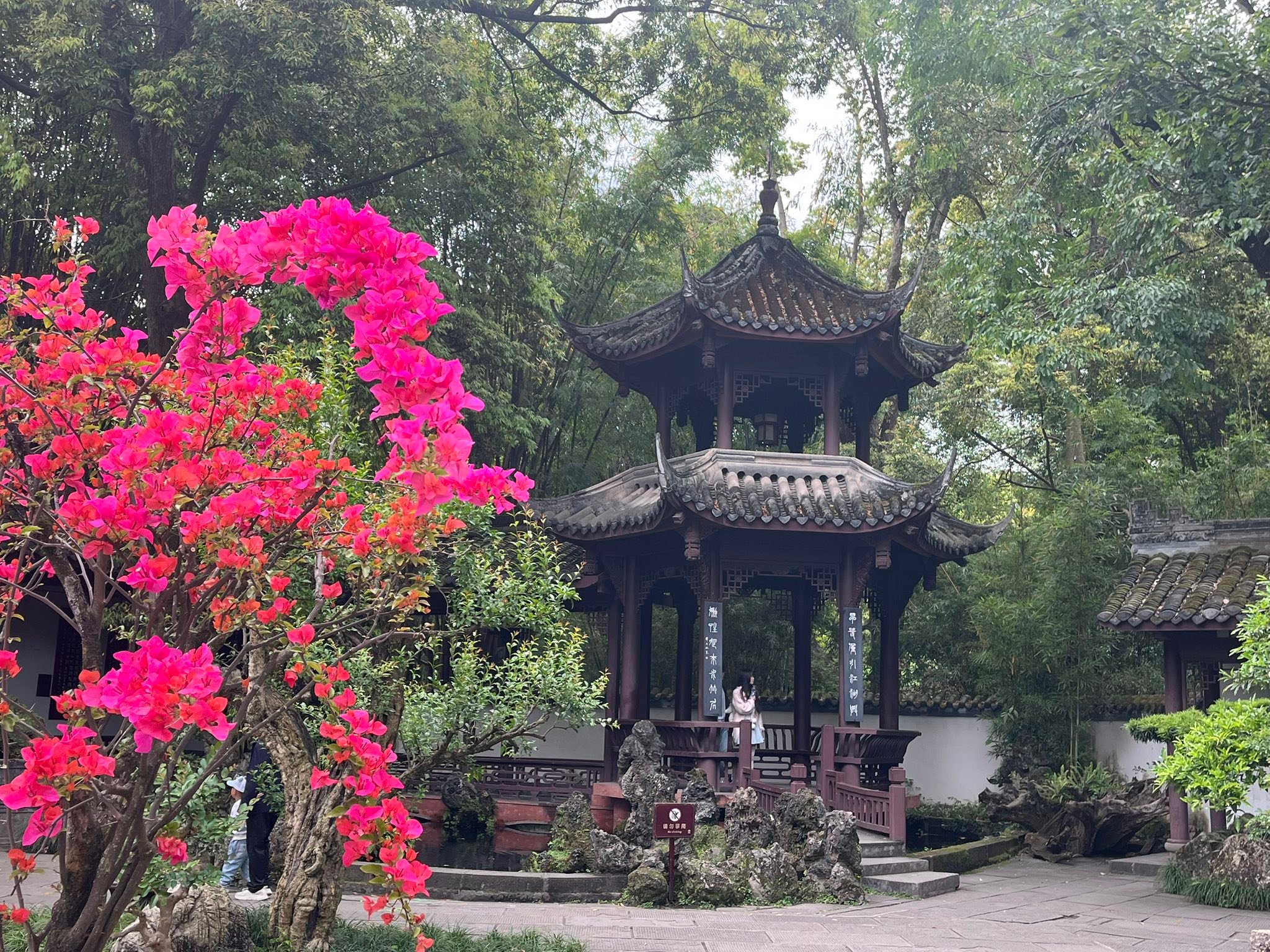
Friends and local officials helped him set up a humble thatched hut by the water. Du Fu wrote famous verses here, including poems about the hardships of ordinary people and the famous piece about his roof blowing off in an autumn gale.
People’s Park
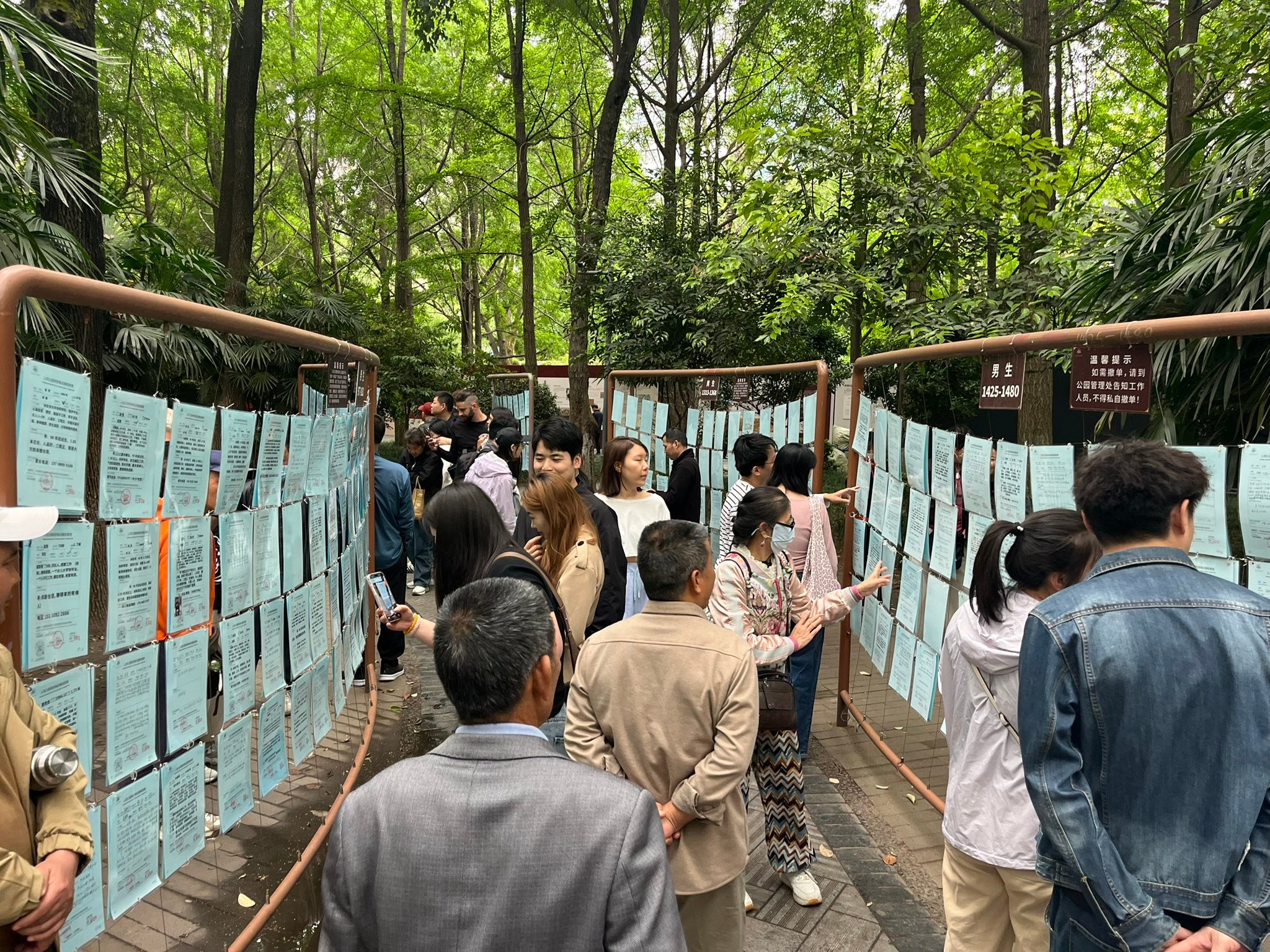
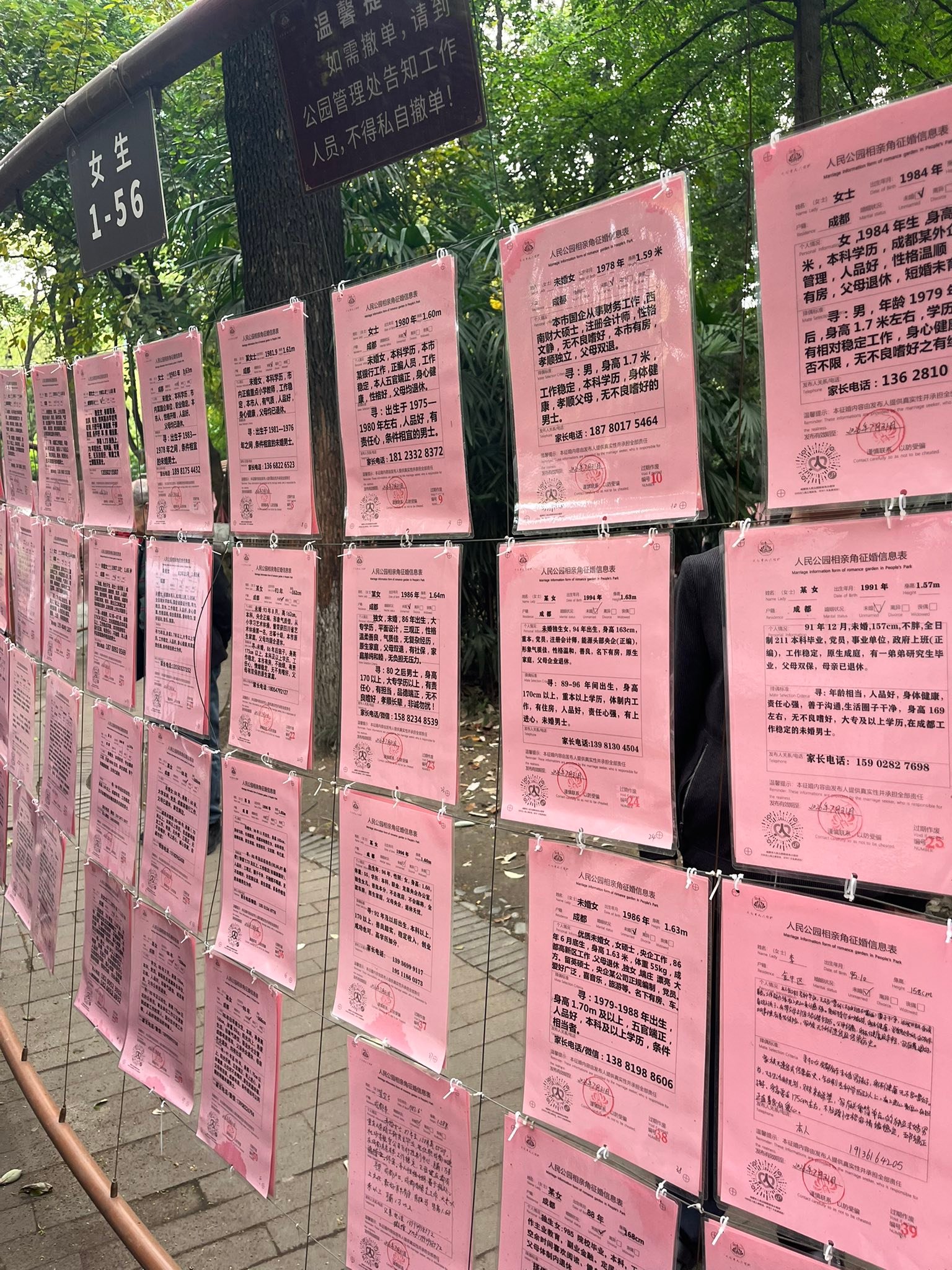
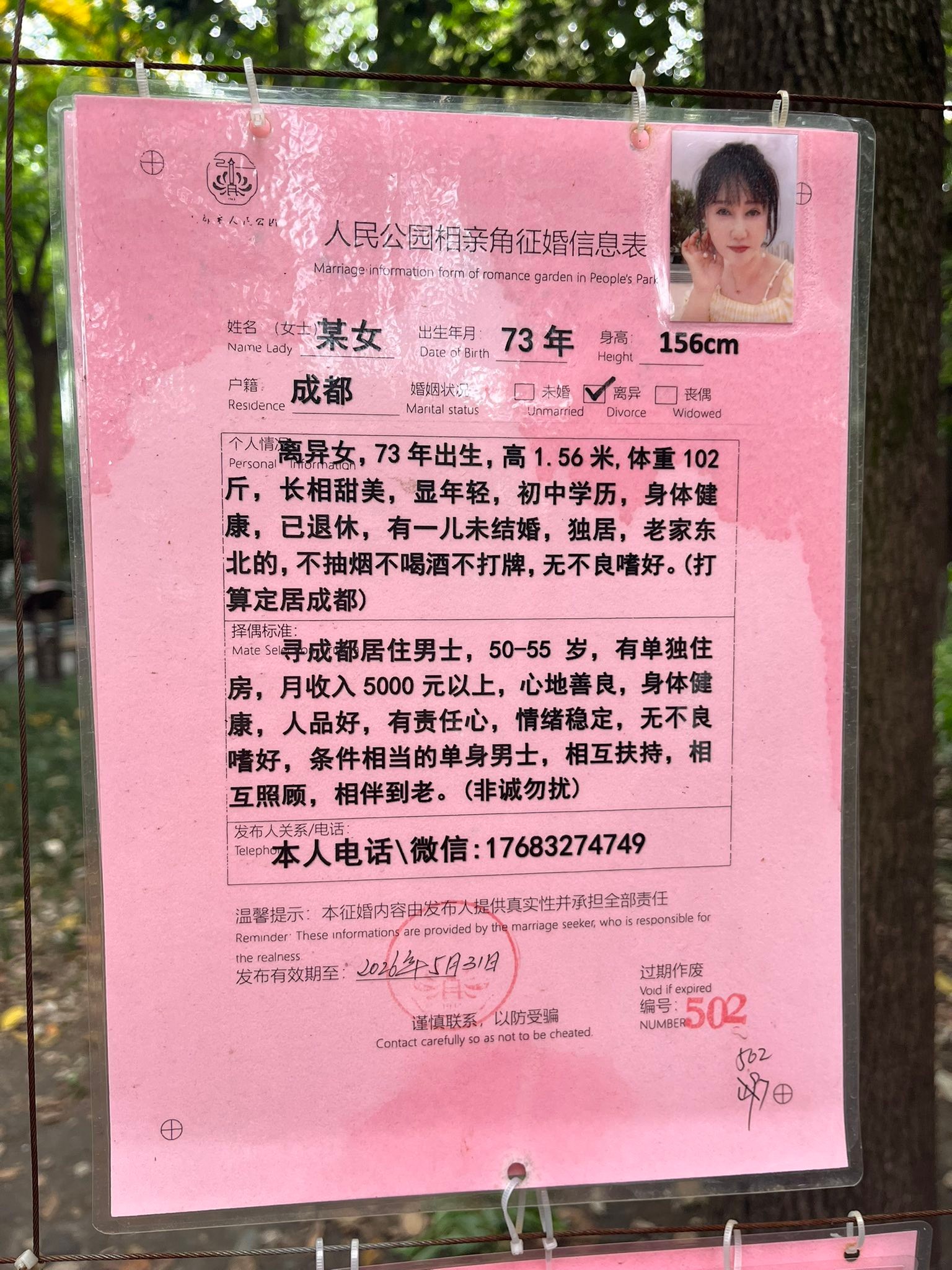
Next on the agenda was to walk through the People’s Park and sample the local Jasmine tea. We were amazed at this off-line dating service where people post a sheet with their photo and details to attract a mate. In fact, we learned that it’s the parents who do this to find someone for their children to date and possibly marry.
Another interesting thing we saw at the park was people having their ears cleaned. As we were sitting and drinking our tea, we would see women come around to offer ear cleaning. Although we opted not to do it, we were watching others having it done. I’m not so sure I appreciated this custom.
Broad and Narrow Alleys
We then went to see another part of the town. The wide and narrow alleys are one of the most representative historical and cultural blocks in Chengdu. They comprise three parallel ancient streets from the Qing Dynasty with a total length of 500 meters.
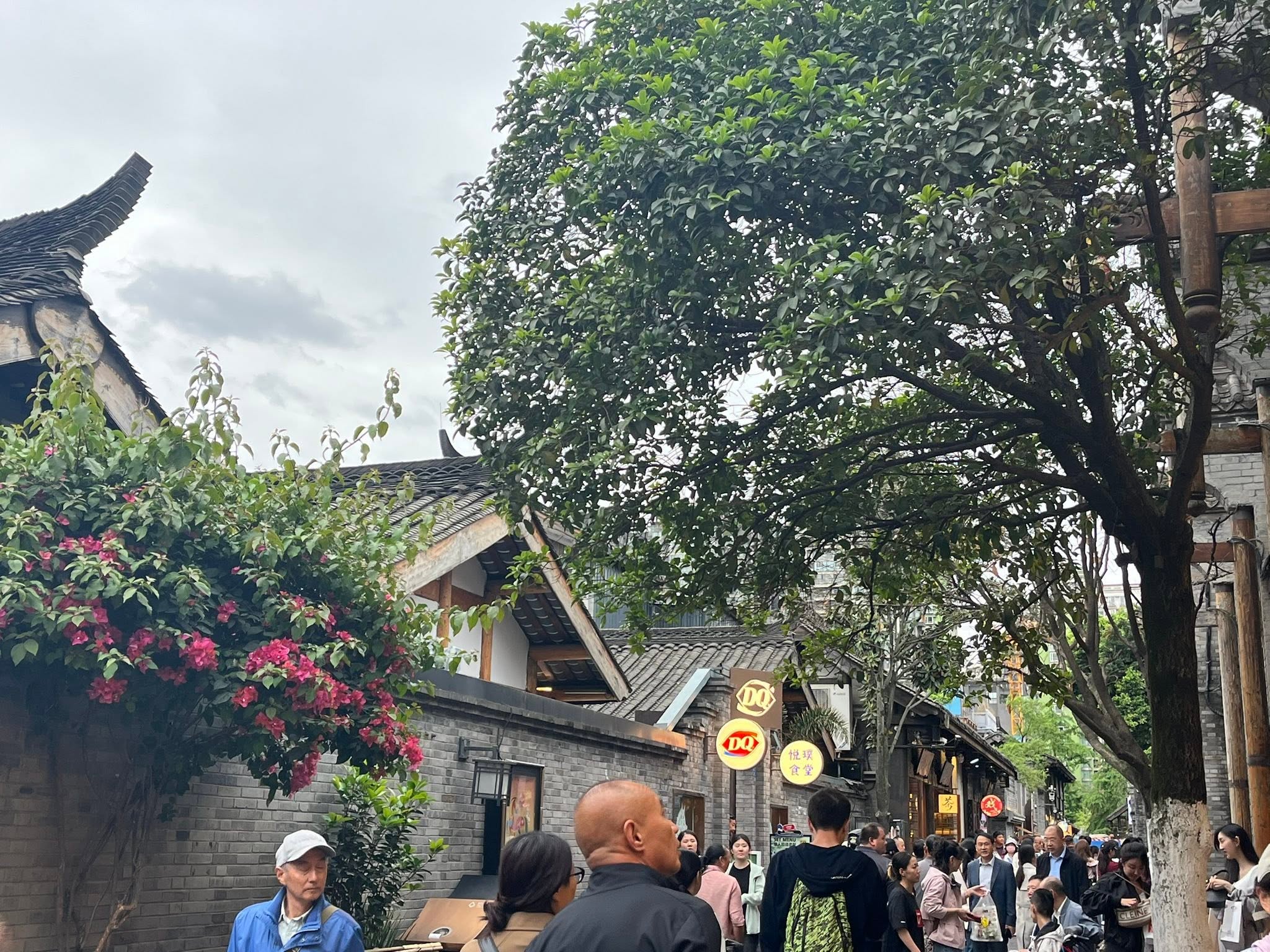
This was a popular area with many people and shops.
‘Hot Pot’ Experience
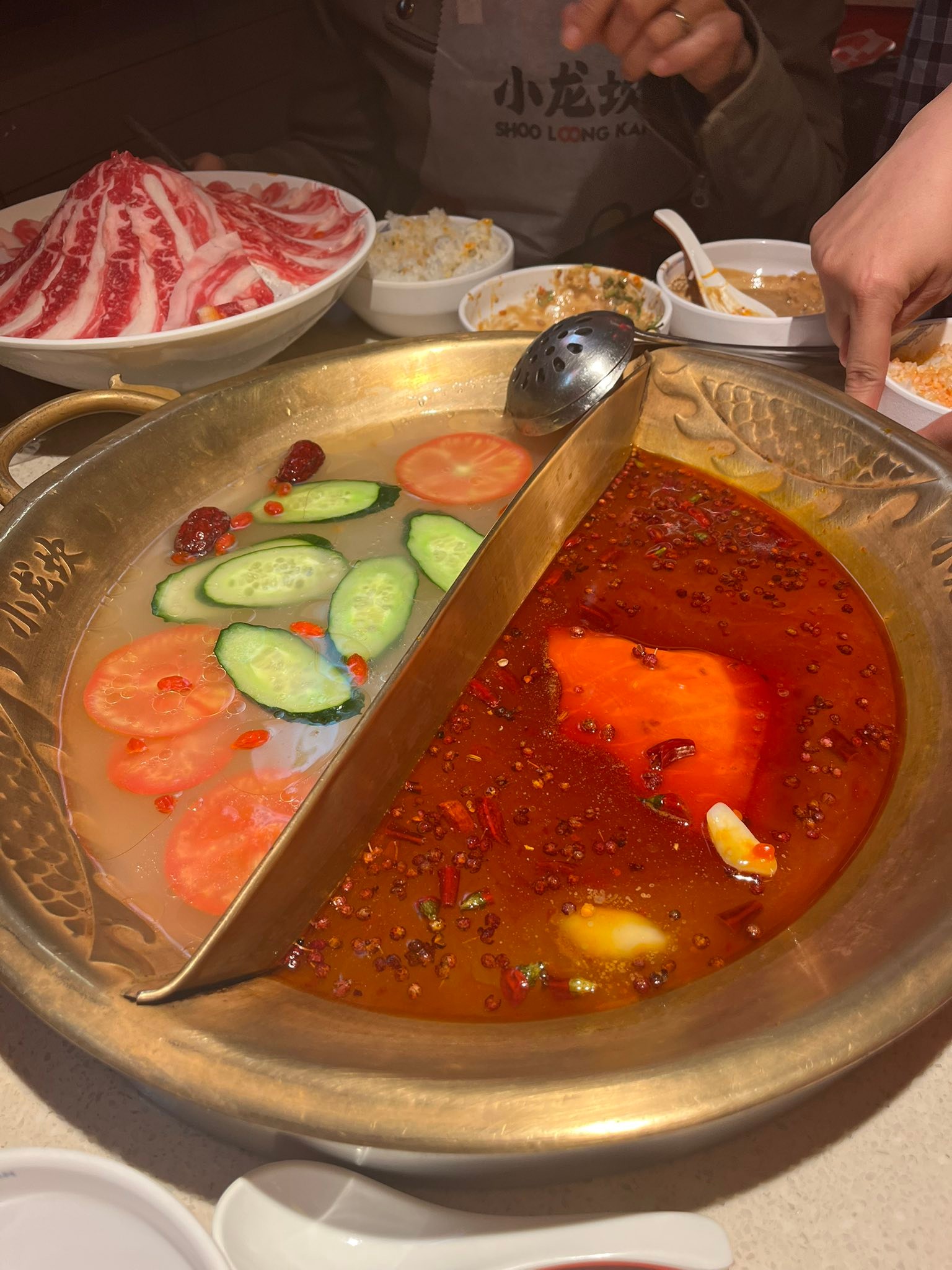
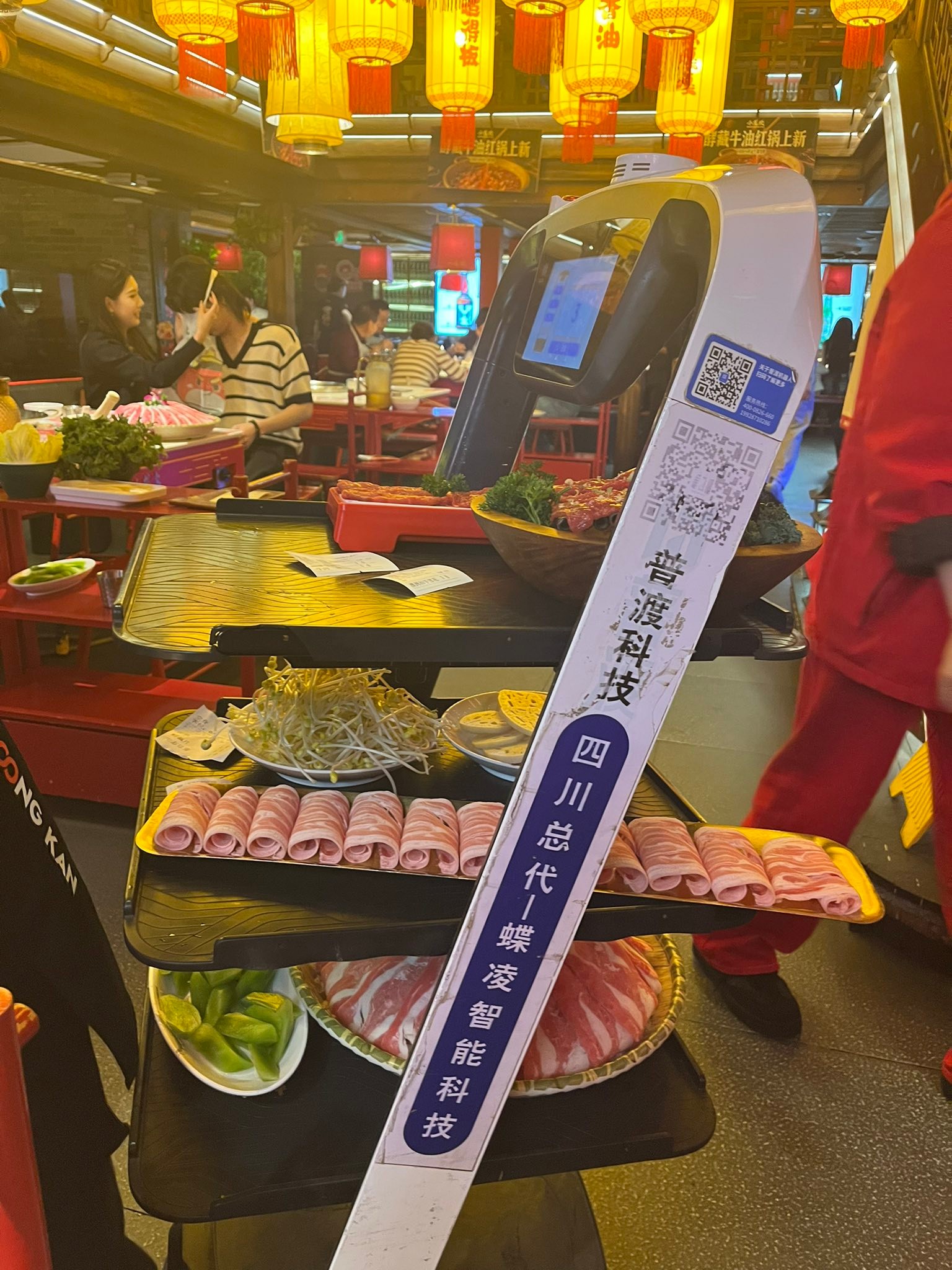
When in Chengdu, you have to have a hot pot dinner! I had read about this and wanted to try it. Funny story that we’ll never forget is that we sat down and attempted to order our meal with a phone app. The English translation wasn’t too good, so instead of ordering the meat to cook in the pot, we only order the pot. As we sat there and waited patiently for the meat to arrive, it never did. We finally were able to communicate with the staff (using apps like Google Translate) that we needed the meat too. Very funny experience it was!
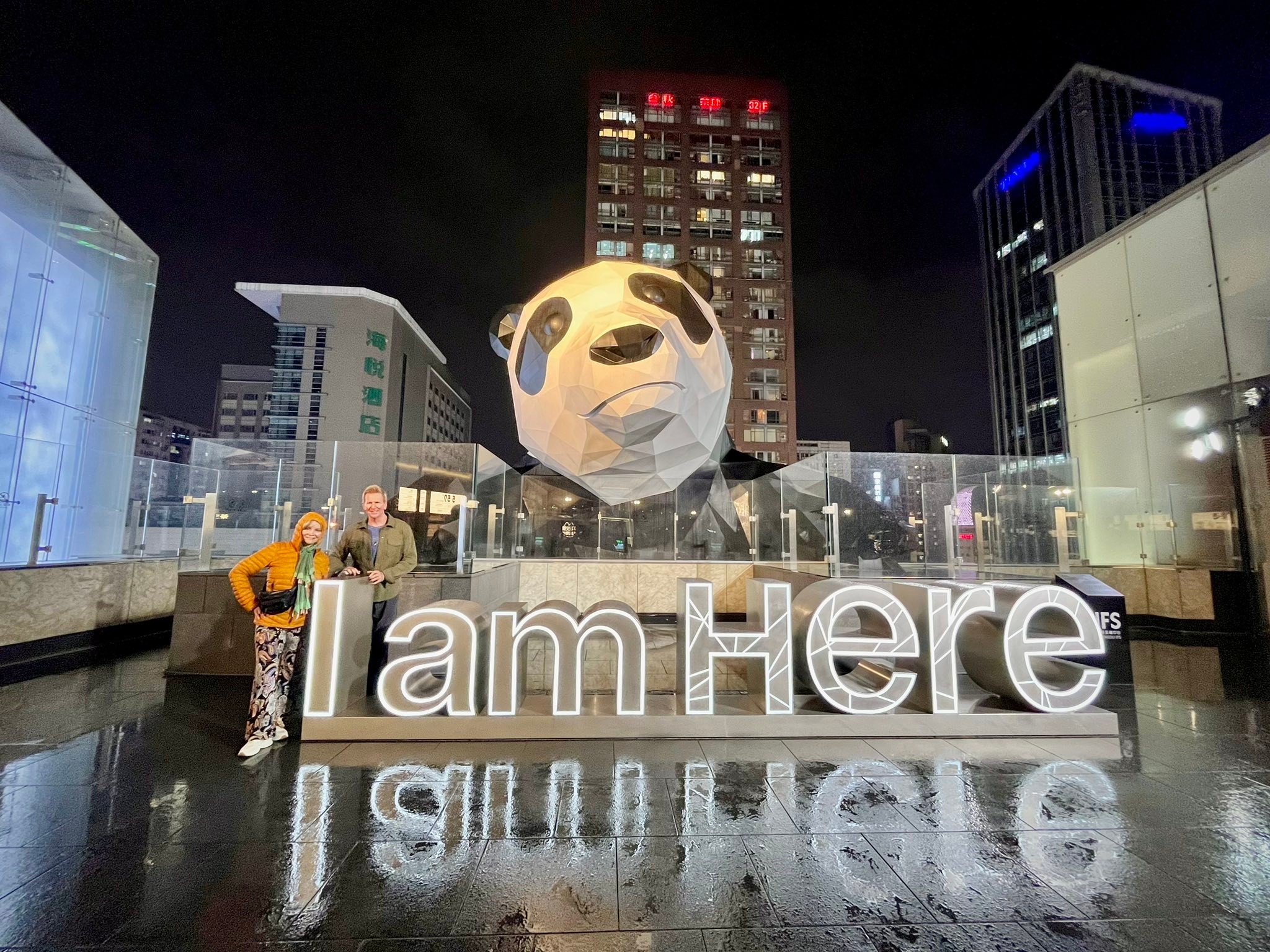
Near our hot pot restaurant was the famous panda on the side of a shopping center. We managed to find it and get a picture with the giant panda.
Chengdu Research Base of Giant Panda Breeding
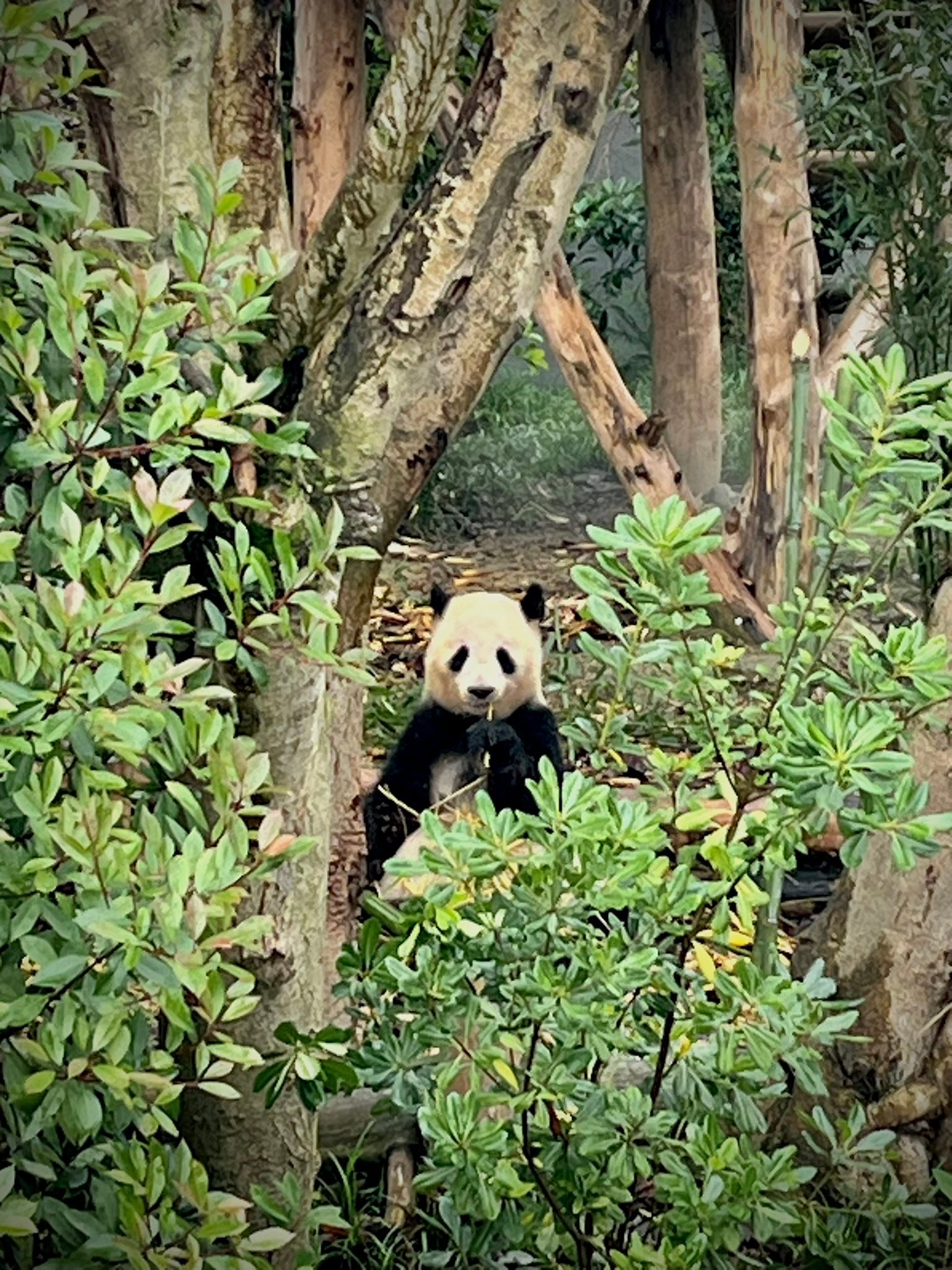
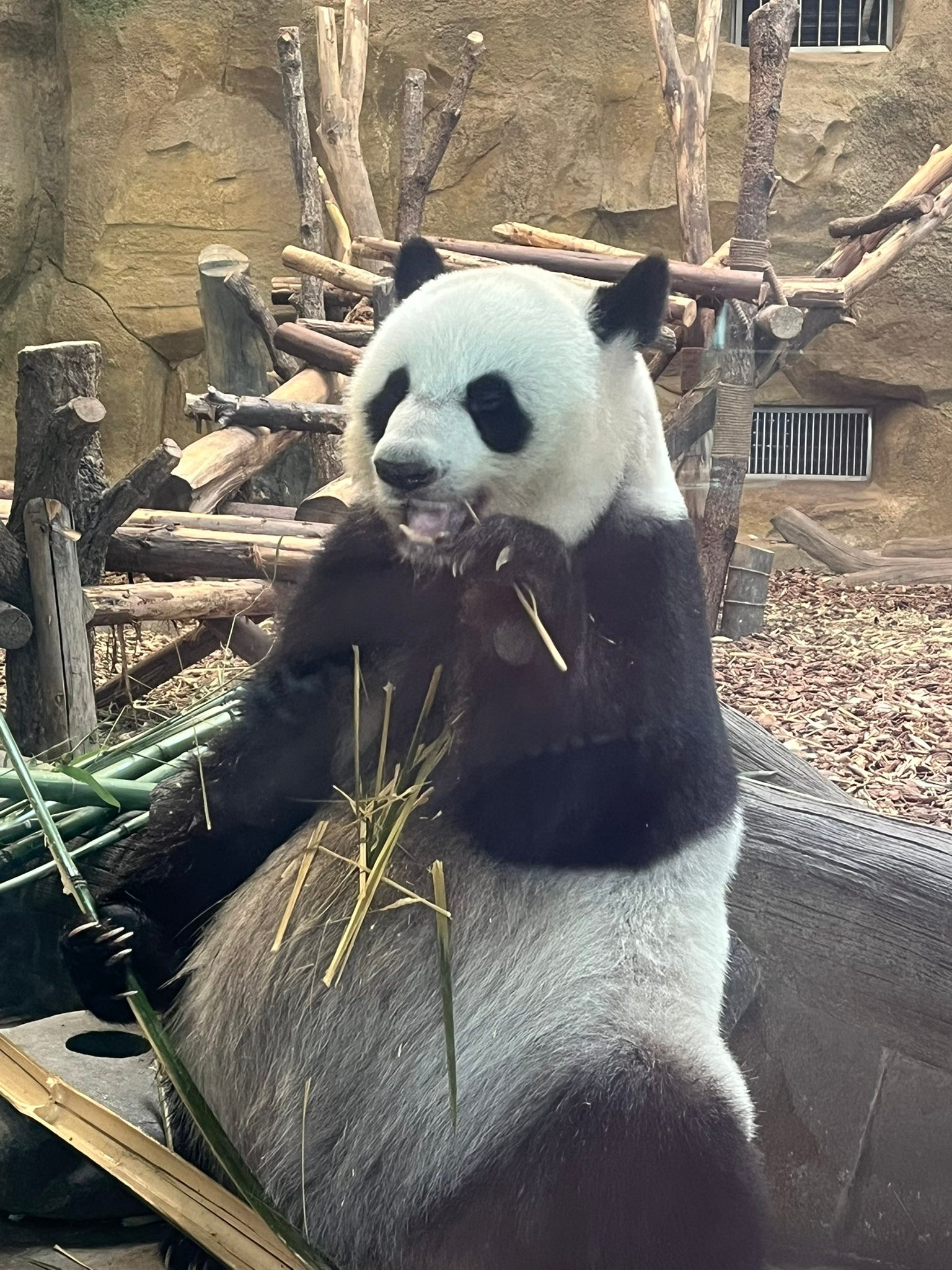
The next day we got to see the pandas! The research center was founded in 1987 starting with six pandas rescued from the wild. It is now a leading global center for captive breeding, conservation, and public education, housing over 200 giant pandas in environments that mimic their natural bamboo habitats.
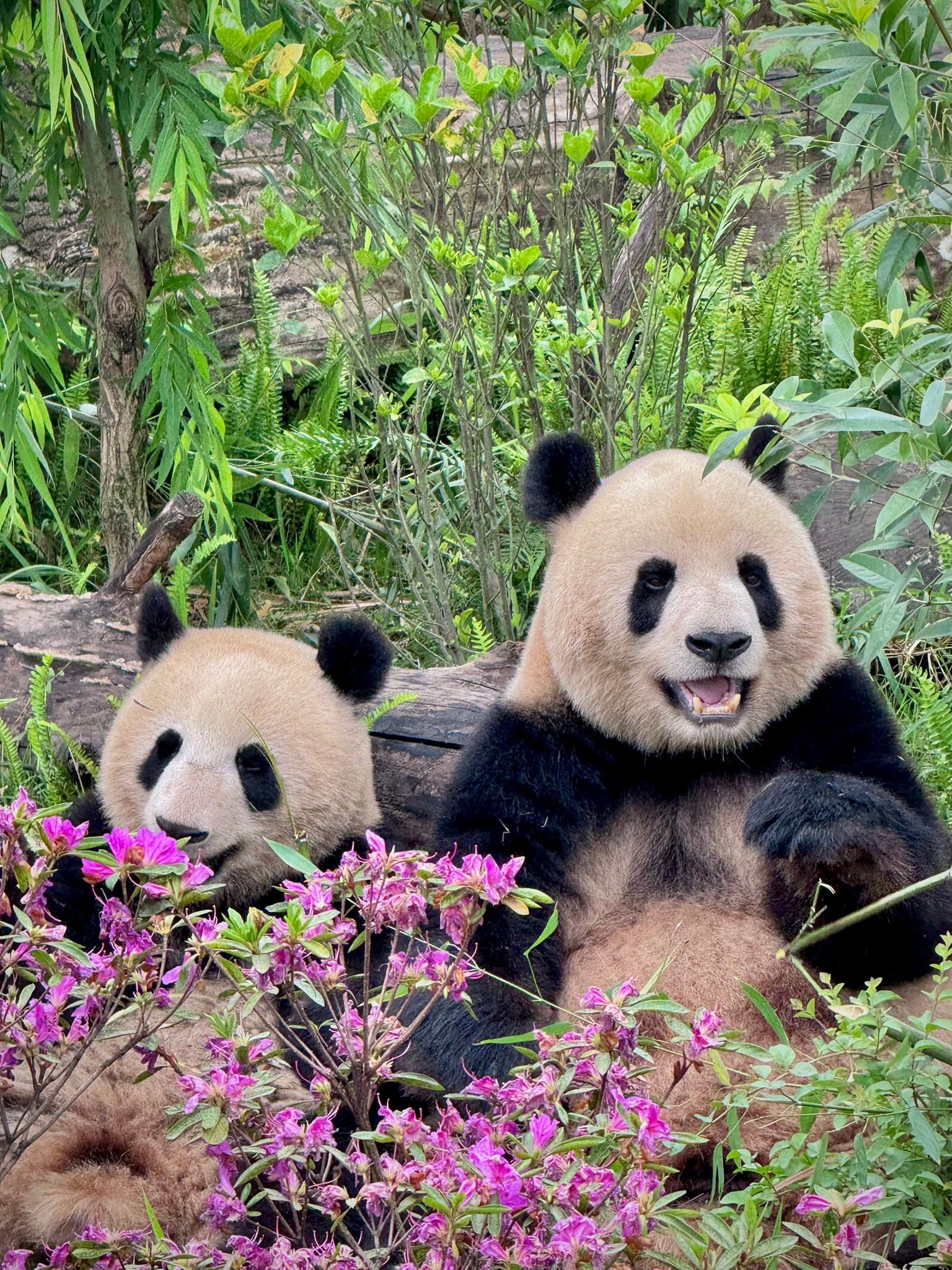
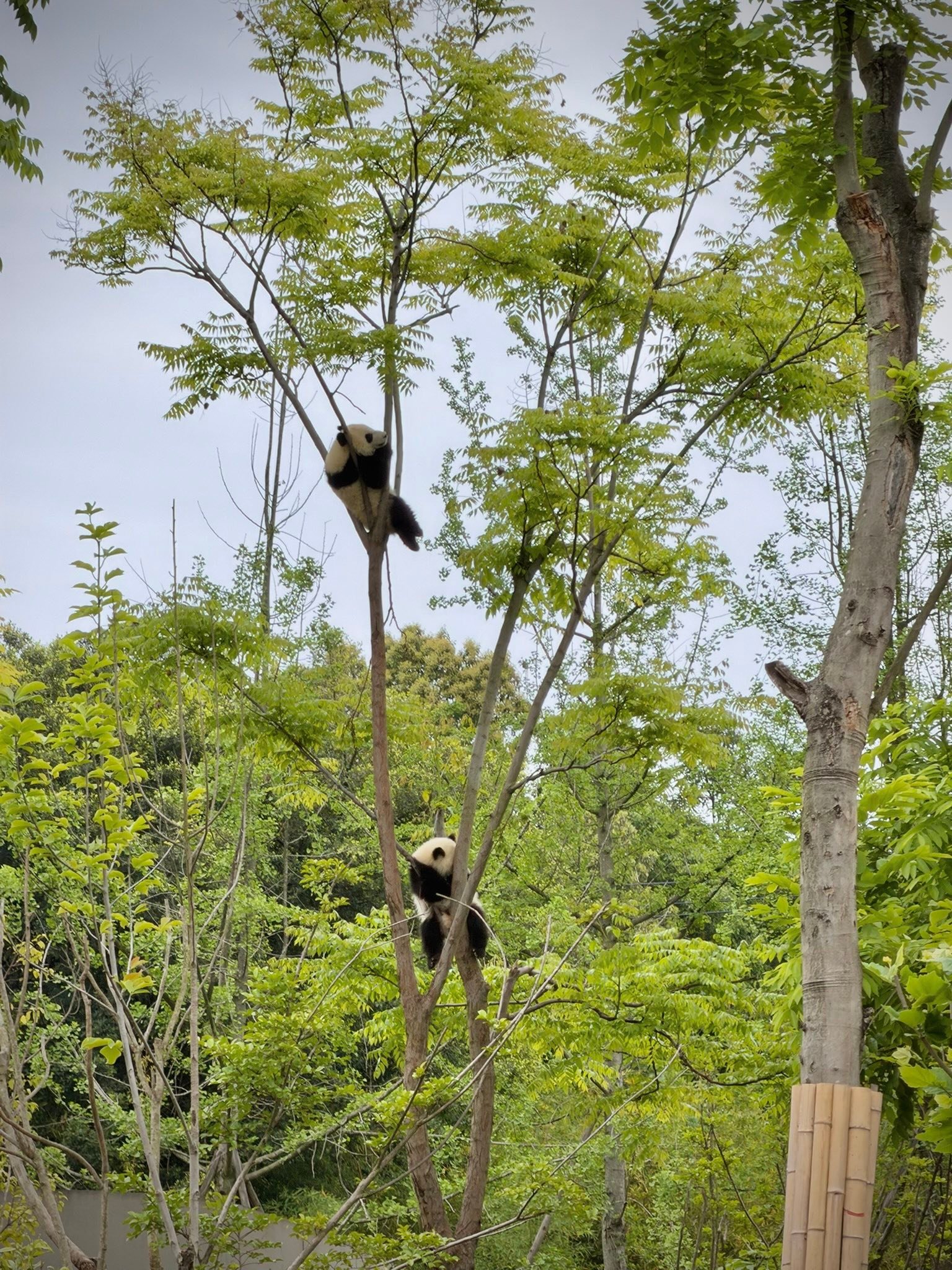
The area resembled a zoo but had many open pits to watch the pandas play and eat bamboo. Pandas spend 10 to 14 hours a day eating bamboo, consuming up to a third of their body weight daily. Next to the outdoor cages, there were signs giving information about each panda. We loved seeing the young pandas climb the trees.
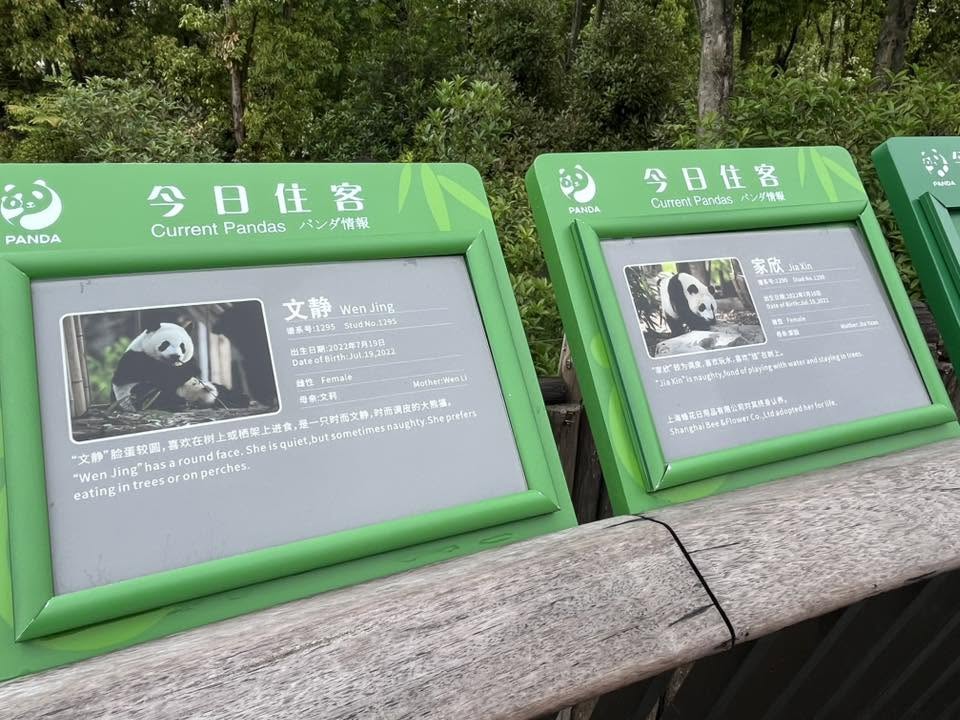
There were only 1,864 wild giant pandas in China by the end of 2013, distributed in isolated small populations. Captive breeding played a vital role in replenishing wild populations, managing genetic diversity and preventing inbreeding. China has achieved technical breakthroughs in maintaining near-zero inbreeding coefficients among captive populations, ensuring the health and genetic diversity of giant pandas.
Guilin
After our busy schedule and one overnight in Chengdu, we were on to Guilin via a 1.5-hour flight. We spent three nights total in Guilin with one night in between in the town of Yangshuo. I really enjoyed the area around Guilin as it reminded me of scenes from Vietnam.
Huangluo Yao Village
Included in our itinerary was a visit to the Huangluo Yao Village in Guangxi, an ancient settlement of the Red Yao ethnic minority group, famous as the “World’s Longest Hair Village”. Red Yao women preserve a centuries-old tradition where they cut their hair only once in their lifetime at age 18, letting it grow up to 7 feet long as a symbol of longevity, wealth, and good fortune.
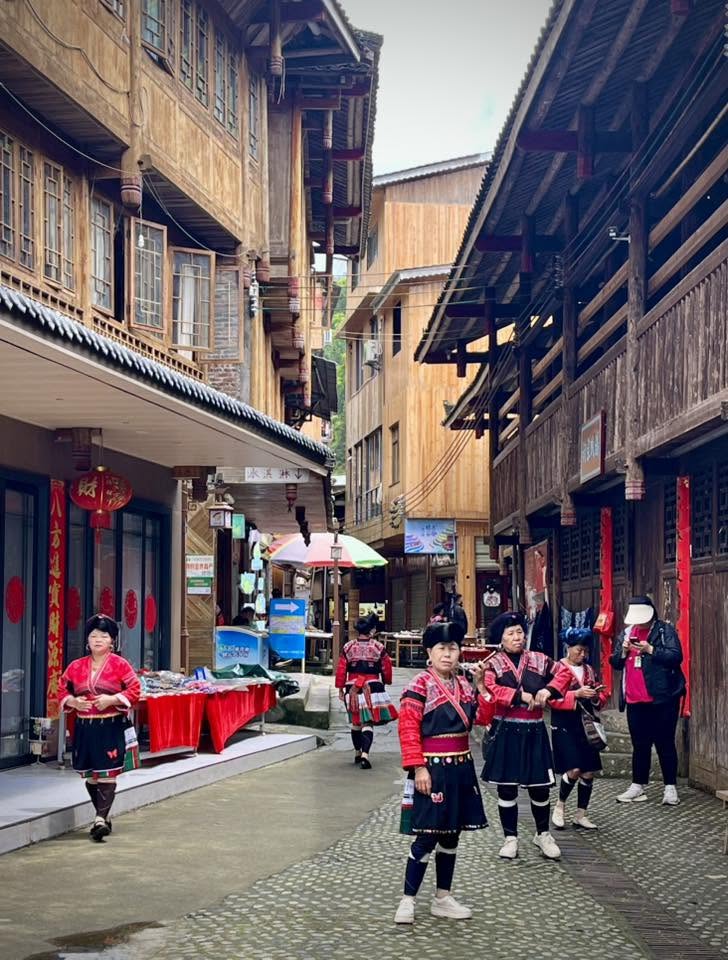
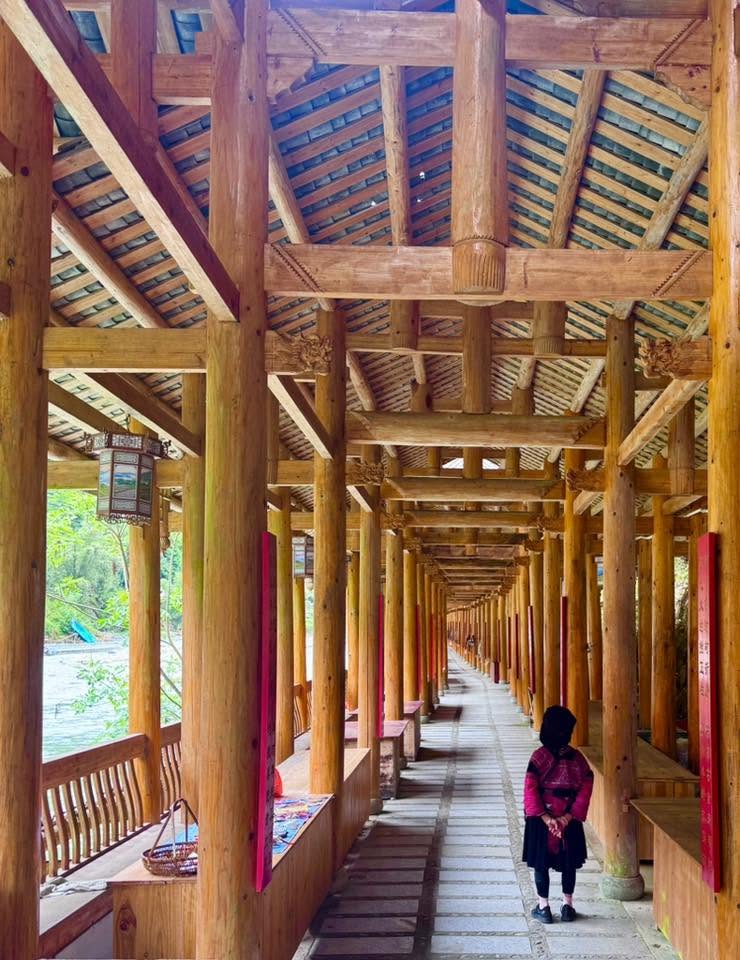
We watched an entertaining show that demonstrated their tradition of letting their hair grow very long. It was quite interesting to learn about this custom, only in this part of China.
Longji (Dragon’s Backbone) Rice Terraces
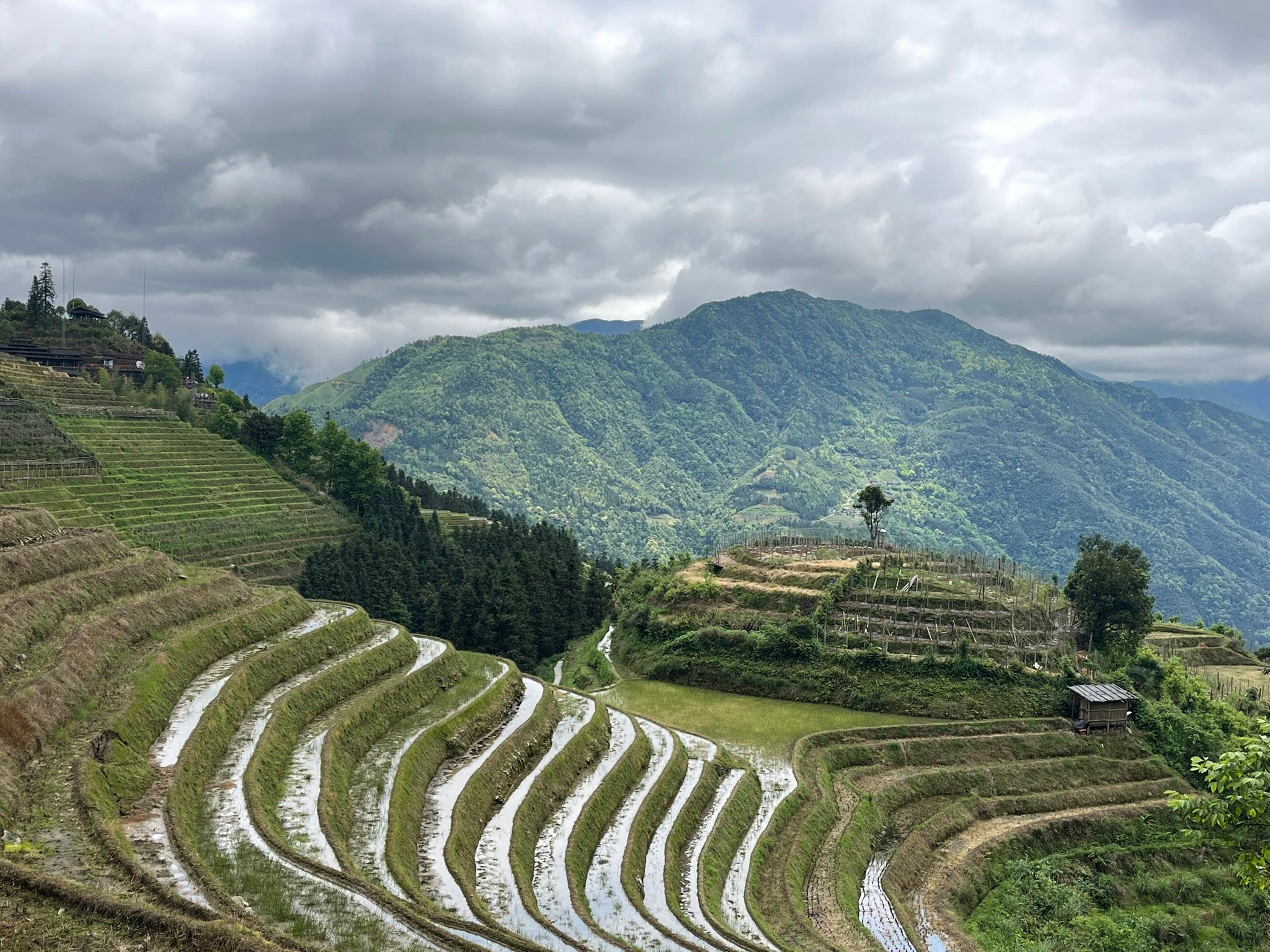
Longji Rice Terraces are one of the most impressive manmade wonders in China. Viewed from the top of the mountains, they look like a dragon’s ribs protruding from the steep mountainsides. The terraces cover an area of 66 square kilometers (25 square miles). They were built 600 years ago by local minority people.
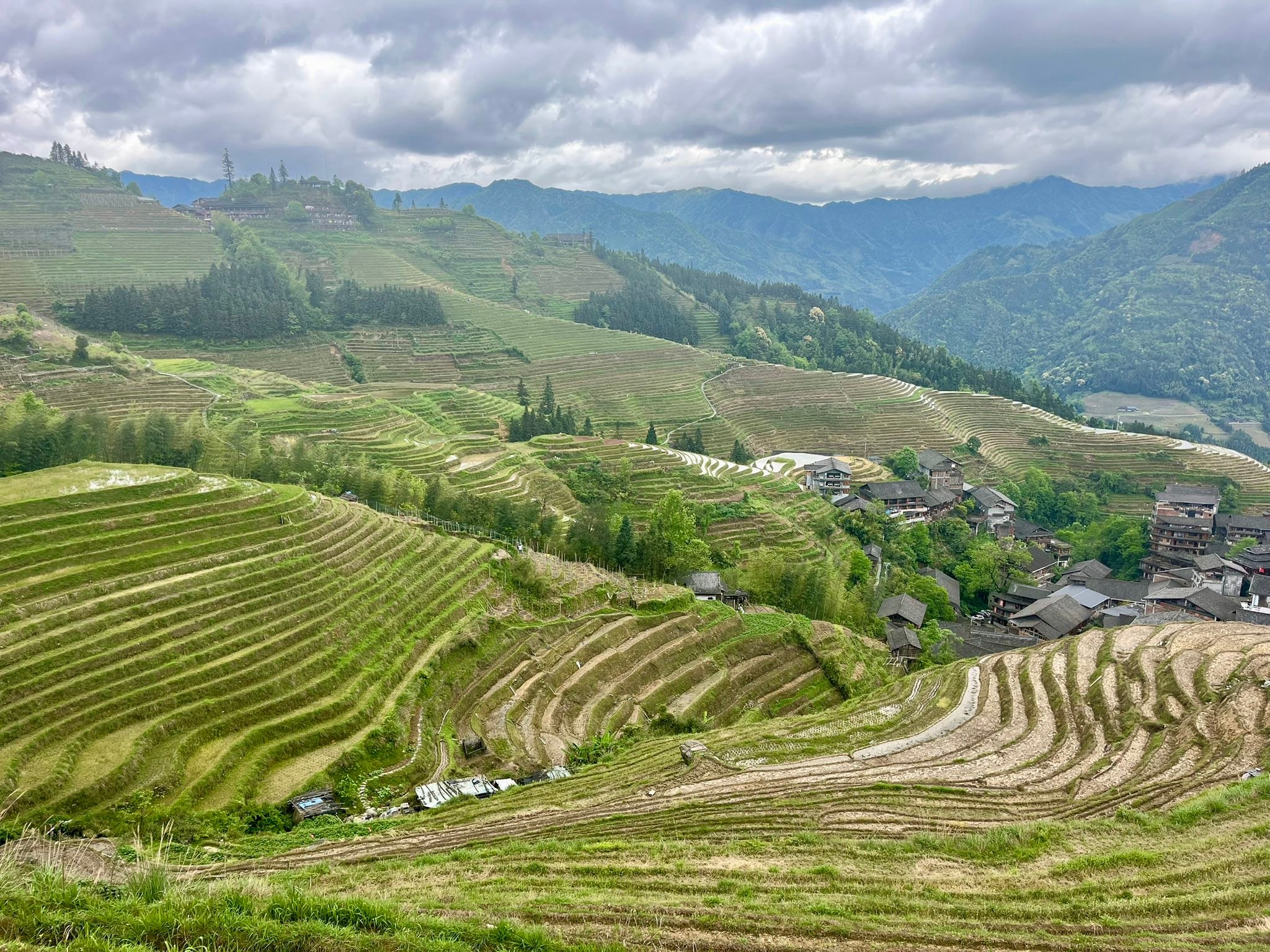
We took a nice long walk around the terraces and through the surrounding forests. It was another beautiful area to discover!
Guilin to Yangshuo on the Li River
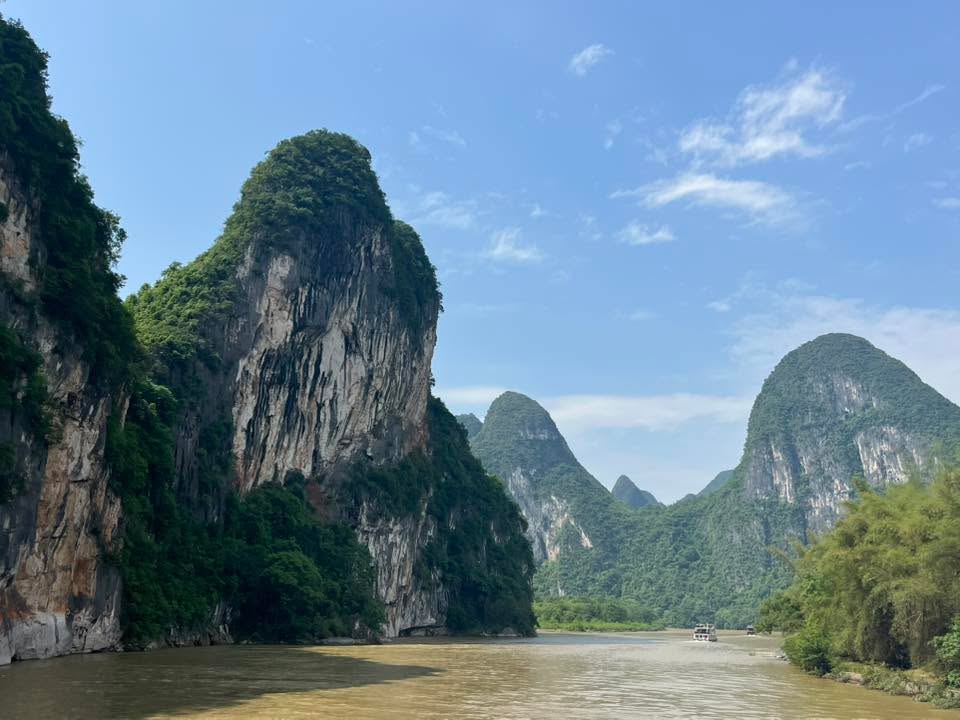
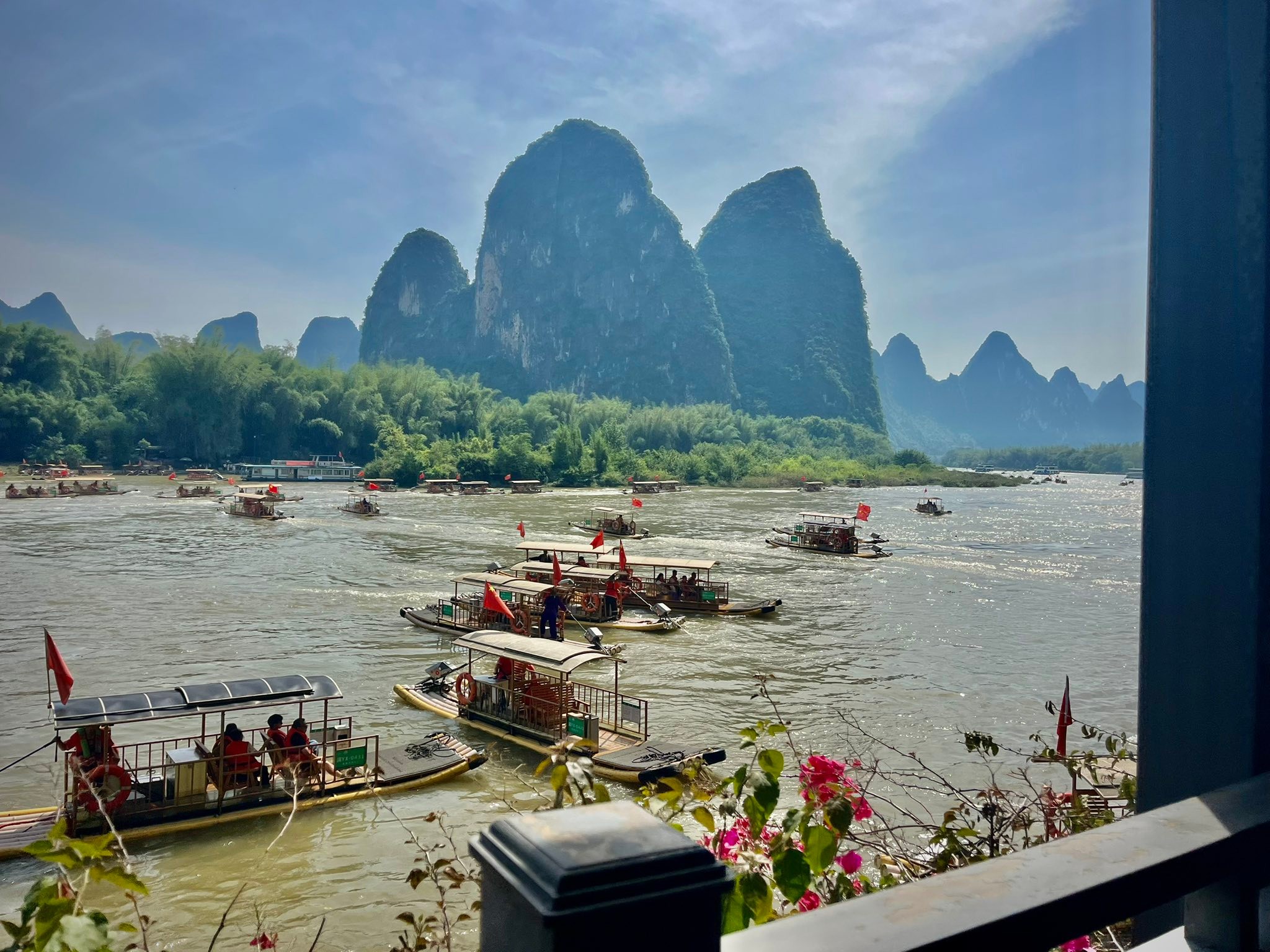
The Li River, the crown jewel of Guilin’s landscape, is a must-visit attraction for every traveler to Guilin. Along its 3-hour, 83-kilometer stretch from Guilin to Yangshuo, the Yangdi to Xingping section offers the most spectacular scenery, passing iconic landmarks like Nine-Horse Fresco Hill and Yellow Cloth Shoal (featured on China’s 20-yuan banknote).
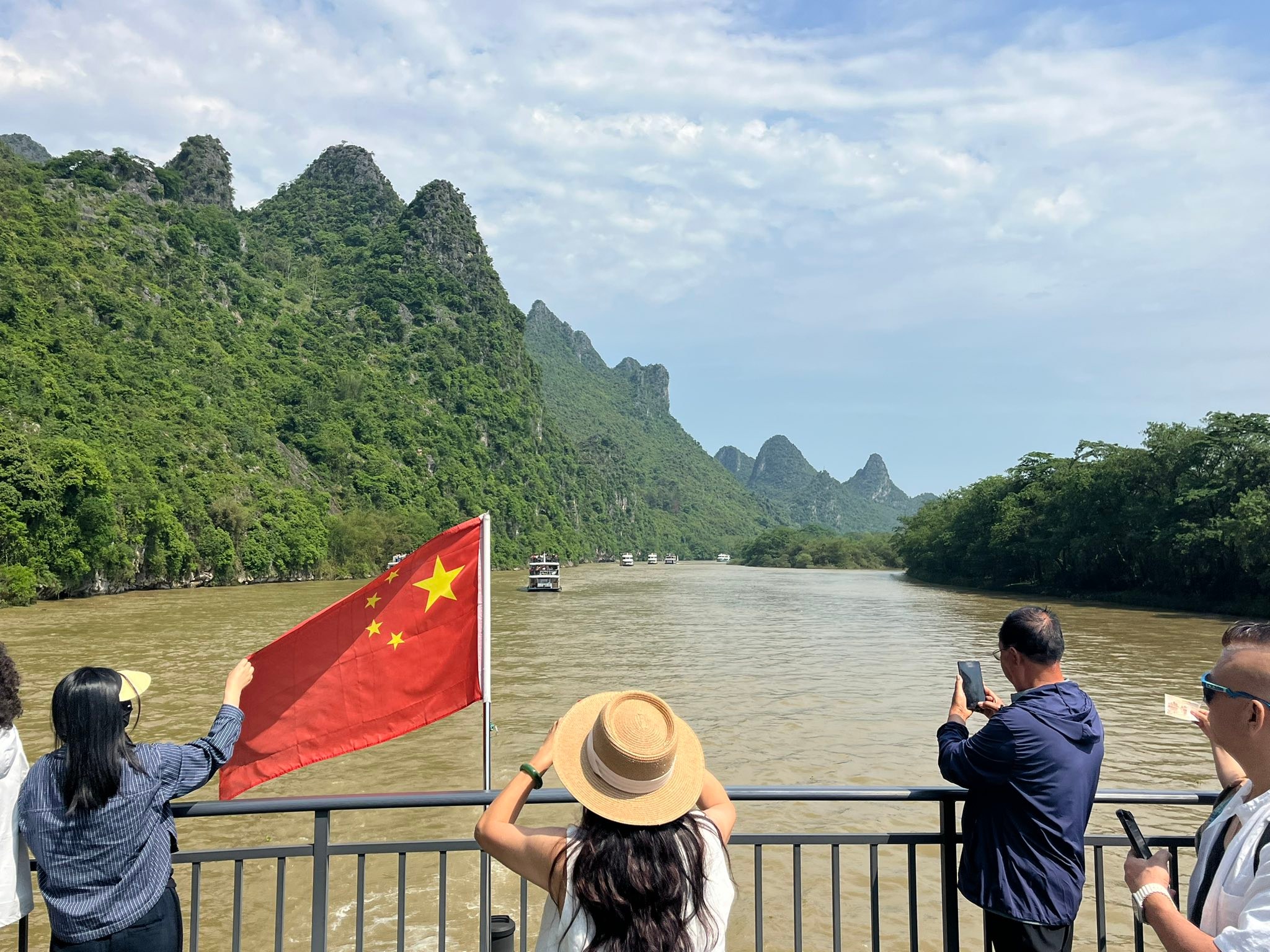
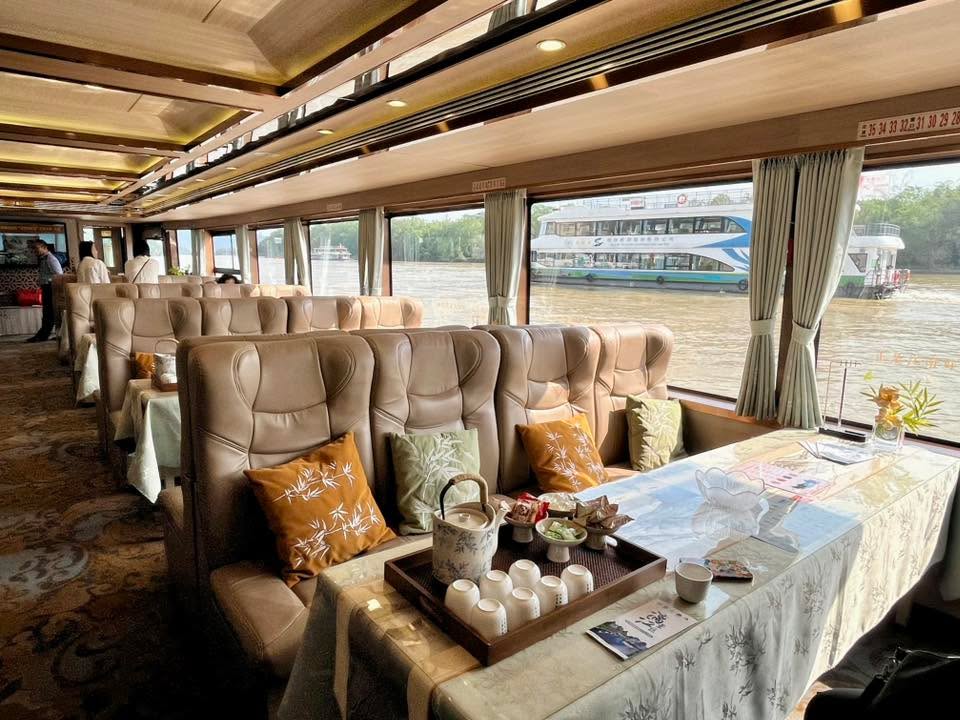
I was amazed at how nice the boat was. We had very comfortable seats and a picnic lunch they provided. There were many tourist boats like ours going down the river. It was very scenic with mountains all around.
Yangshuo Town
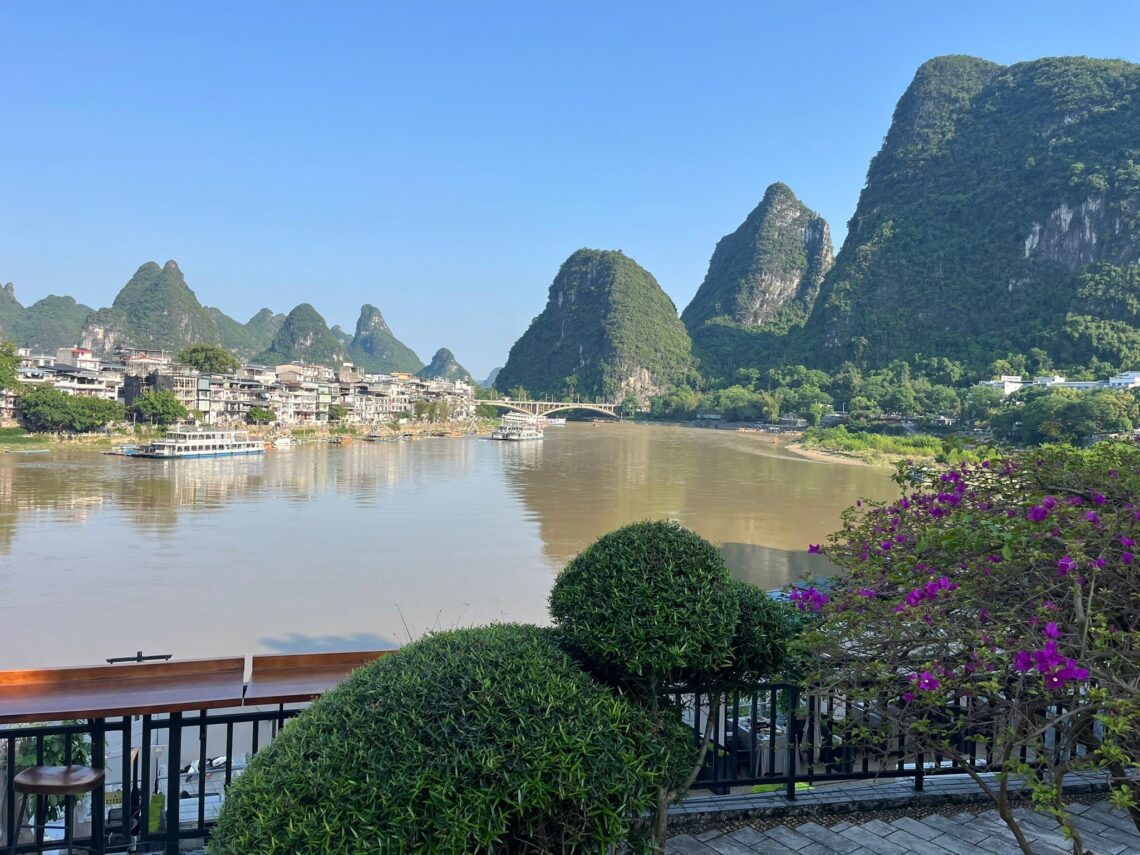
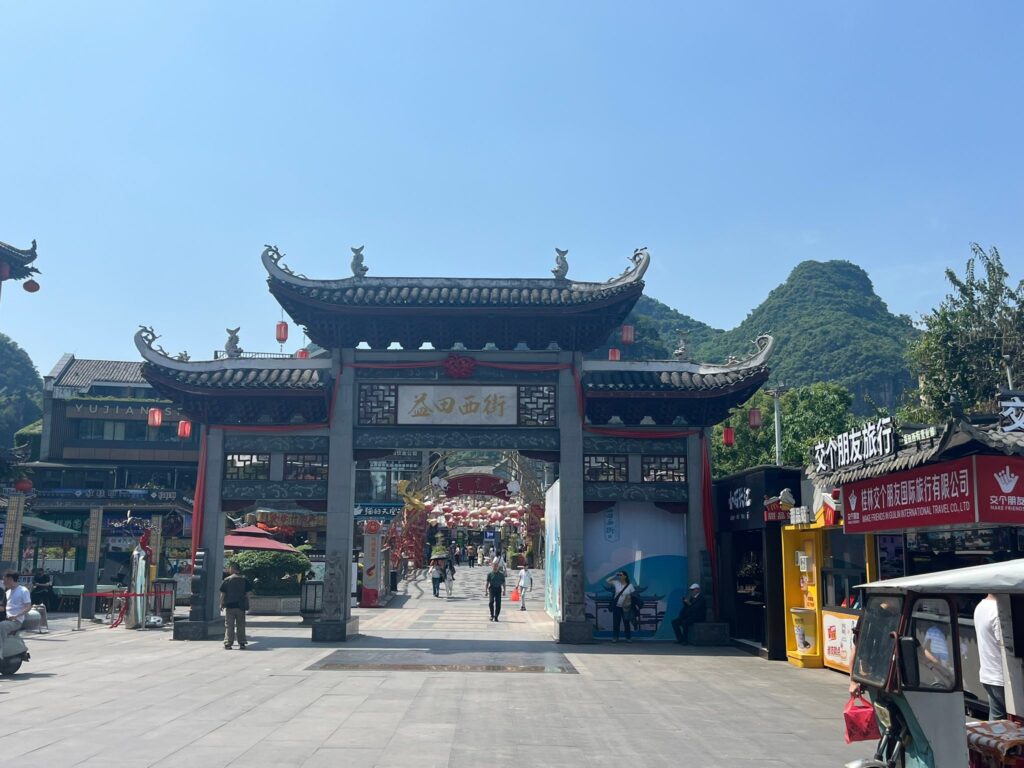
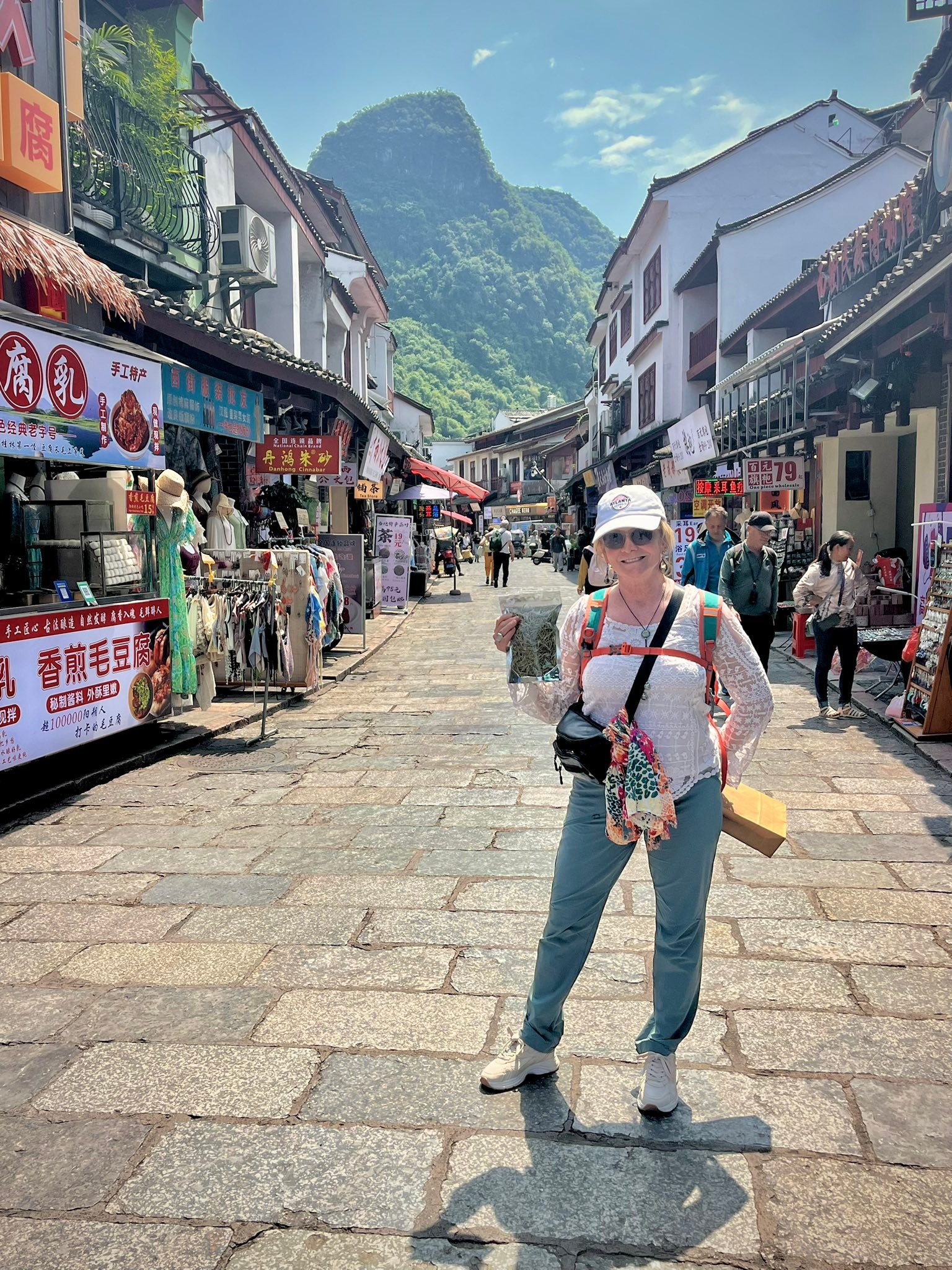
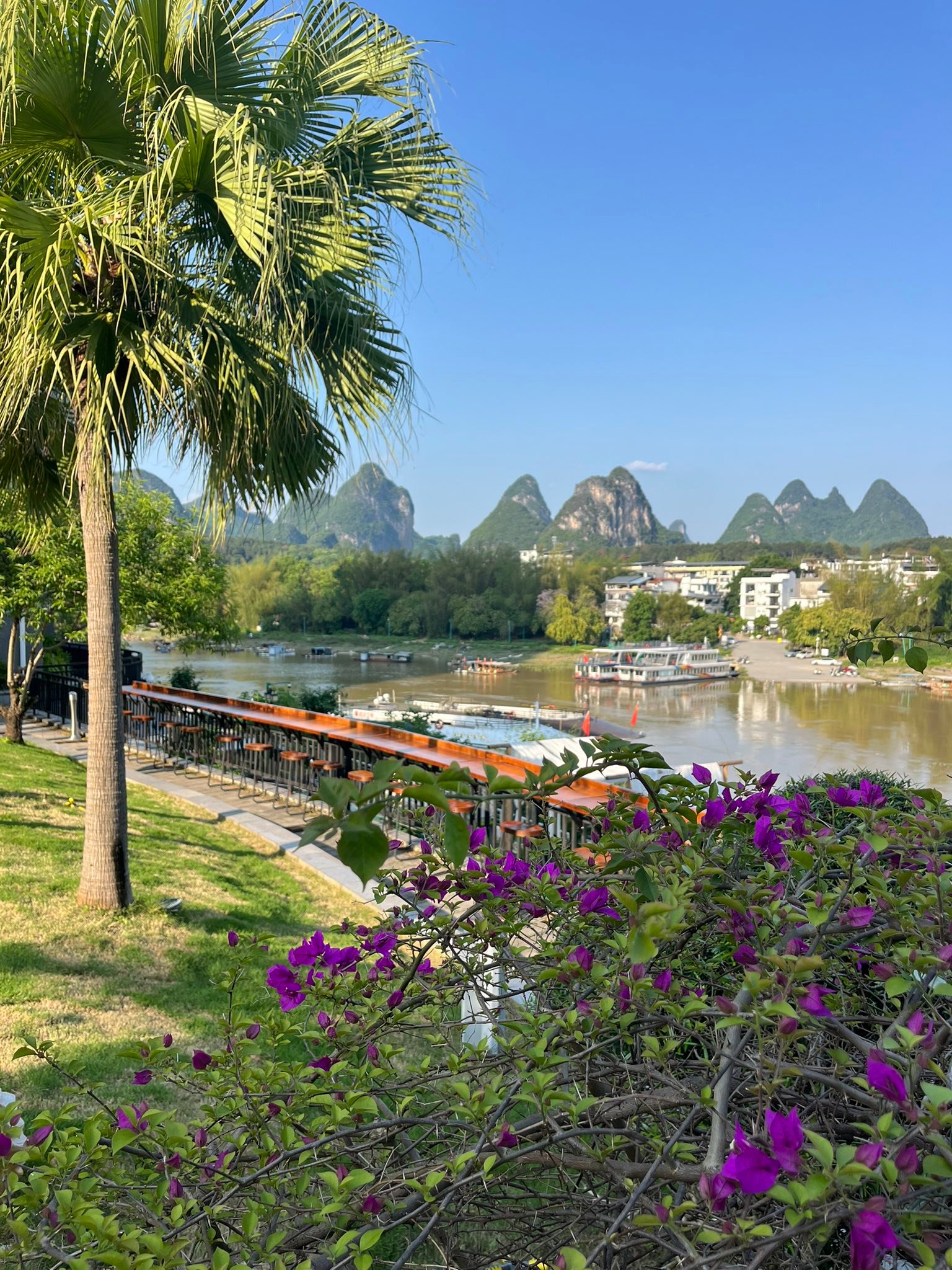
When we got off the 3-hour cruise, we walked through the touristic town of Yangshuo. Our hotel for the night was very nice, situated next to the river. When we arrived, our hotel wasn’t ready yet so the four of us decided to get massages. We were given pajama shorts and shirts and then all laid down next to each other while were all massaged. It was a very odd experience but fun.
Impression Sanjie Liu Show
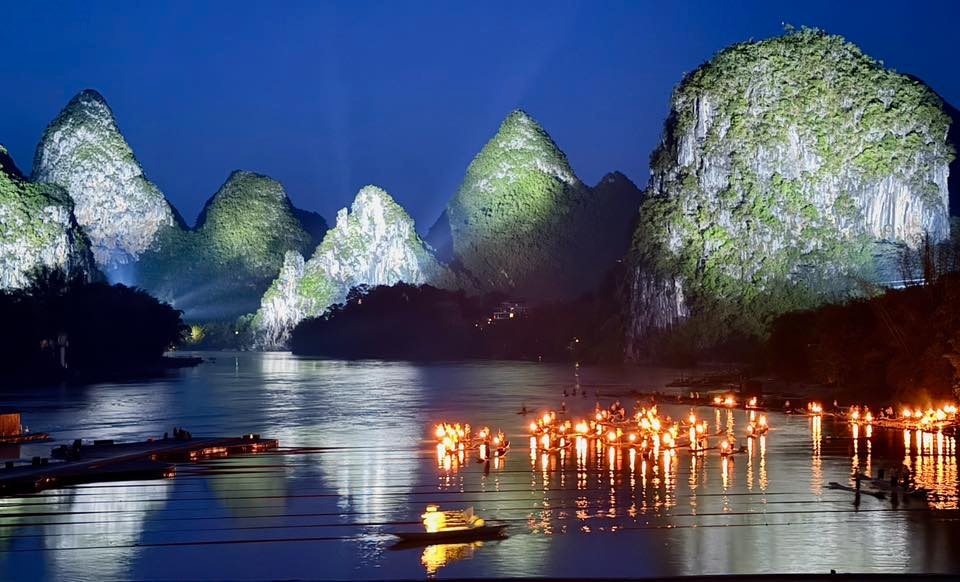
That night we had tickets to see the special show in this town. The Impression Sanjie Liu show is a spectacular, large-scale, open-air night performance directed by Zhang Yimou, one of the most notable Chinese film directors, who had also directed the 2008 Beijing Olympic Games Opening Ceremony. Set on the Li River with twelve illuminated karst peaks as a backdrop, it features over 600 performers, highlighting local minority cultures, folk songs, and the “San Jie Liu” legend.
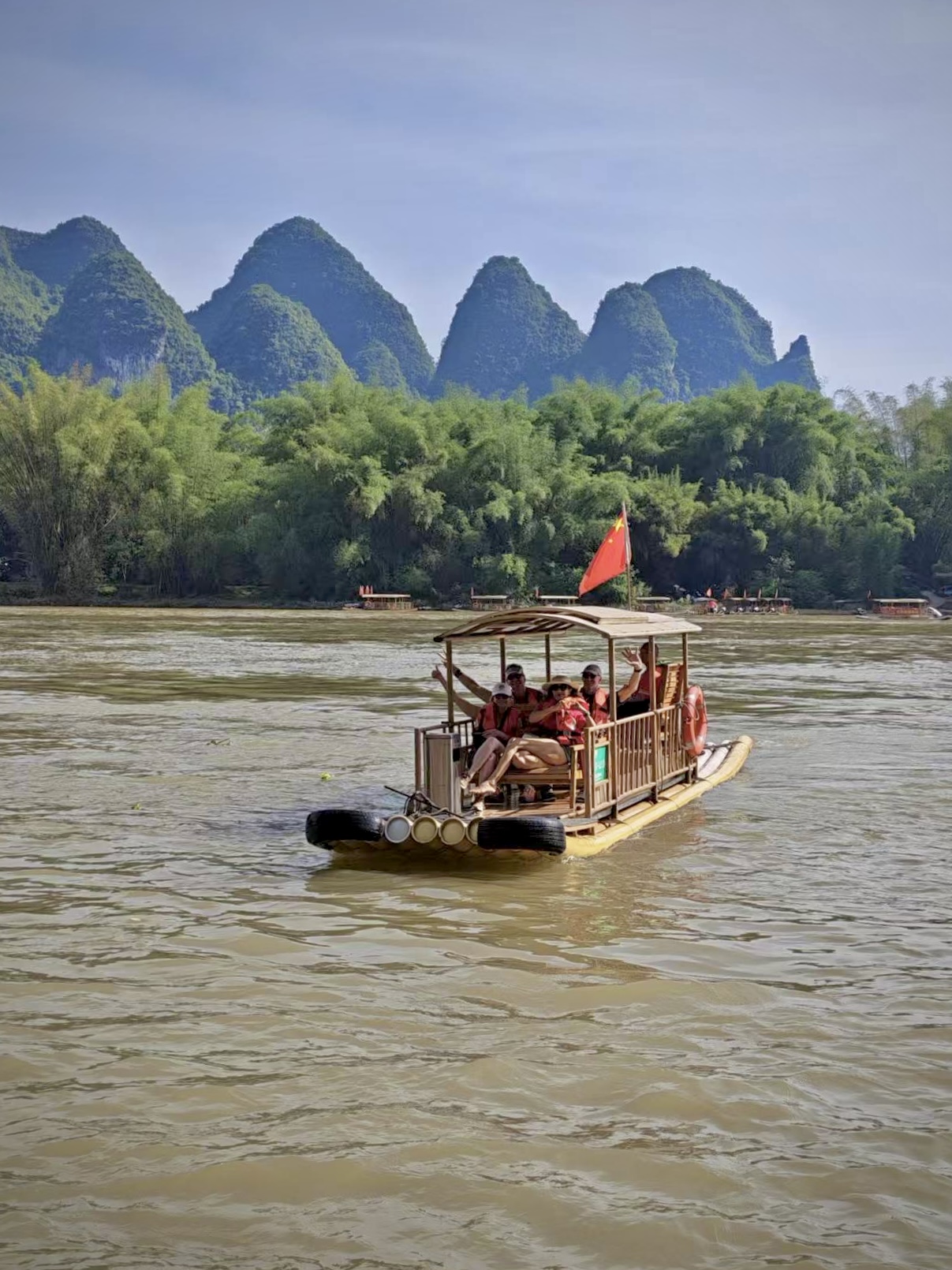
Bamboo Rafting on the Yulong River
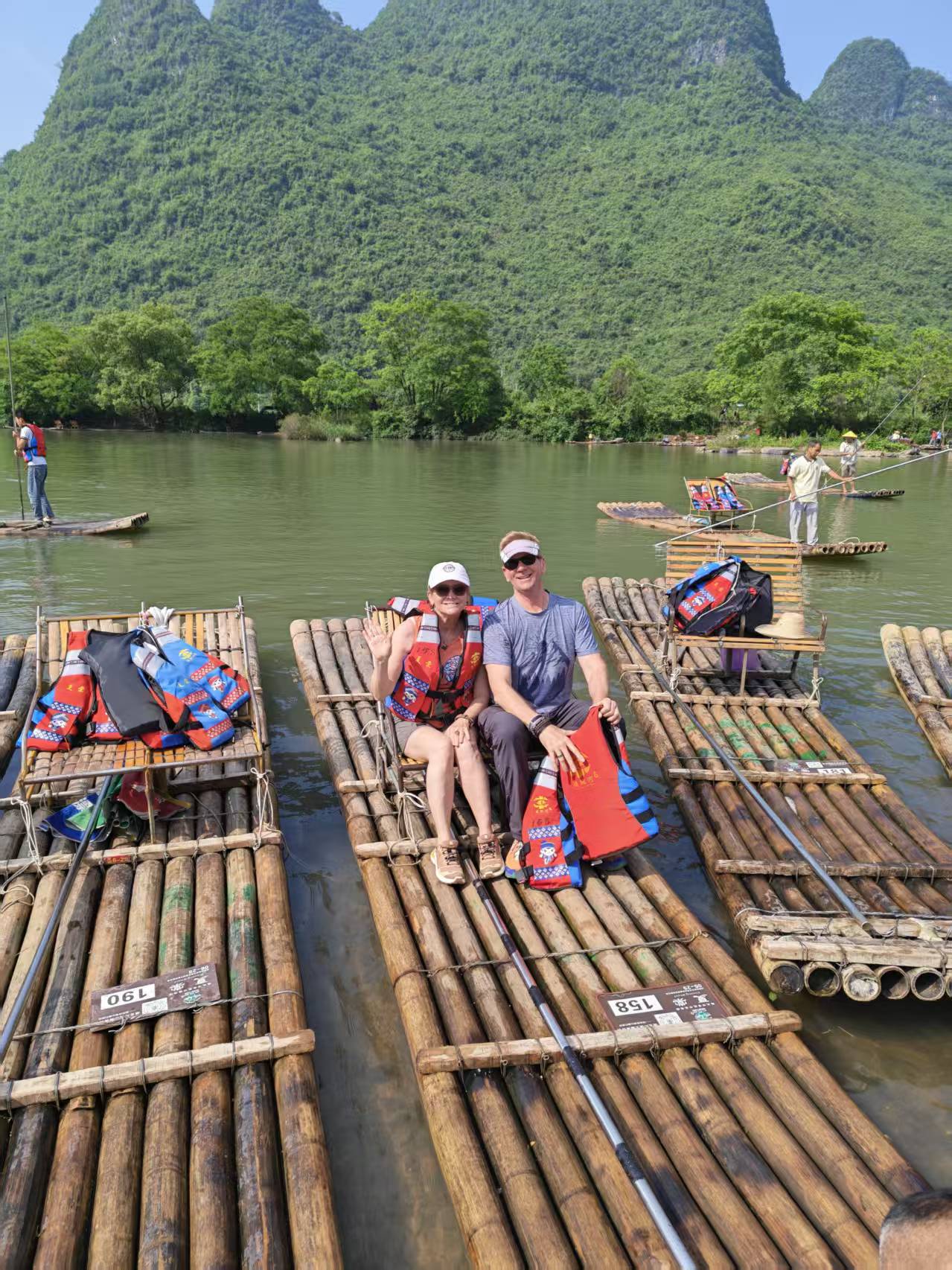
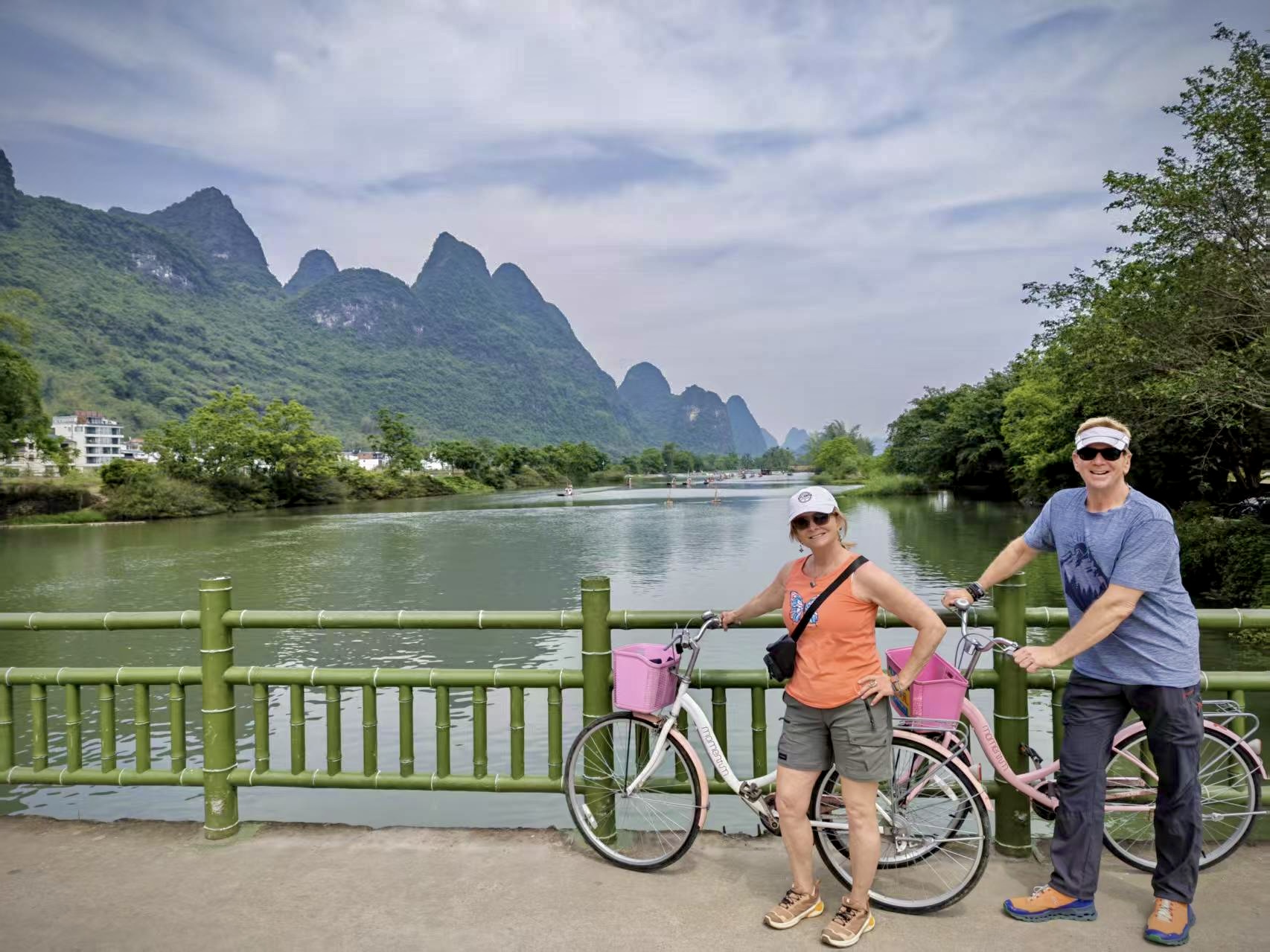
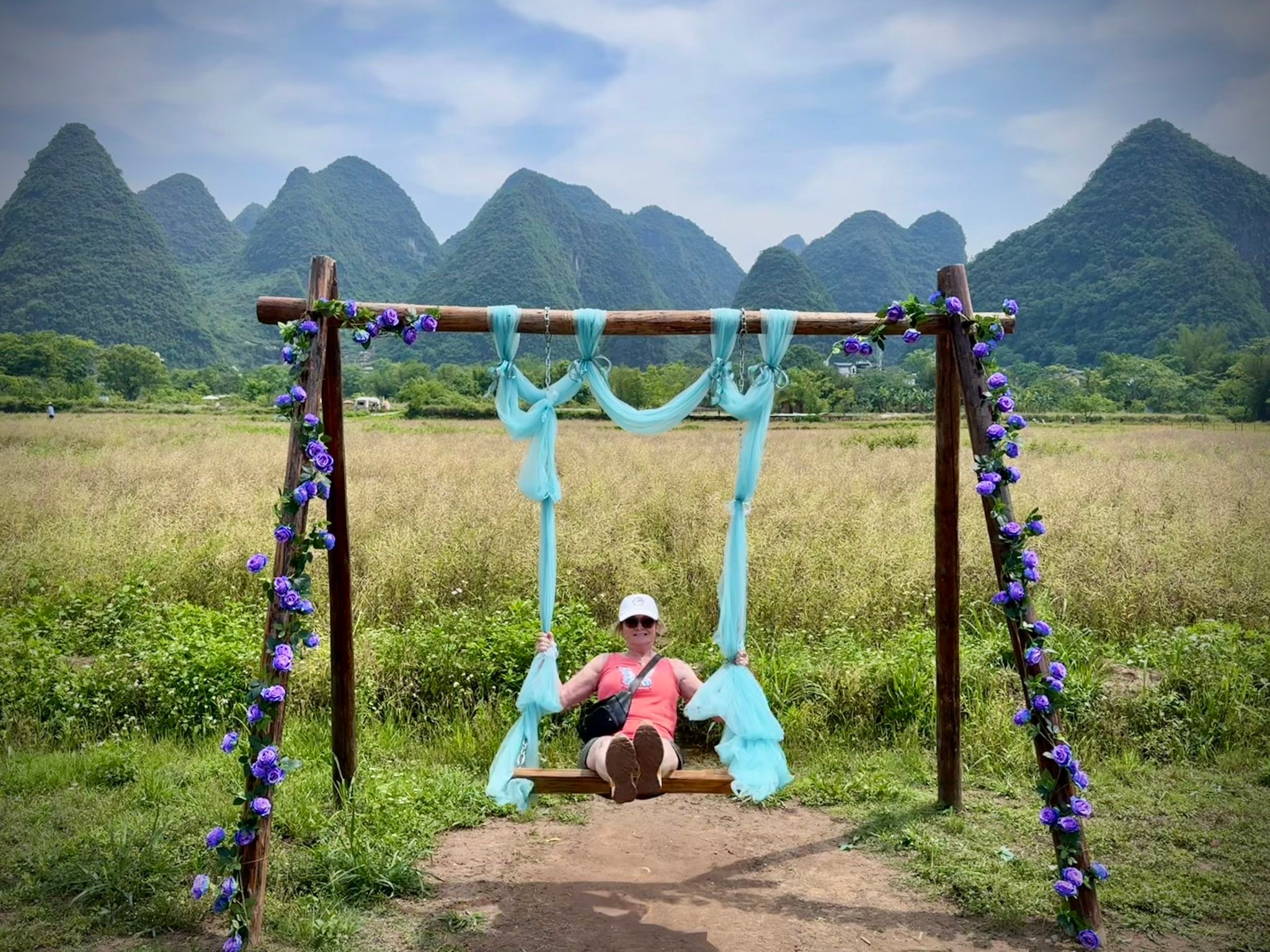
On the next day, we had an active schedule with two different kinds of rafting on the river and an easy bike ride through the countryside.
Biking along the Yulong River
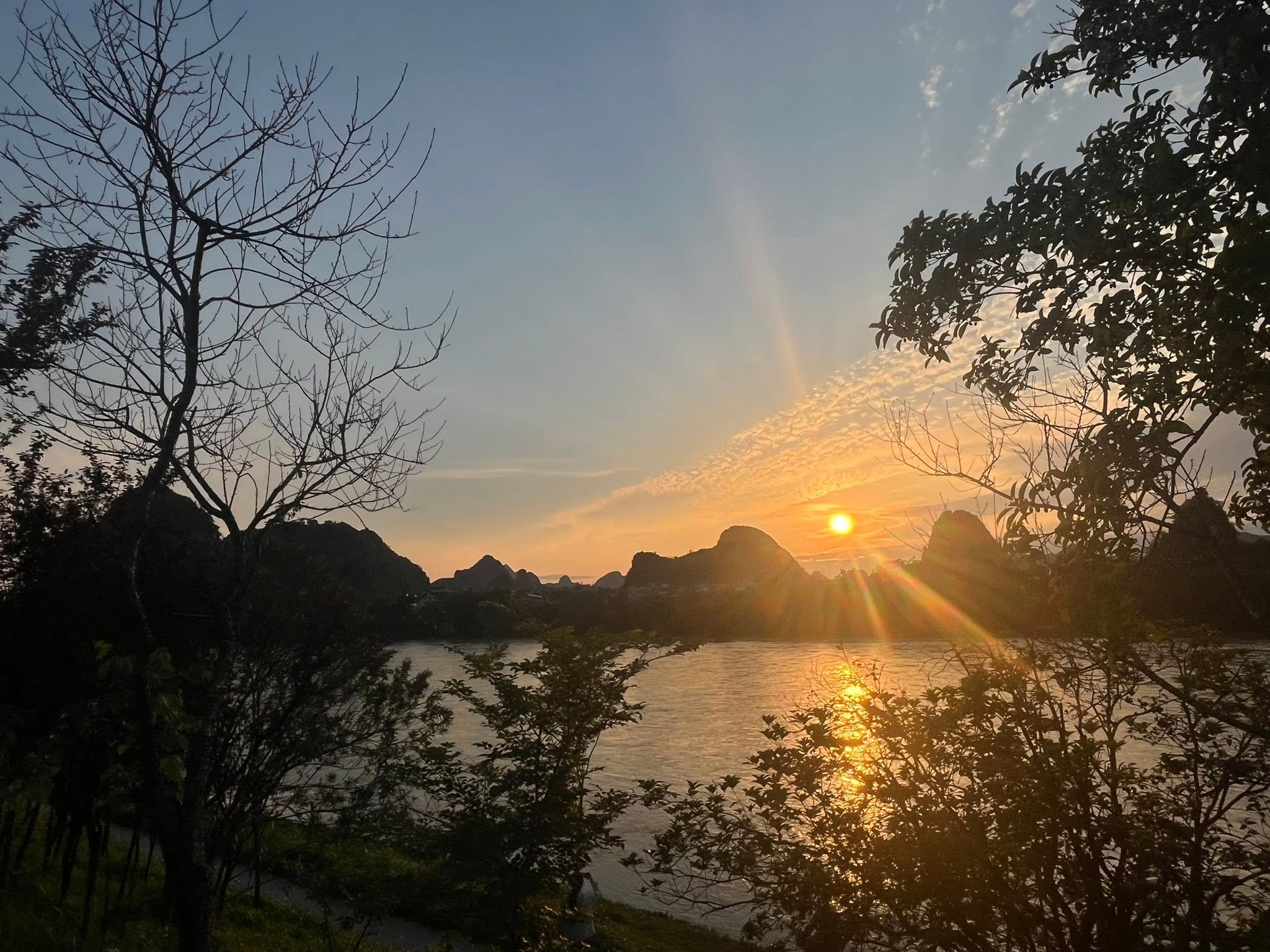
Guilin by Night
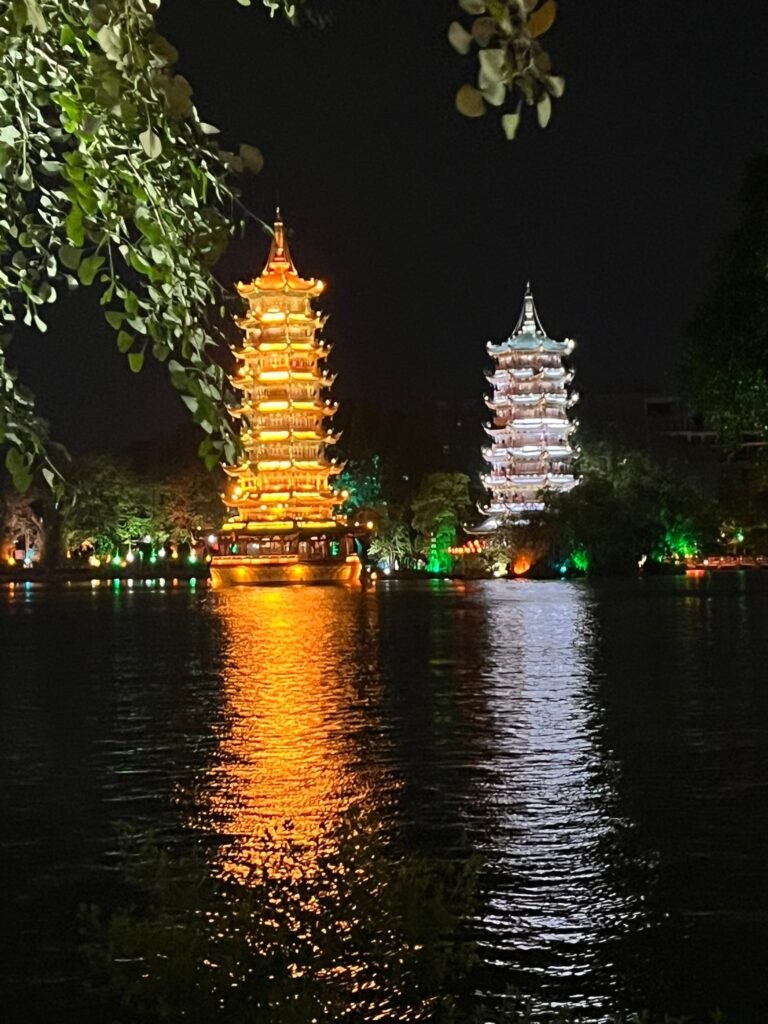
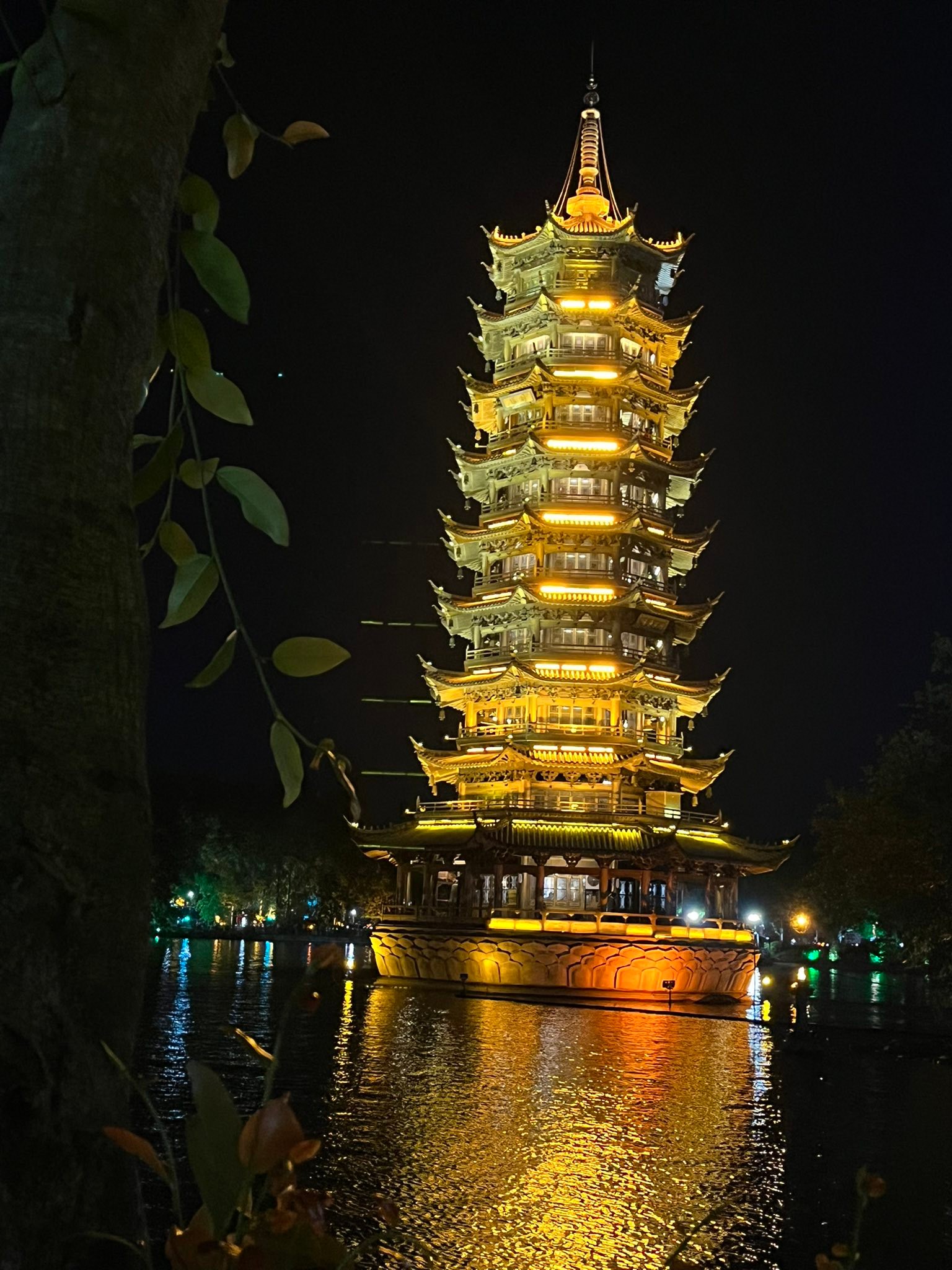
Back to Guilin from Yangshuo, we asked our guide to organize a boat cruise at night. This town really puts on a light show on its river and lakes. It was beautiful to see all the lights and especially the pagodas.
The Sun and Moon Pagodas (or Sun and Moon Twin Towers) are iconic architectural landmarks standing in the waters of Shanhu Lake (Fir Lake) in downtown Guilin. They are the central highlight of the city’s famous Two Rivers and Four Lakes Scenic Area. The Sun Pagoda stands at 41 meters tall with 9 stories, it is recognized as the world’s tallest copper pagoda and one of the few in the world equipped with an elevator. The Moon Pagoda stands at 35 meters tall with 7 stories and is finished with glazed tiles and marble.
Elephant Trunk Hill Park and Love Island
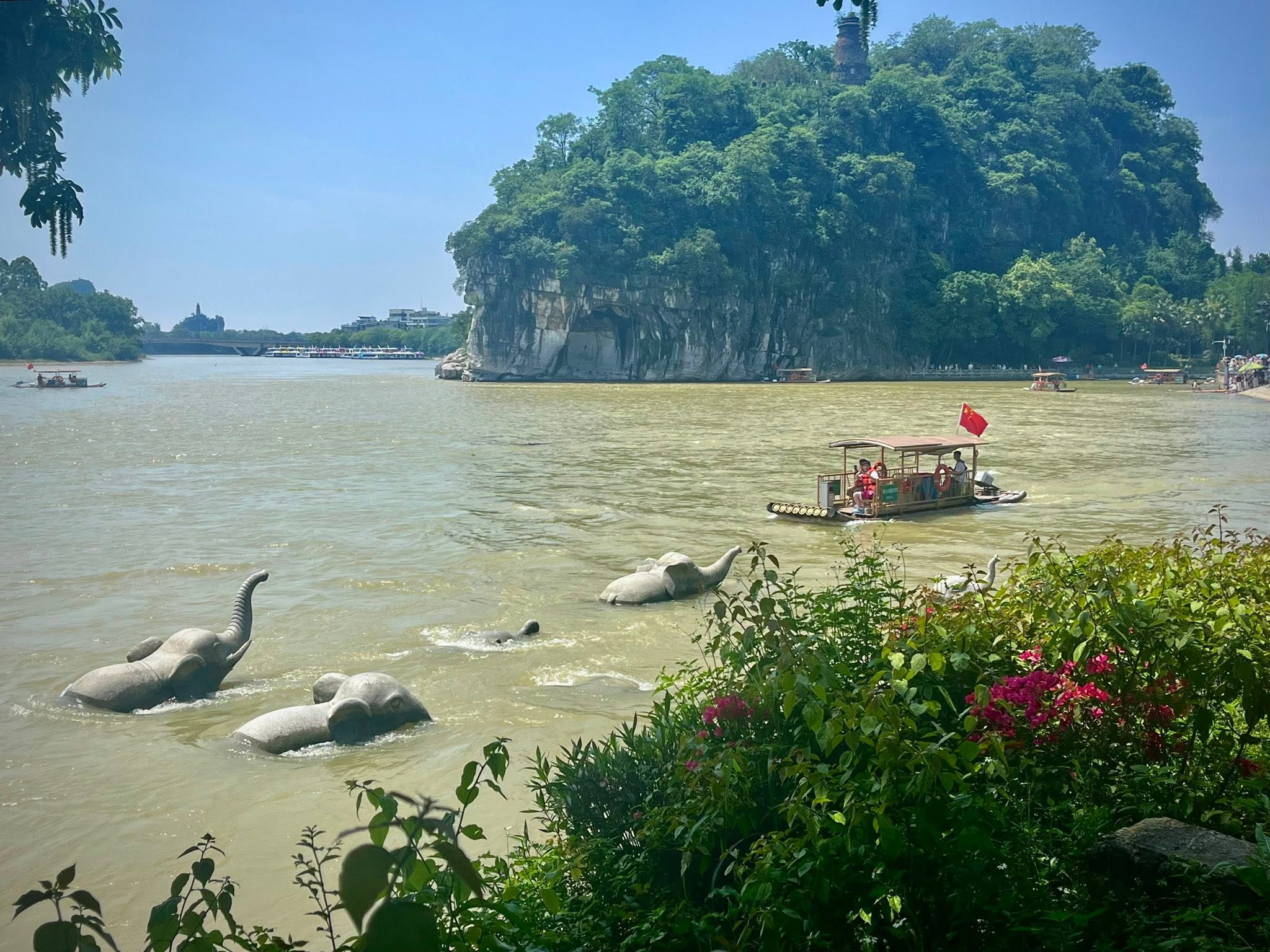
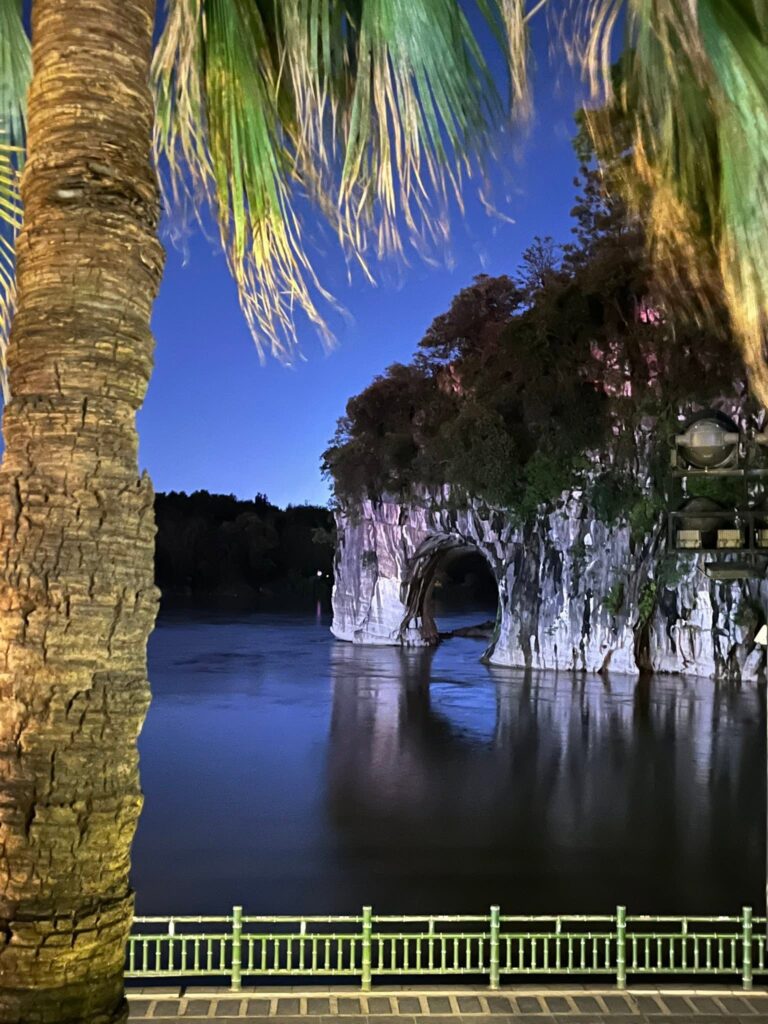
Before leaving Guilin on the last day there, we visited a few more sites. Elephant Trunk Hill is regarded as the symbol of Guilin. The hill is 3.6 hundred million years old. The name was chosen because the shape of the hill is just like an elephant drinking from the Li River with its trunk.
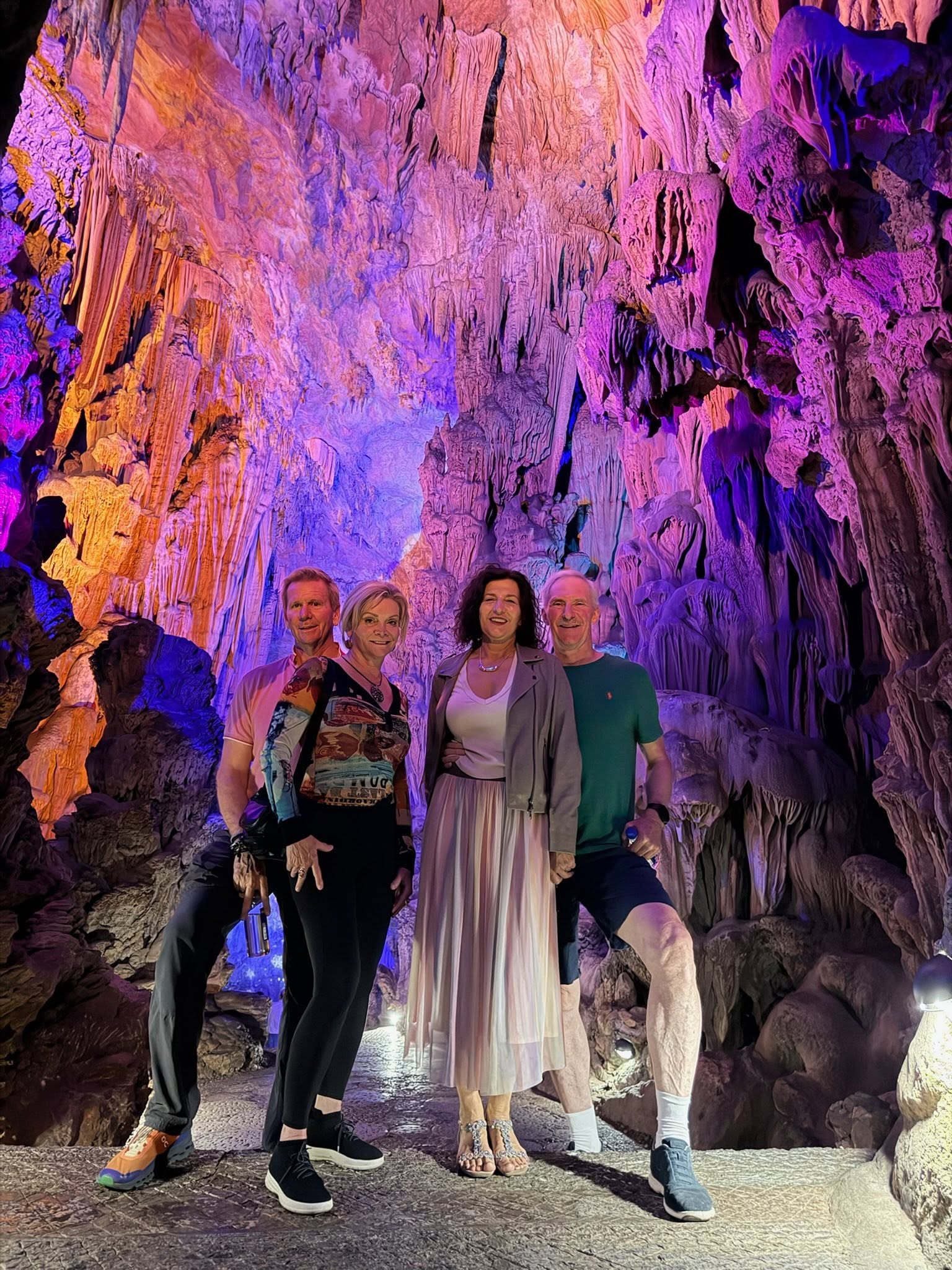
Reed Flute Cave
We went to the Reed Flute Cave, 240 meters (787ft) deep and 500 meters (1640ft) long.
Zhangjiajie
We arrived to this new area after a 7-hour train ride. The next day, we started to explore the famous park.
Zhangjiajie National Park
Zhangjiajie National Forest Park is a renowned, massive nature reserve in China’s Hunan Province, famous for over 3,000 towering quartz-sandstone pillars that inspired the “Hallelujah Mountains” in the movie Avatar. Established in 1982 as China’s first national forest park, it is a UNESCO World Heritage site known for its dramatic, misty, 400-million-year-old pillar formations.
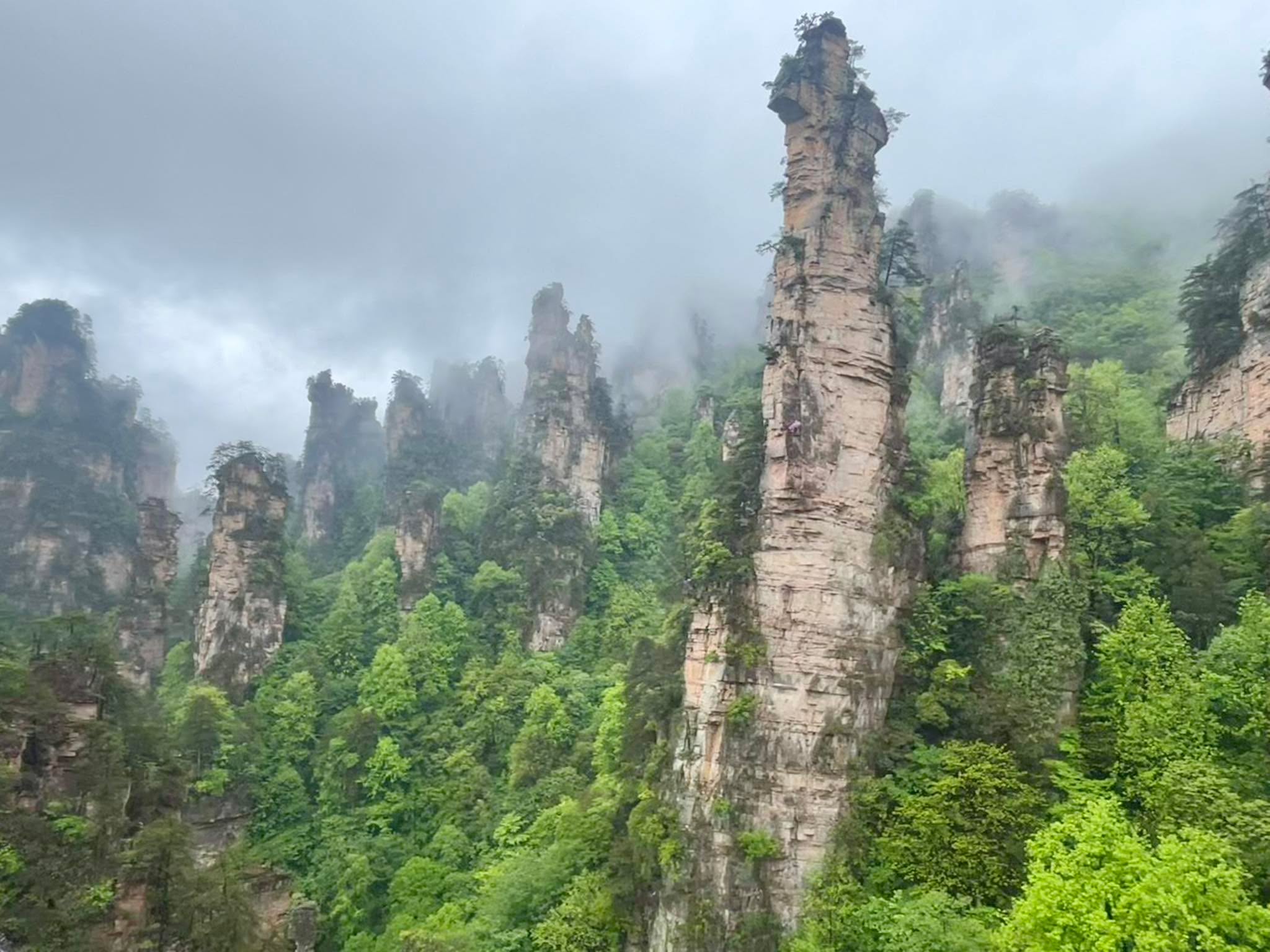
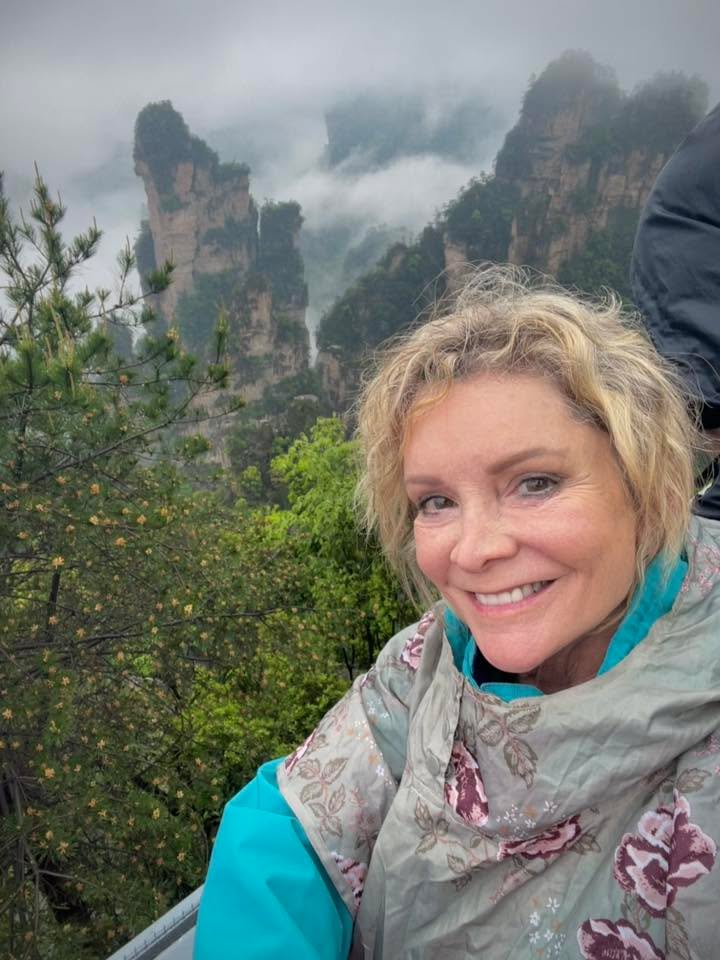
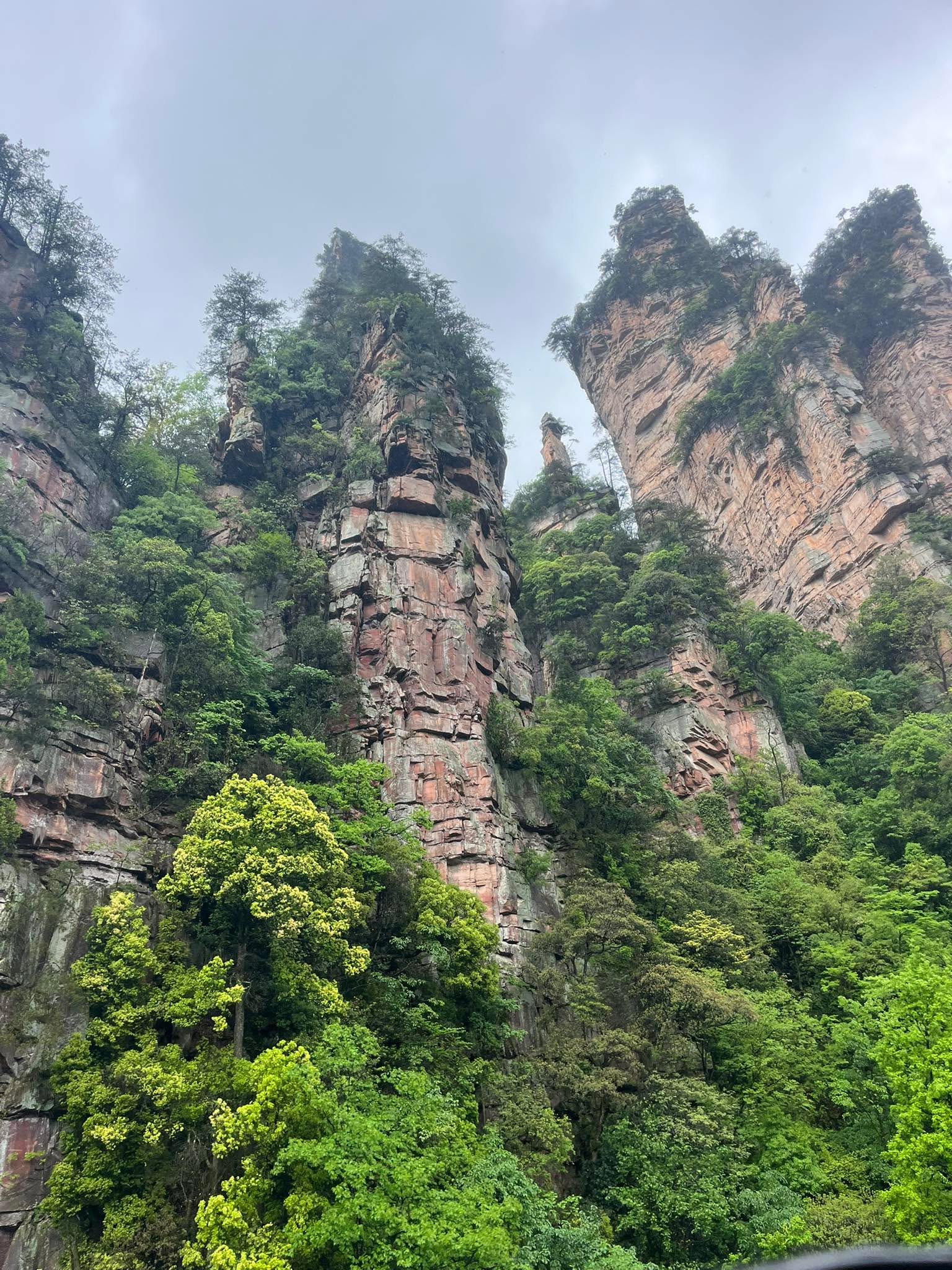
Unfortunately it was rainy and foggy the day we visited, but it was still amazing to see this unique area of China.
Huanglong (Yellow Dragon) Cave
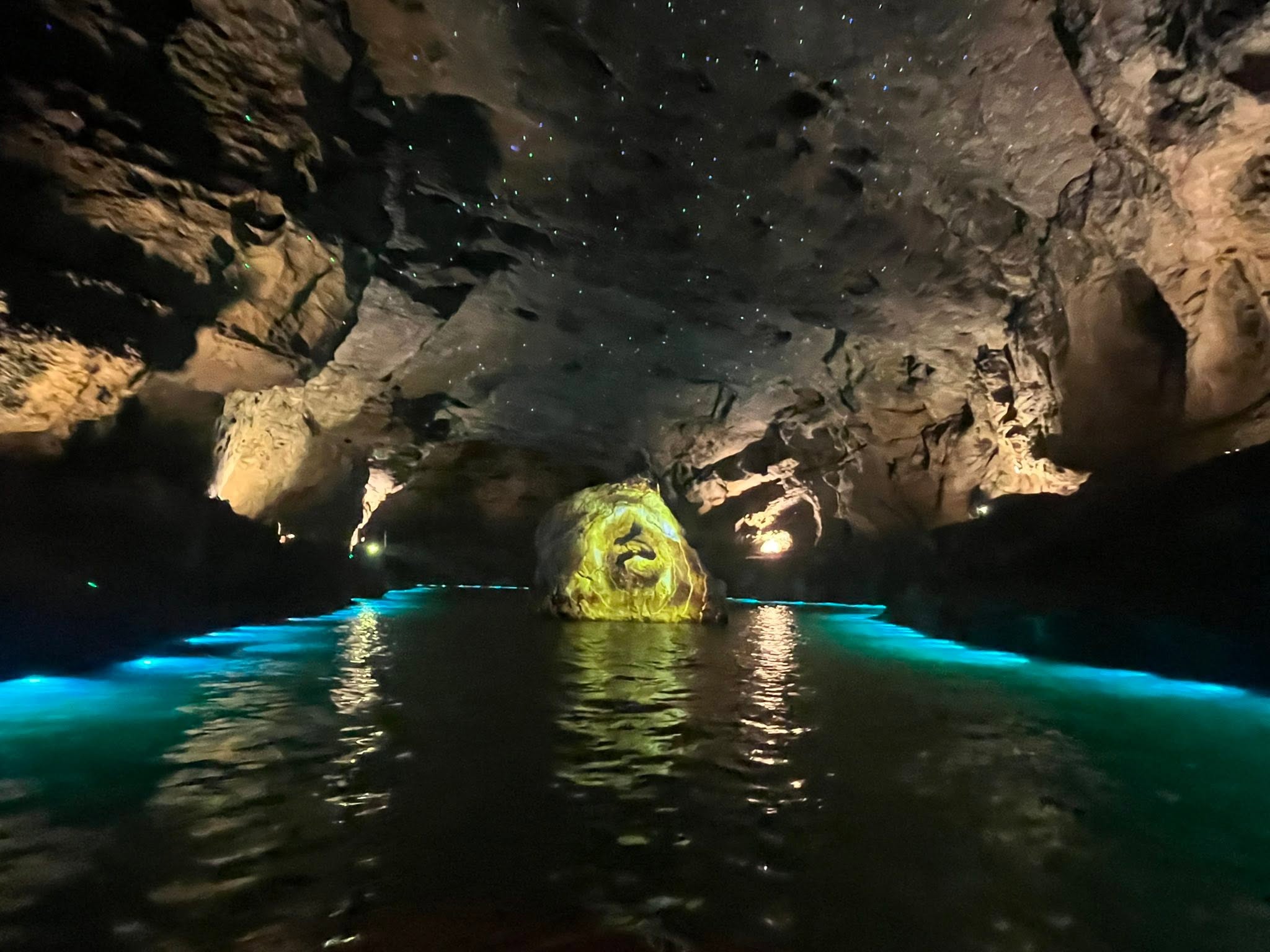
Huanglong Cave is a 15-km-long karst cave system opened in 1984. It features underground waterfalls, rivers, and surreal limestone formations, including the famous “King’s Throne” stalagmite. It is a premier, 4A-level, UNESCO-listed attraction with a walking and boat tour.
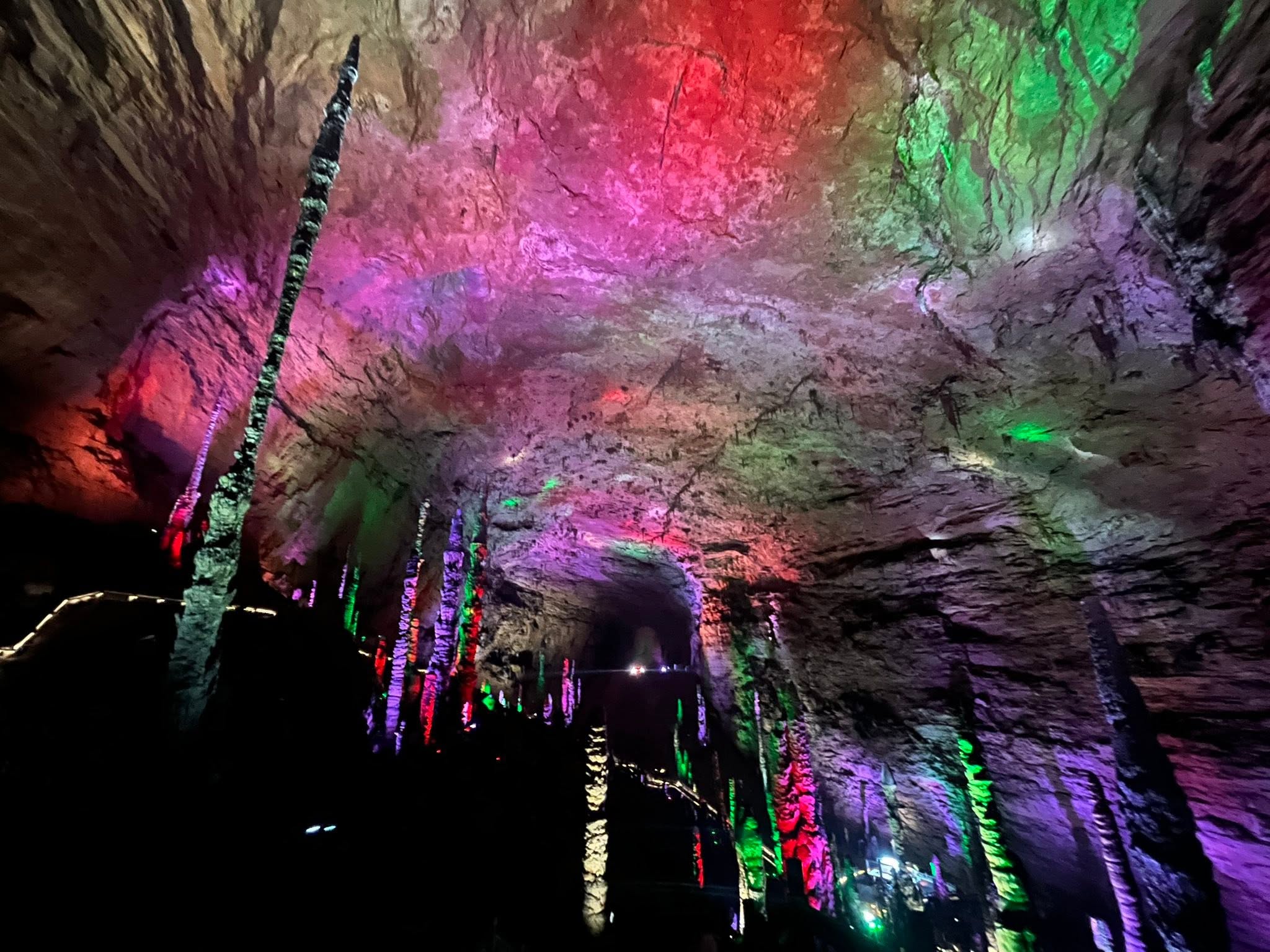
Visiting this cave wasn’t in our original itinerary, but our guide offered the experience instead of a planned hike. As the weather wasn’t good, this was a nice alternative. I think it was the biggest cave I’ve ever seen!
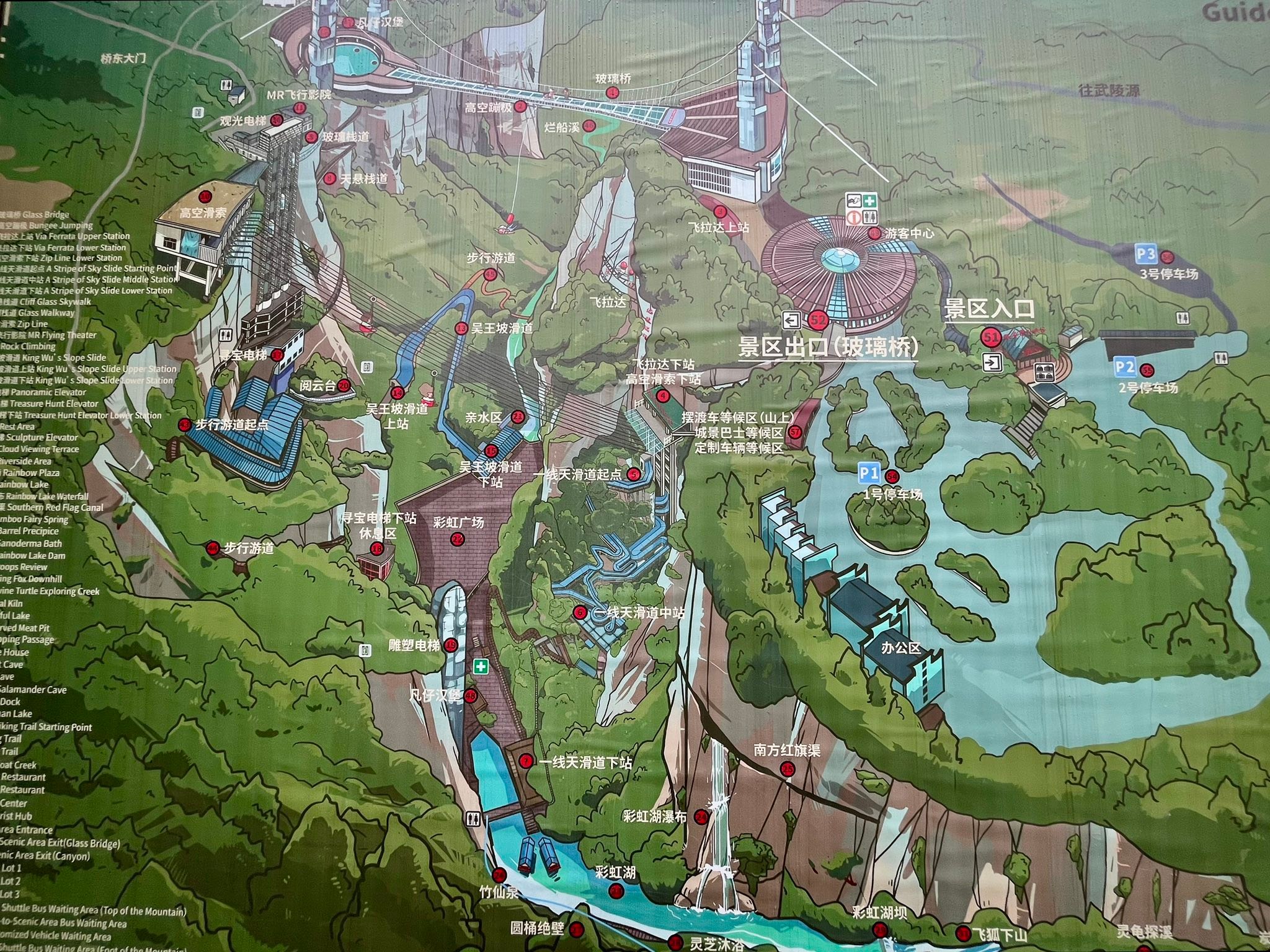
Zhangjiajie Grand Canyon Scenic Area
The Zhangjiajie Glass Bridge is a 430-meter-long (1,410 ft) and 6-meter-wide glass-bottomed bridge located 300 meters (984 ft) above the ground. Opened on August 20, 2016, it was once the world’s longest and highest glass bridge, providing stunning views of the valley below, along with extreme sports like bungee jumping.
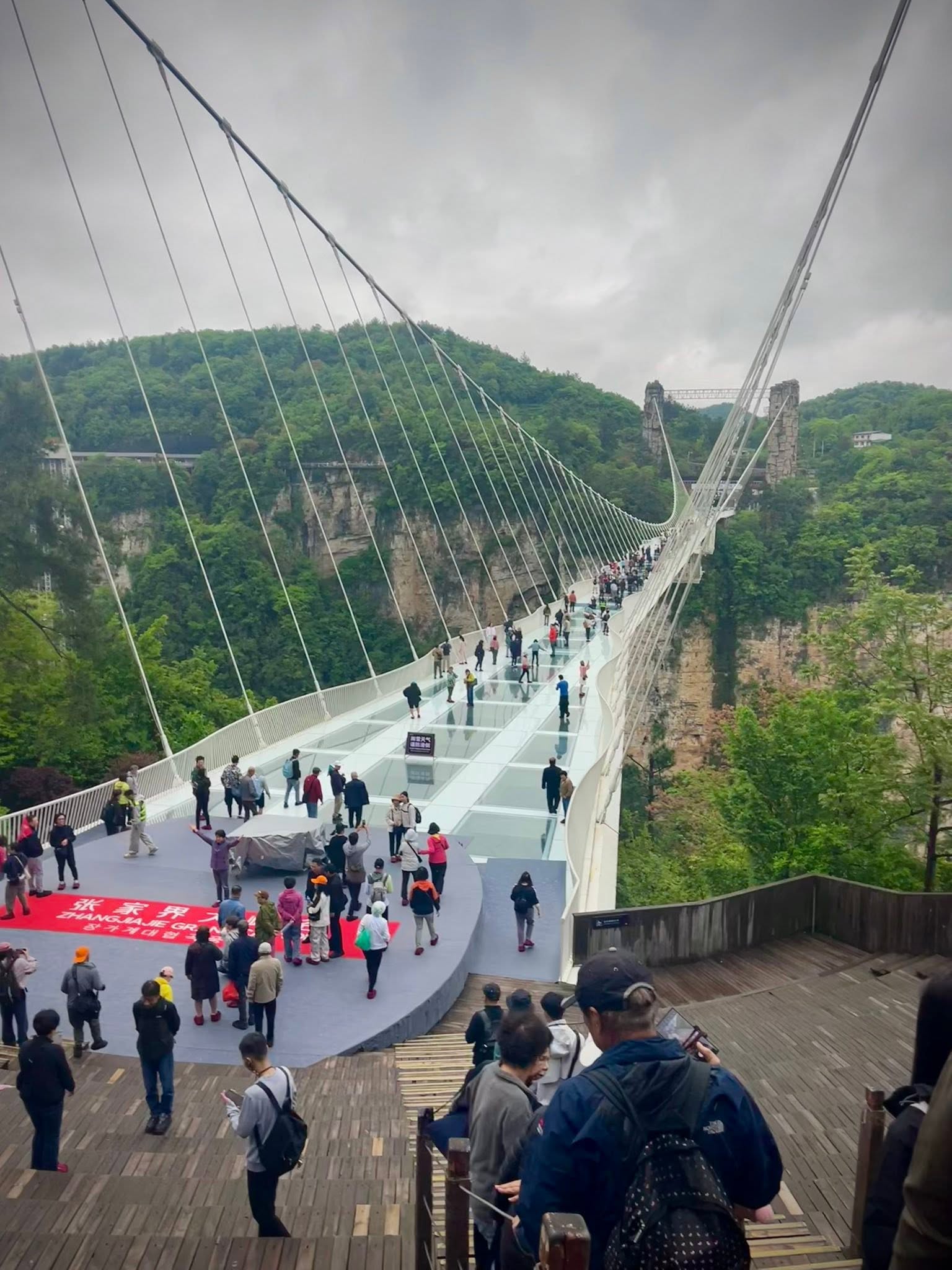
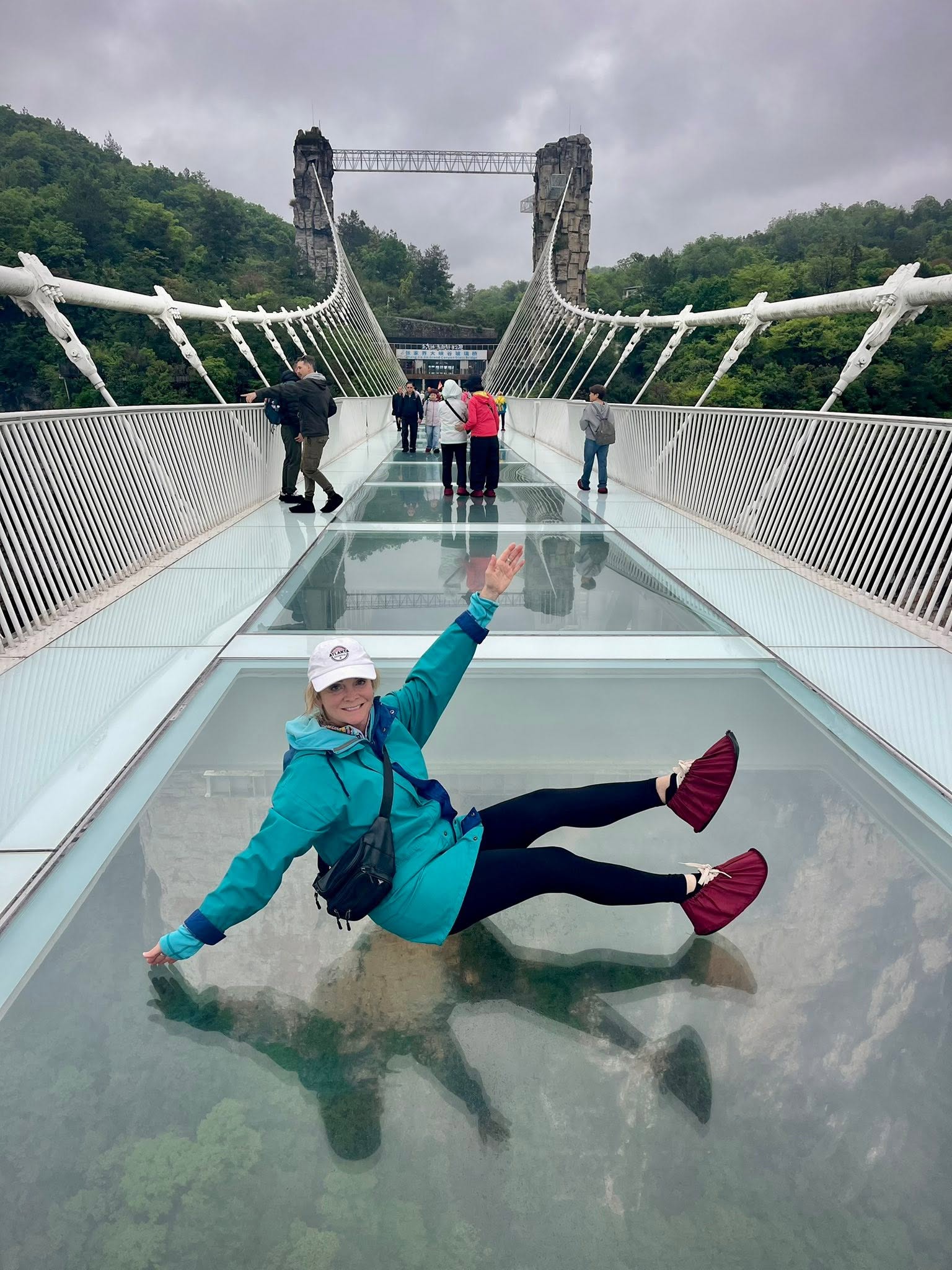
I was looking forward to seeing this unique bridge, and it was just as amazing as I had read. They gave us special slippers to put on over our shoes to avoid slipping while walking across the glass. They were even more useful since it was slightly raining. I am not afraid of heights, but those who are wouldn’t enjoy this place. We watched someone do a bungy jump off the middle of the bridge. How cool would that be!
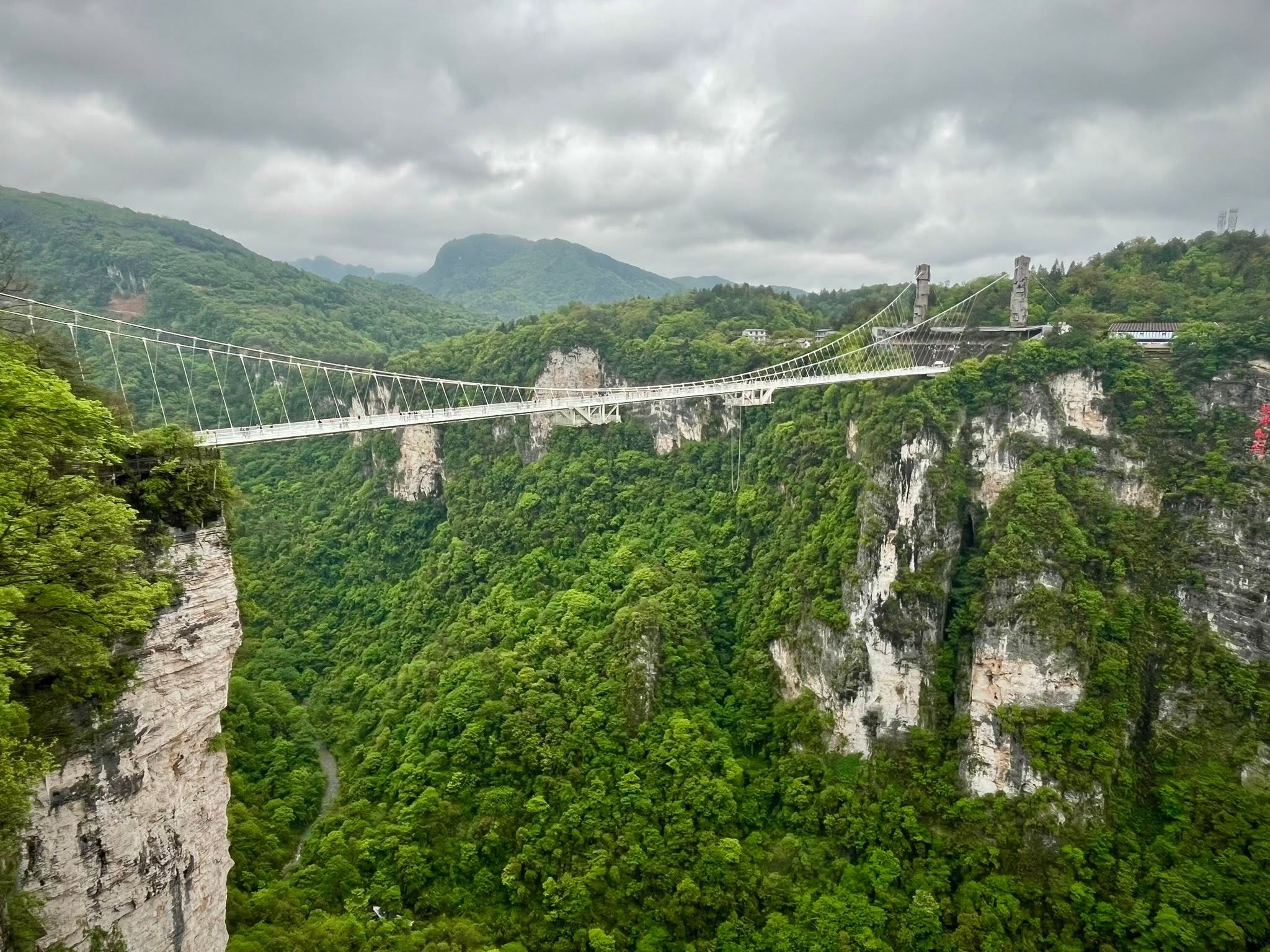
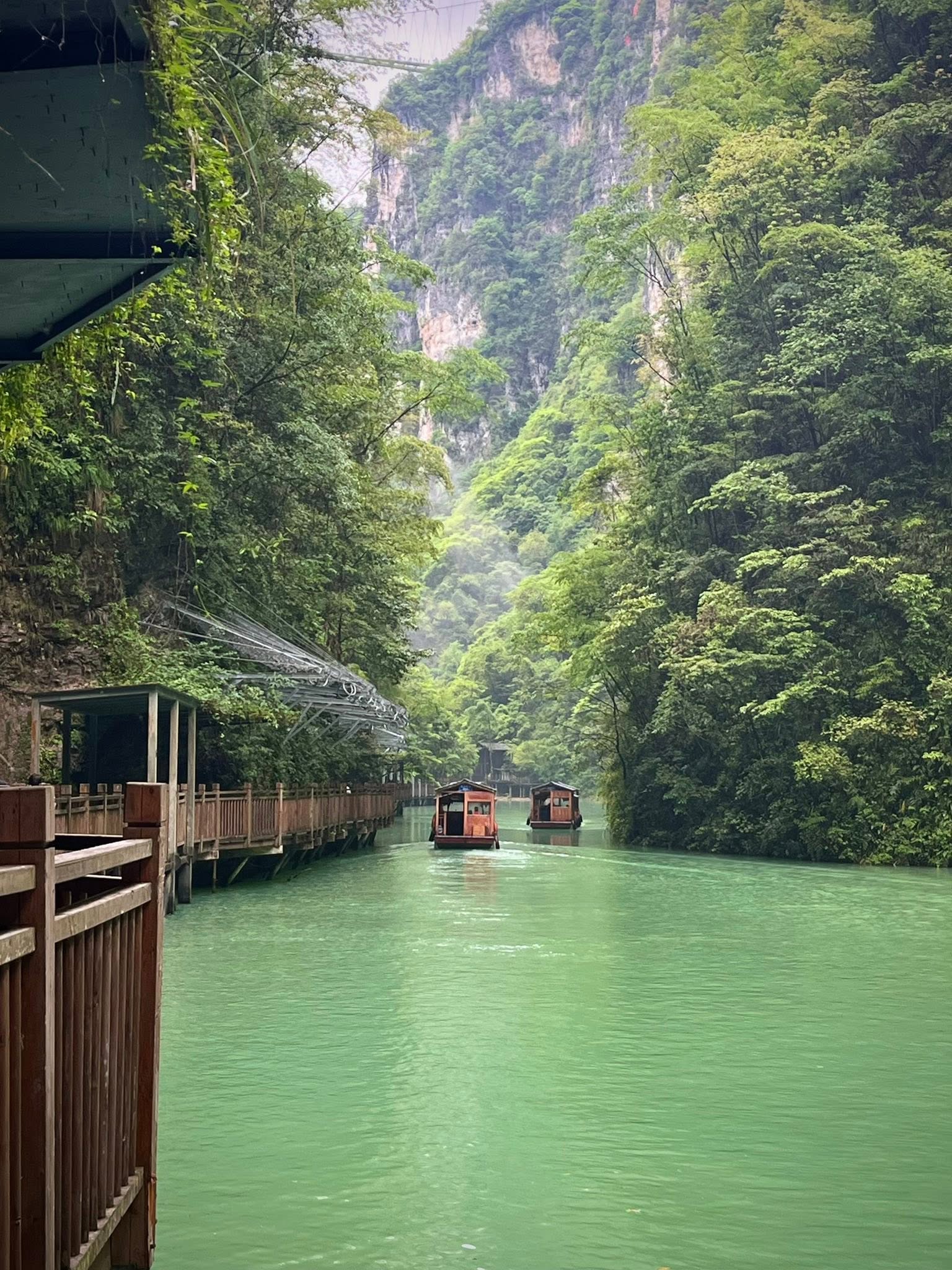
We walked all the way across and then went to the area where you can zip-line across the canyon. I loved doing this! I didn’t realize our tickets to this area included the zip-line as well as a beautiful boat ride in the river at the bottom of the canyon. We also got to do a curvy toboggan slide where we put on special pants and gloves – so fun, even for us older peeps.
Tianmen Mountain
Tianmen Mountain is renowned for its spectacular natural scenery, the world’s longest cableway, and the mysterious Tianmen Cave with exactly 999 steps to reach the top. Despite the windy, rainy weather, we managed to walk to the top.
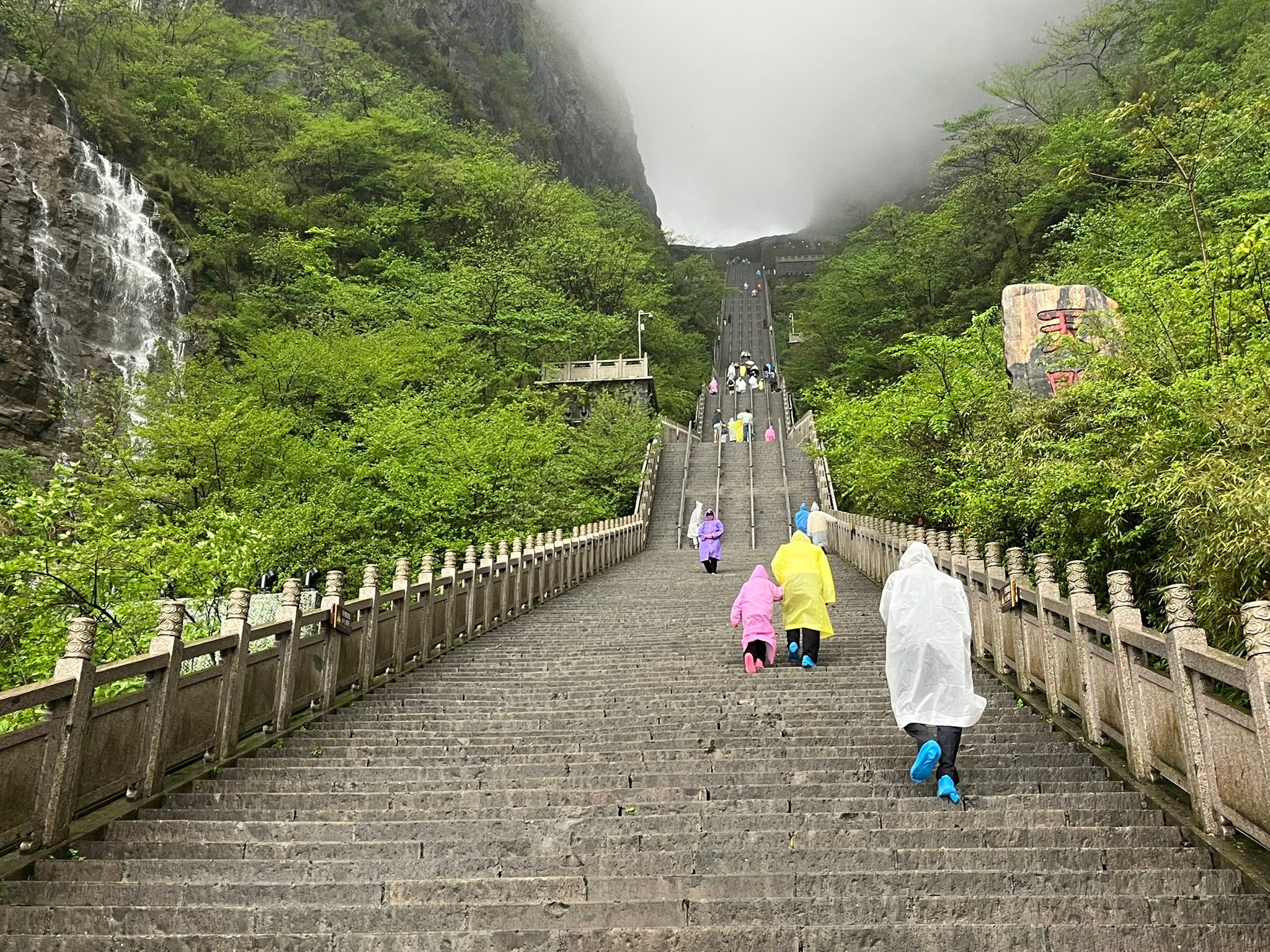
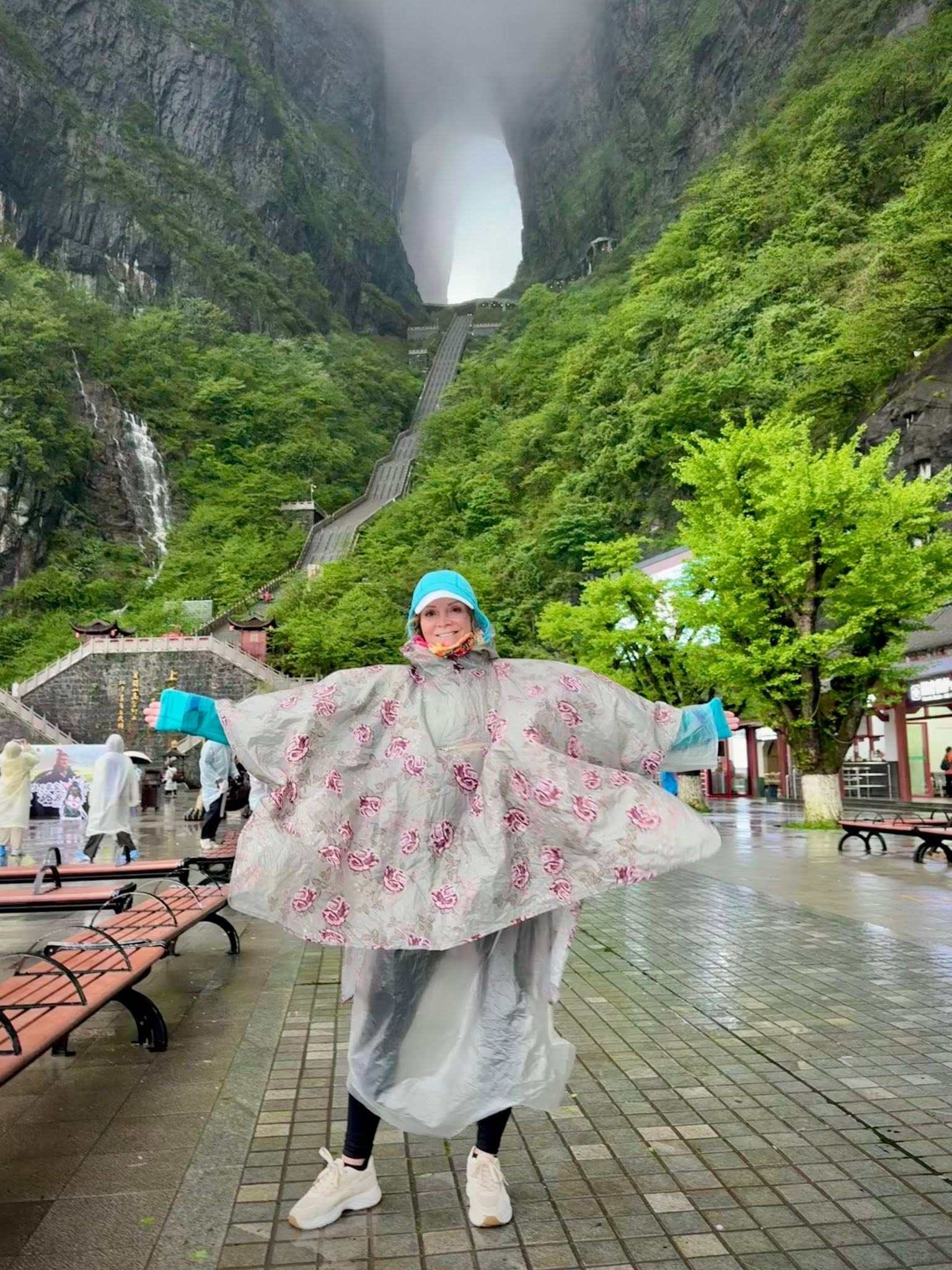
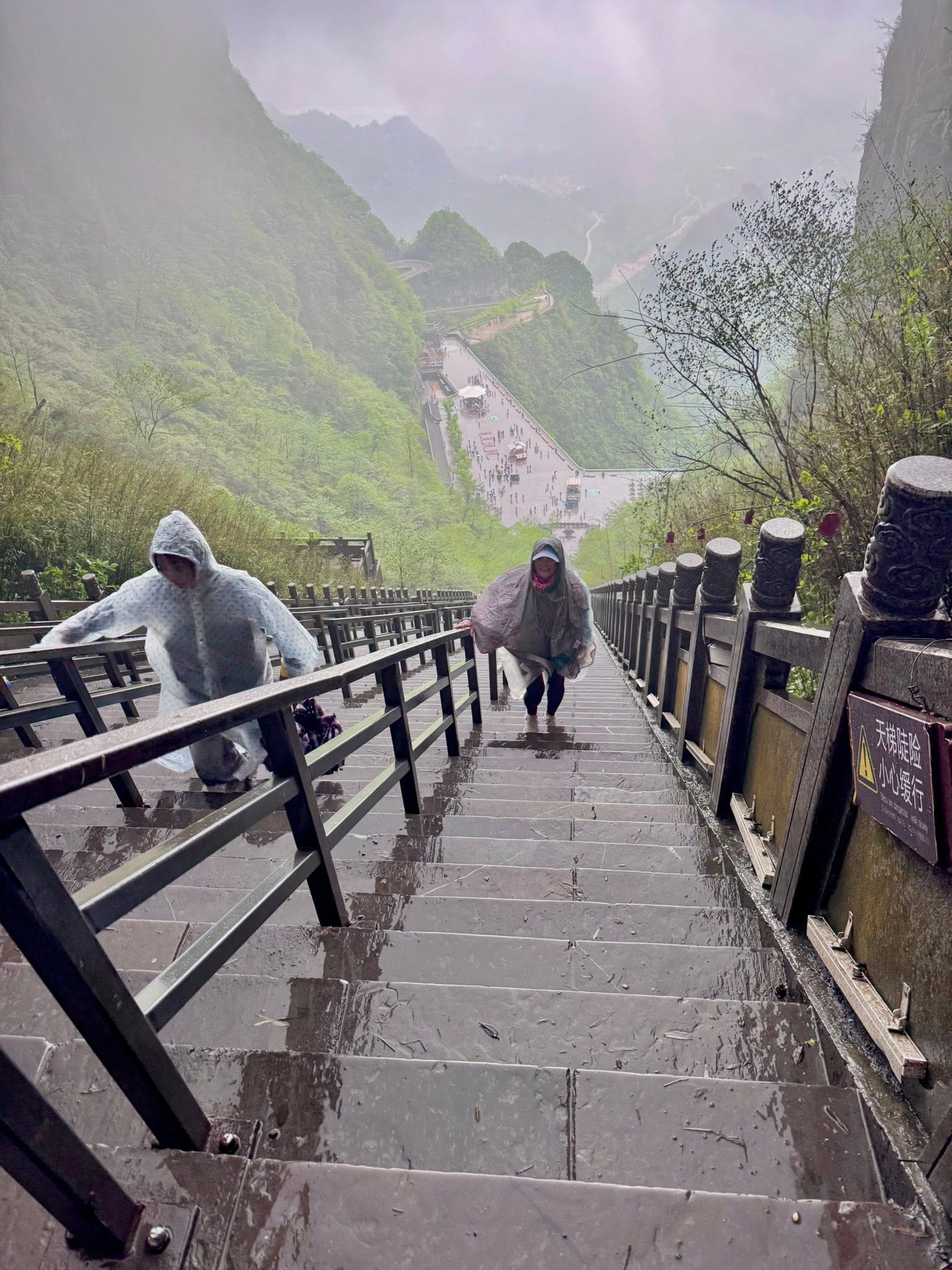
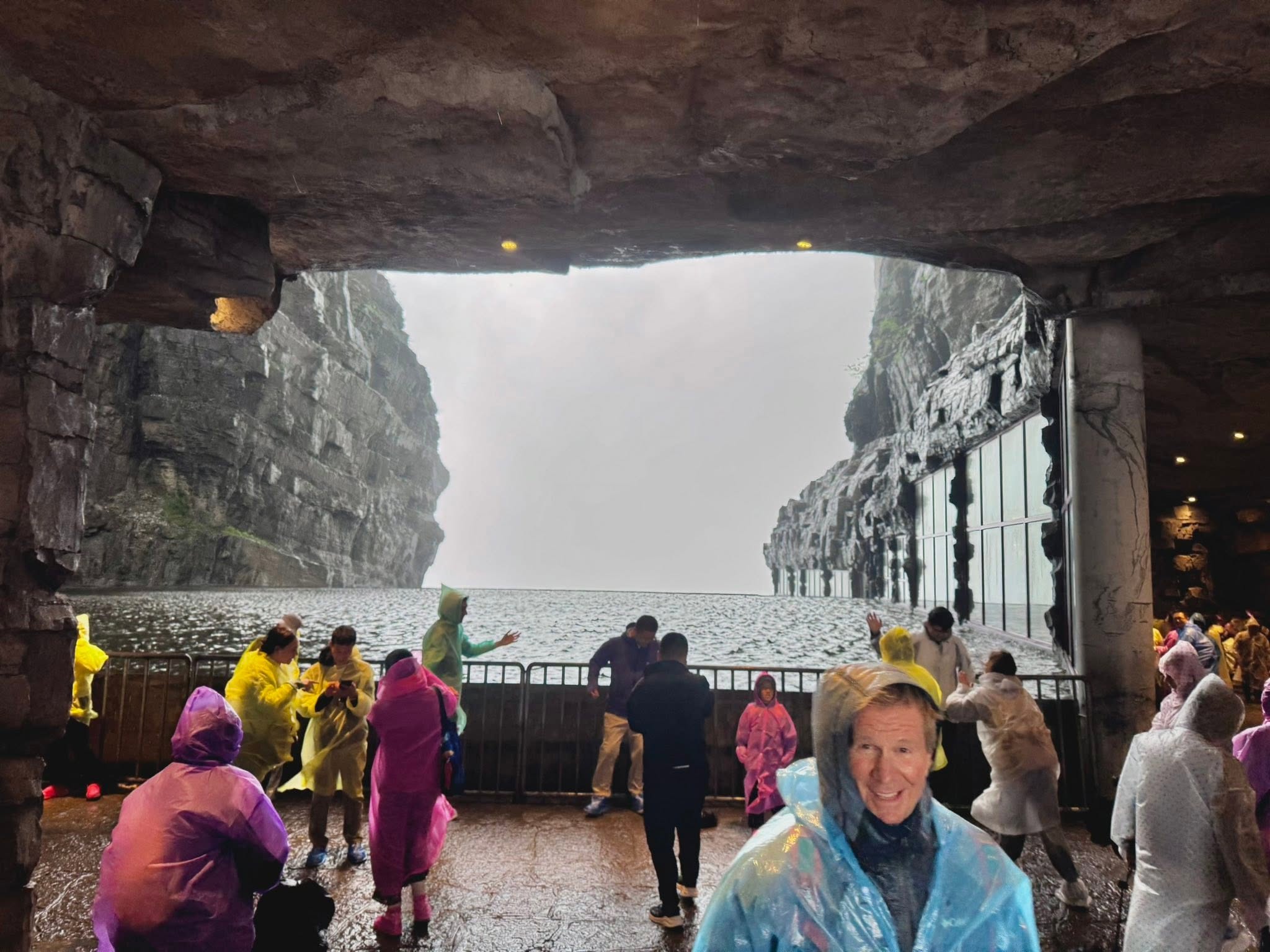
At the top is a huge, natural, water-eroded hole that forms an archway through the cliff face of Tianmen Mountain. It is considered the highest natural arch of its kind in the world. The hole has a height of over 130 meters and a width of around 57 meters. The name “Tianmen” translates to “Heaven’s Door,” reflecting its majestic and imposing appearance. The 999 steps are referred to as the “Stairway to Heaven”. There is a body of water at the top inside the cave.
The next activity was optional, but we wanted to take the eight escalators to the very top where we could walk on a glass cliffside path. It was a shame that the fog prevented us from seeing how scary it was and how high we were up on a mountainside. I still enjoyed it and was glad to have this crazy experience.
72 Qilou
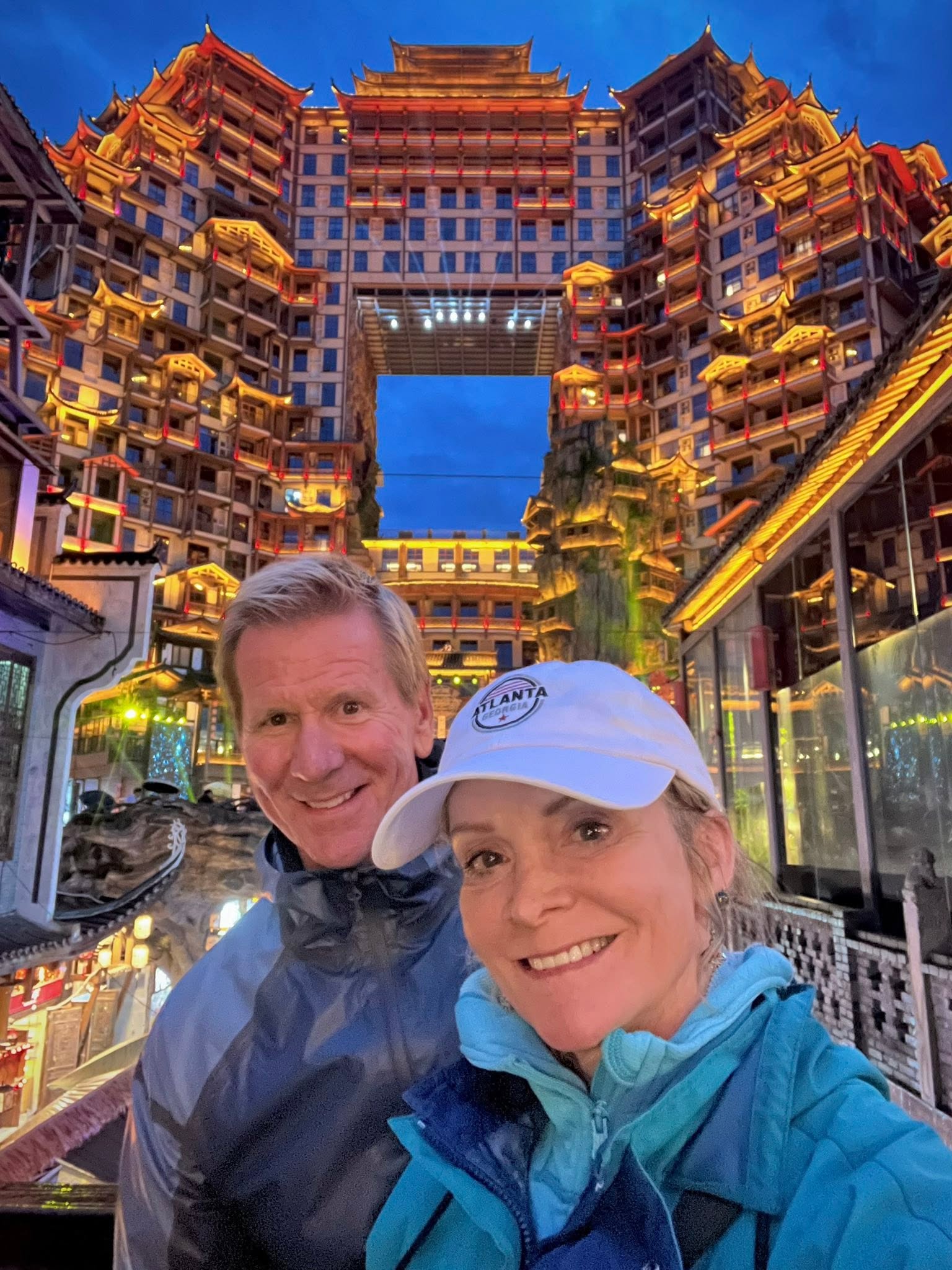
The 72 Qilou (72 Strange Buildings or 72 Wonder Towers) in Zhangjiajie is the world’s tallest stilted building, standing at 109.9 meters and certified by Guinness World Records. It is a premier nighttime attraction blending traditional Tujia ethnic architecture with modern 7D light shows, restaurants, and shopping.
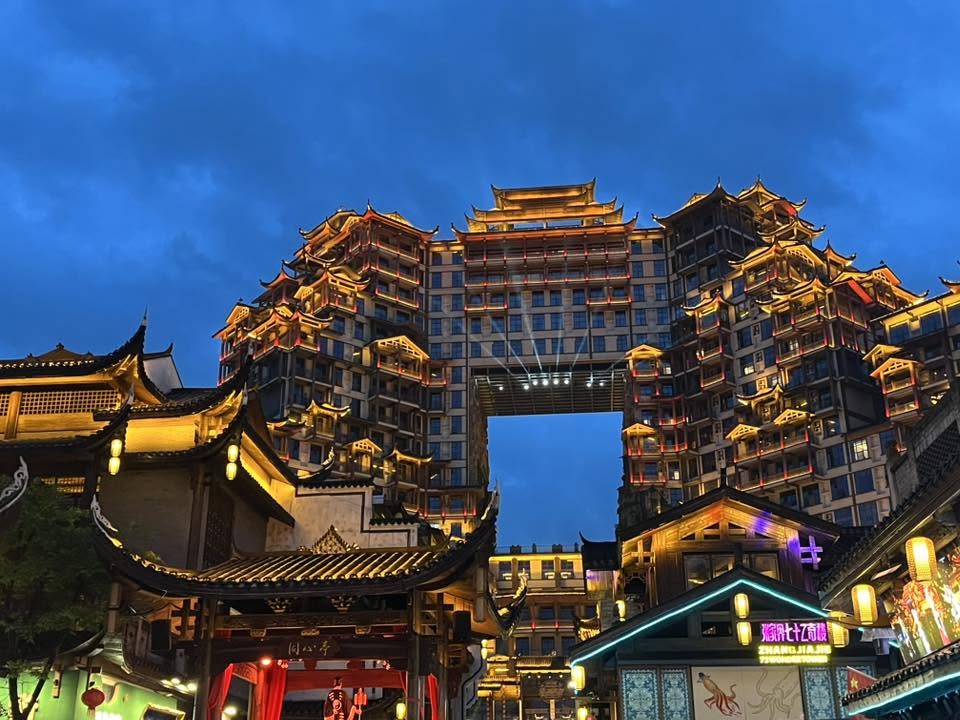
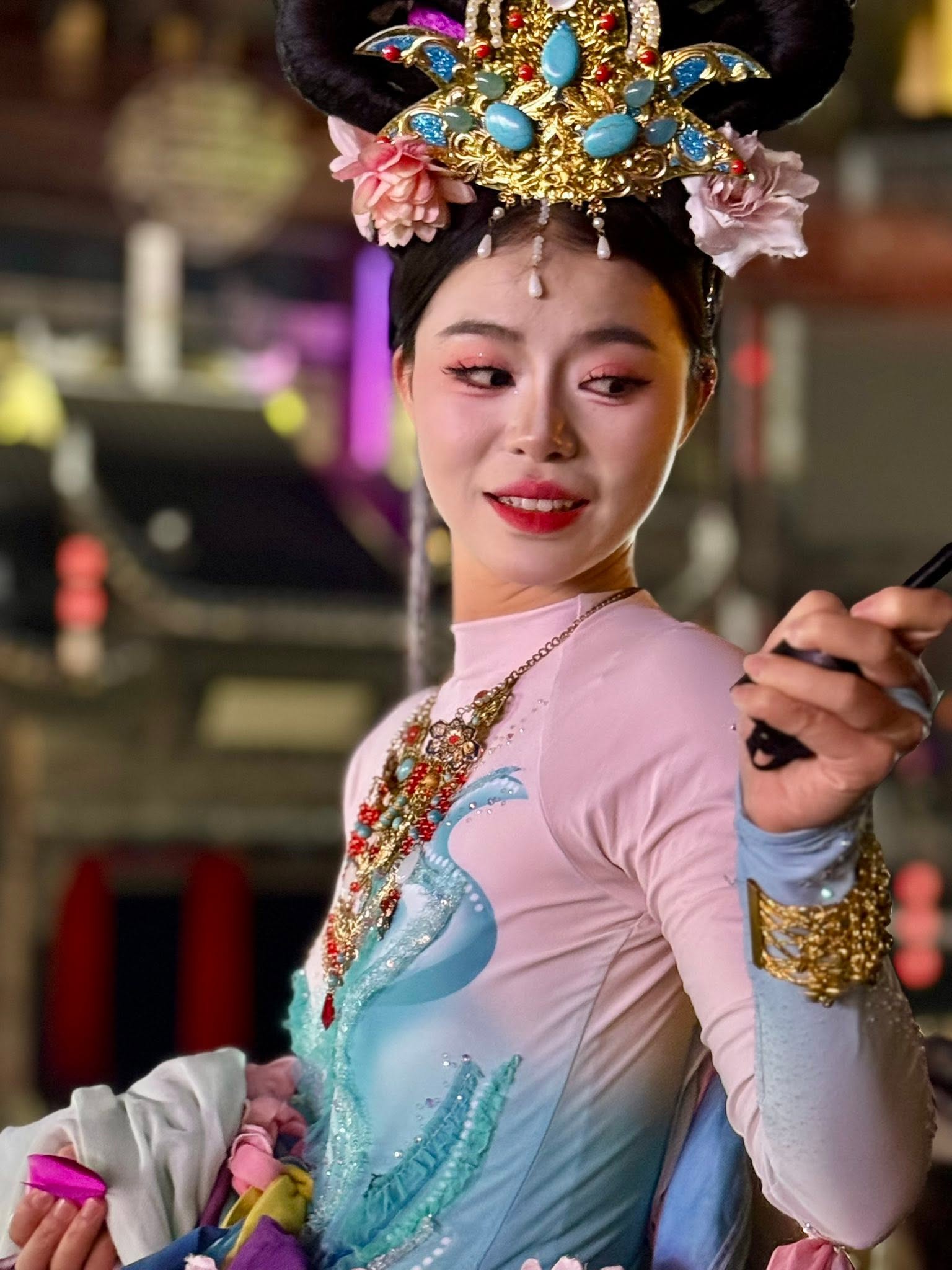
This place was our last stop before going to the airport for our flight to Shanghai. We arrived as it was getting dark and then saw the place light up. I really enjoyed seeing this special place! We watched a short show while there.
Shanghai
Huangpu River Boat Cruise
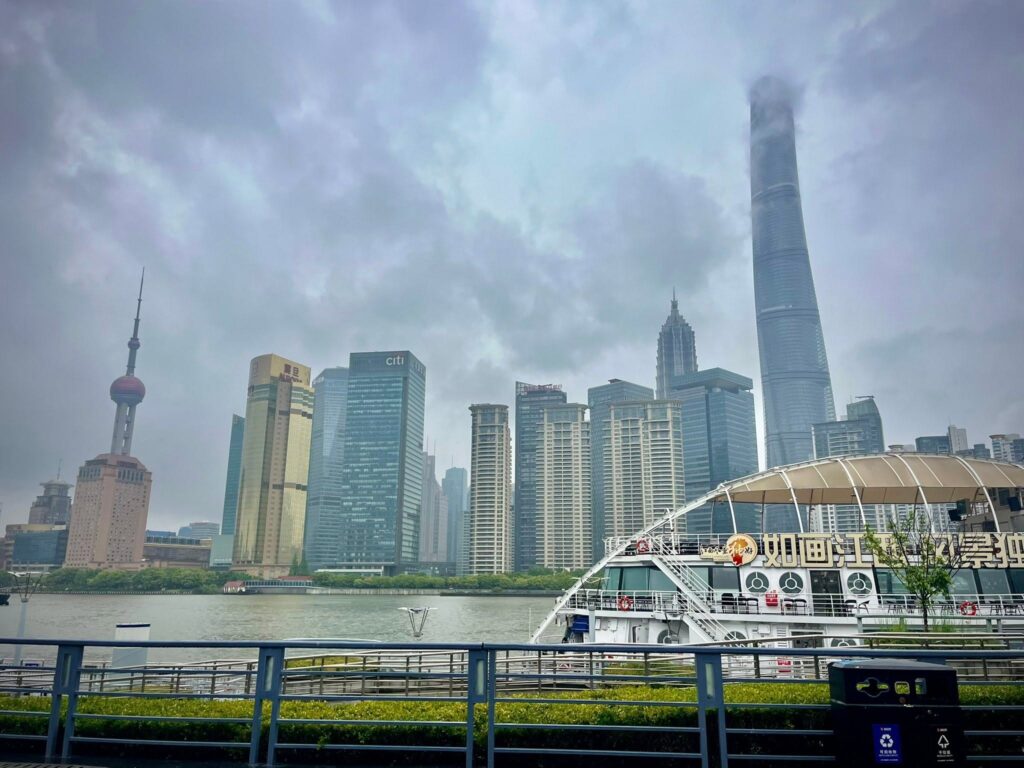
Our first organized event on the full day in Shanghai was a boat cruise on the Huangpu River. Rainy weather hampered the views a bit, but we still enjoyed the ride. The modern buildings were impressive to see.
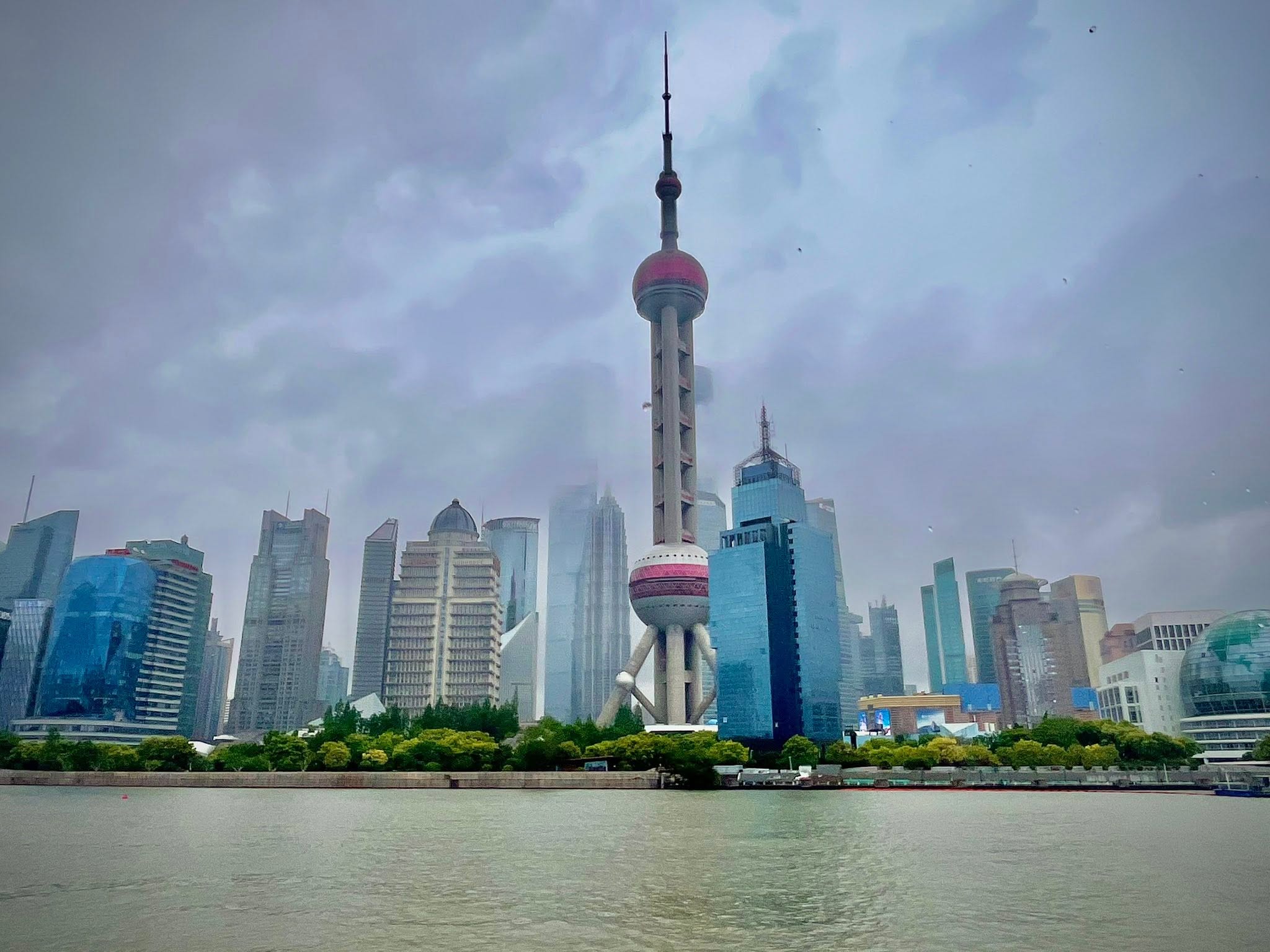
The Huangpu River is a 113-kilometer-long landmark river in Shanghai. It splits the city into two distinct areas: the historic Puxi district on the west and the modern Pudong financial zone on the east. It flows into the Yangtze River just before reaching the East China Sea.
Yu Yuan Garden
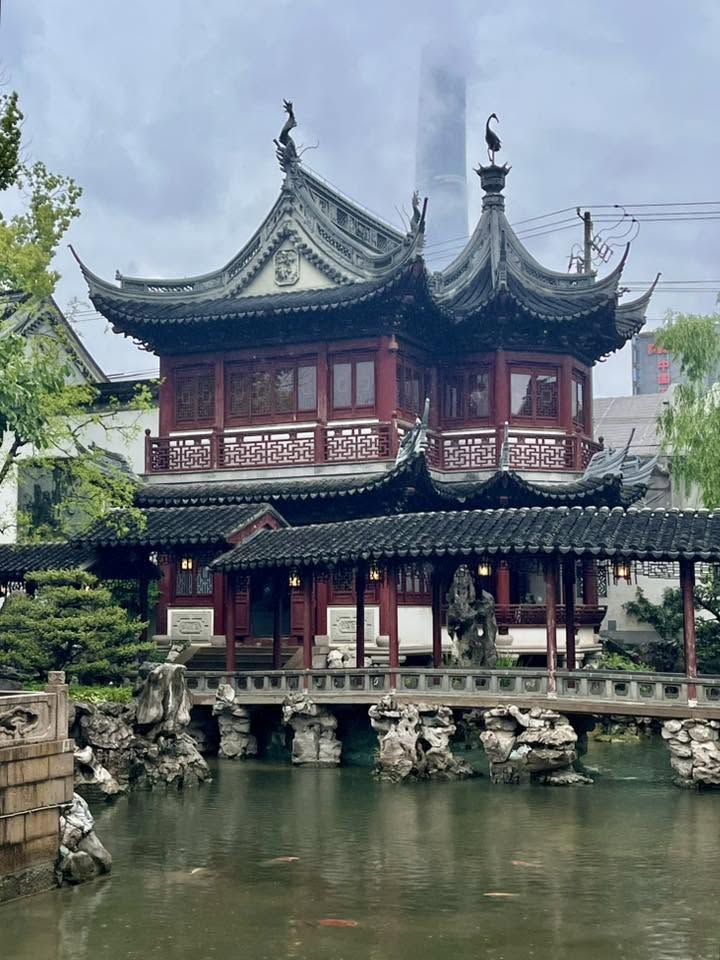
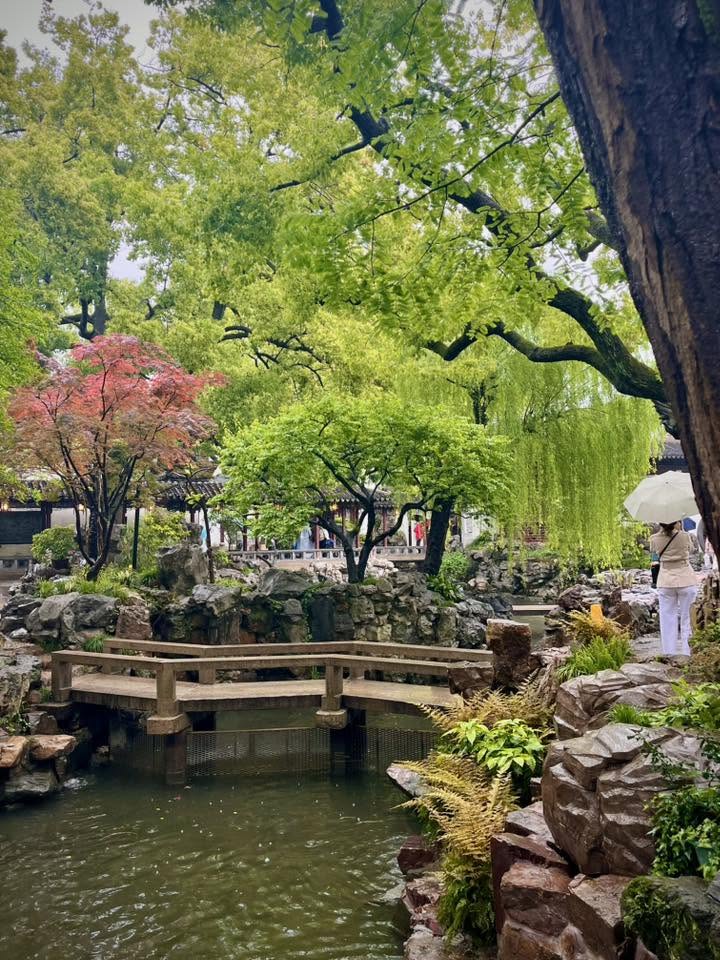
Yu Yuan Garden is a classical garden ranking among the must-see attractions in Shanghai. It dates back to the Ming Dynasty (1368-1644) and was owned by a government officer named Pan Yunduan. Yu in Chinese means pleasing and satisfying, and this garden was specially built for Pan’s parents as a place for them to enjoy a tranquil and happy time in their old age. Its inception was in 1559 and built in intermittent phases over nearly 20 years before the completion in 1590. After Pan Yunduan’s death, his family fell into decline, so the garden was poorly maintained and changed hands several times.
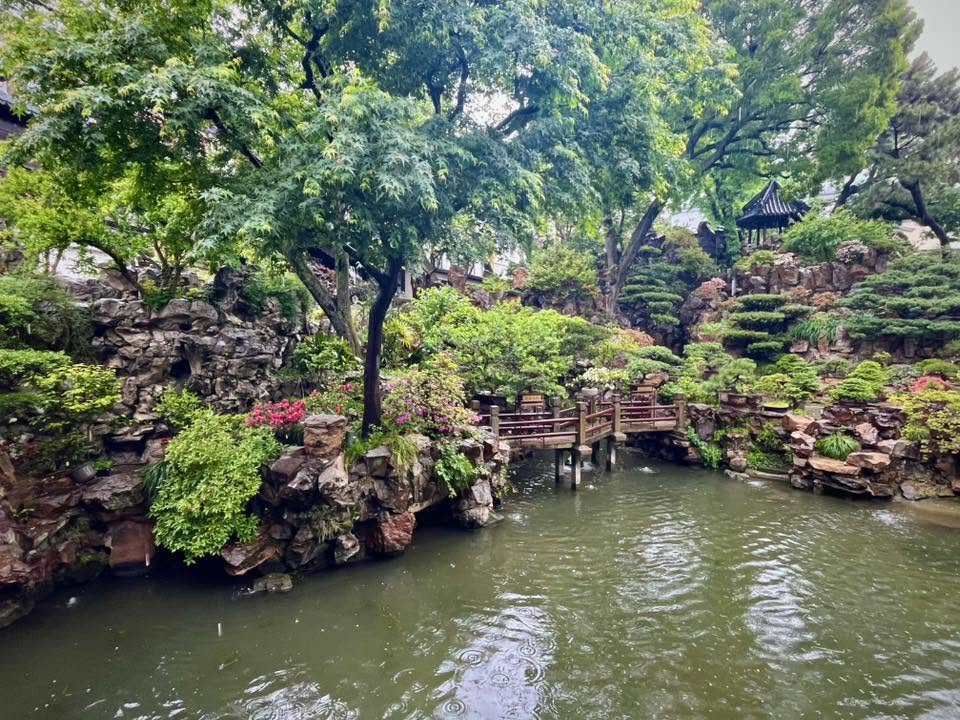
This was a very peaceful park in the middle of the modern city. We walked around and learned about the interesting history of these gardens.
Tianzi Fang District
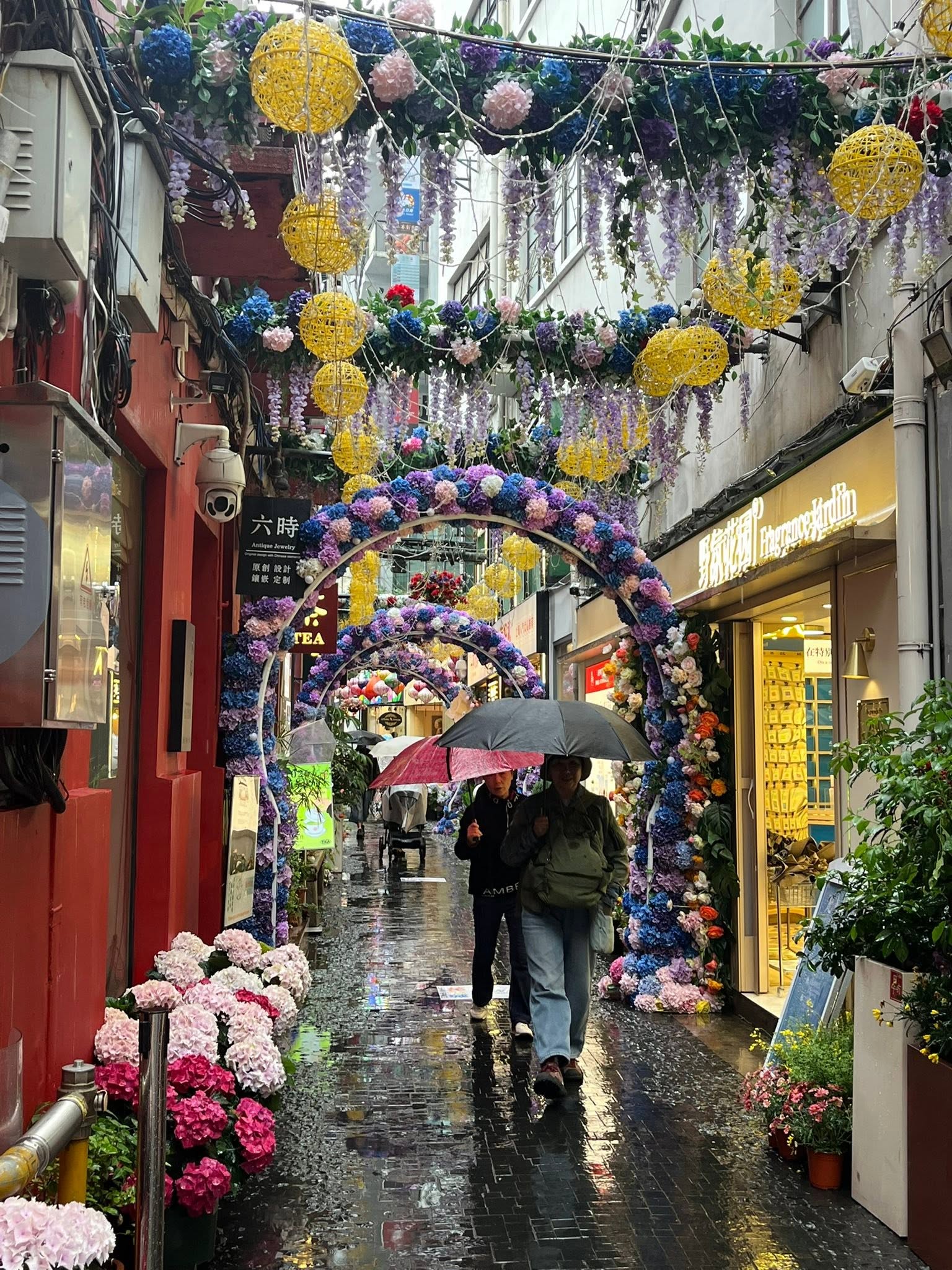
Tianzi Fang is a touristic arts and crafts enclave that has developed from a renovated traditional residential area in the French Concession area of Shanghai.
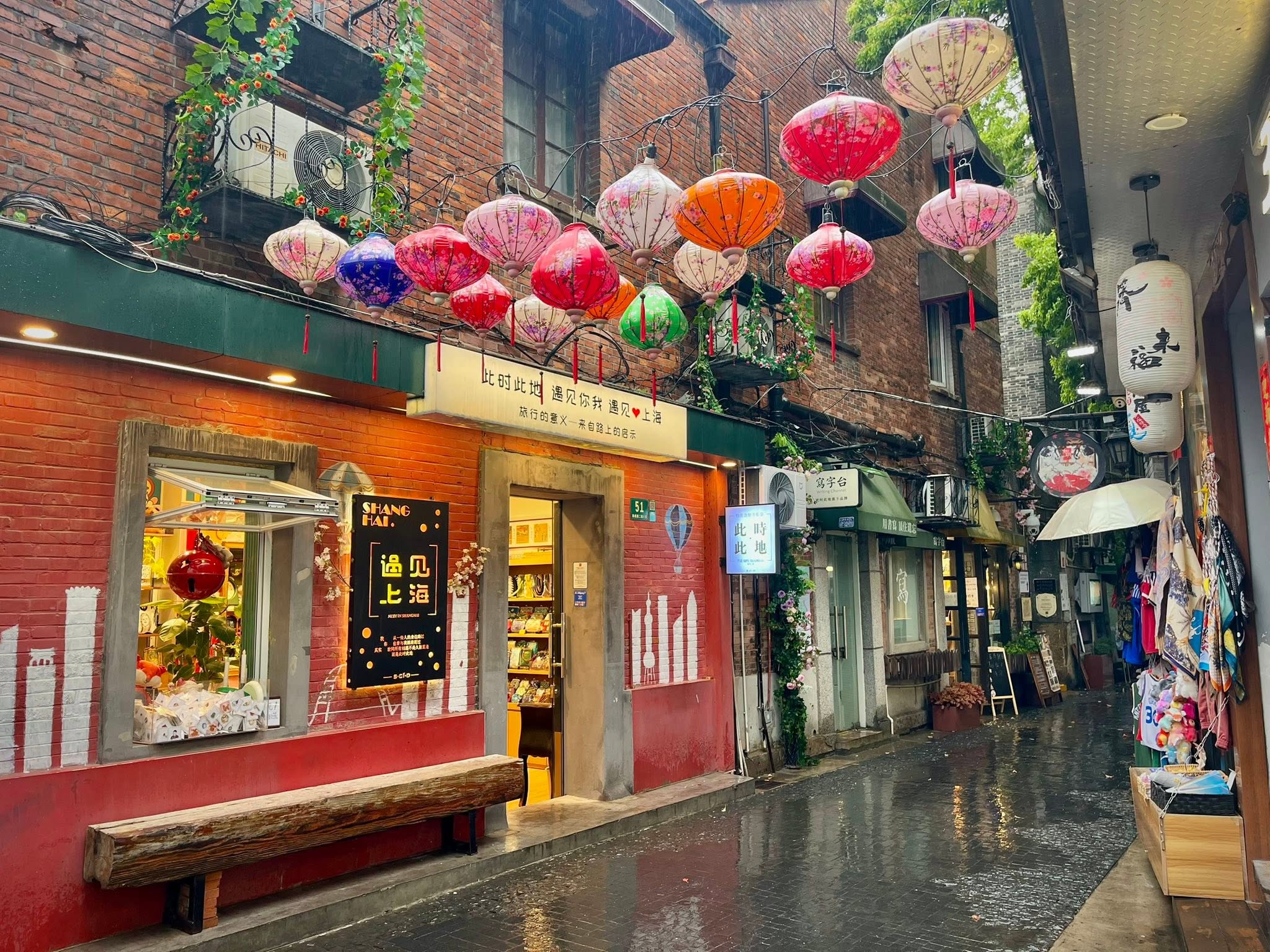
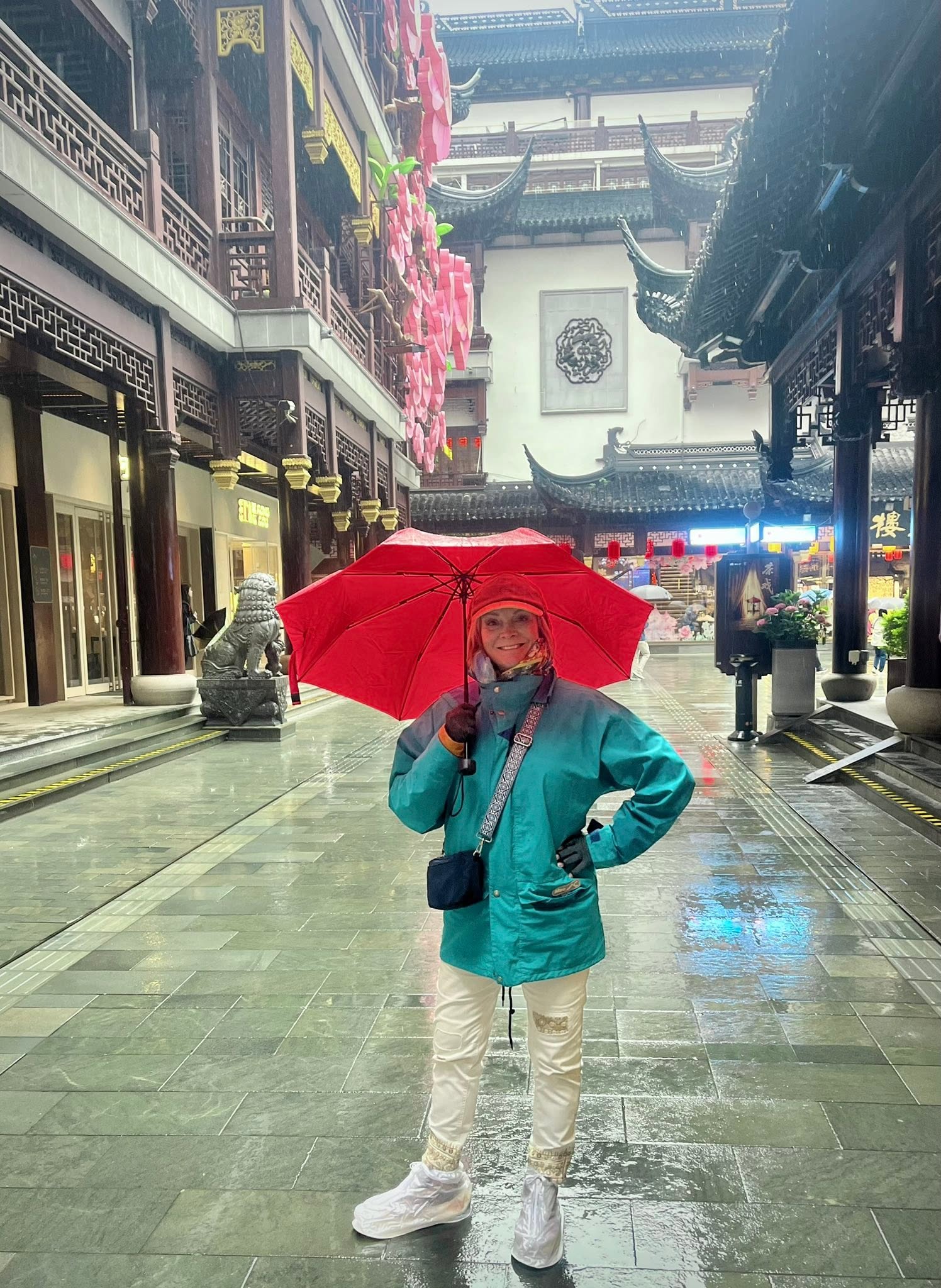
This was a colorful place with many cute shops. I was glad I bought some cheap slip-on rain boots (see below) to keep my feet dry while walking all over Shanghai this day.
Bund by Night
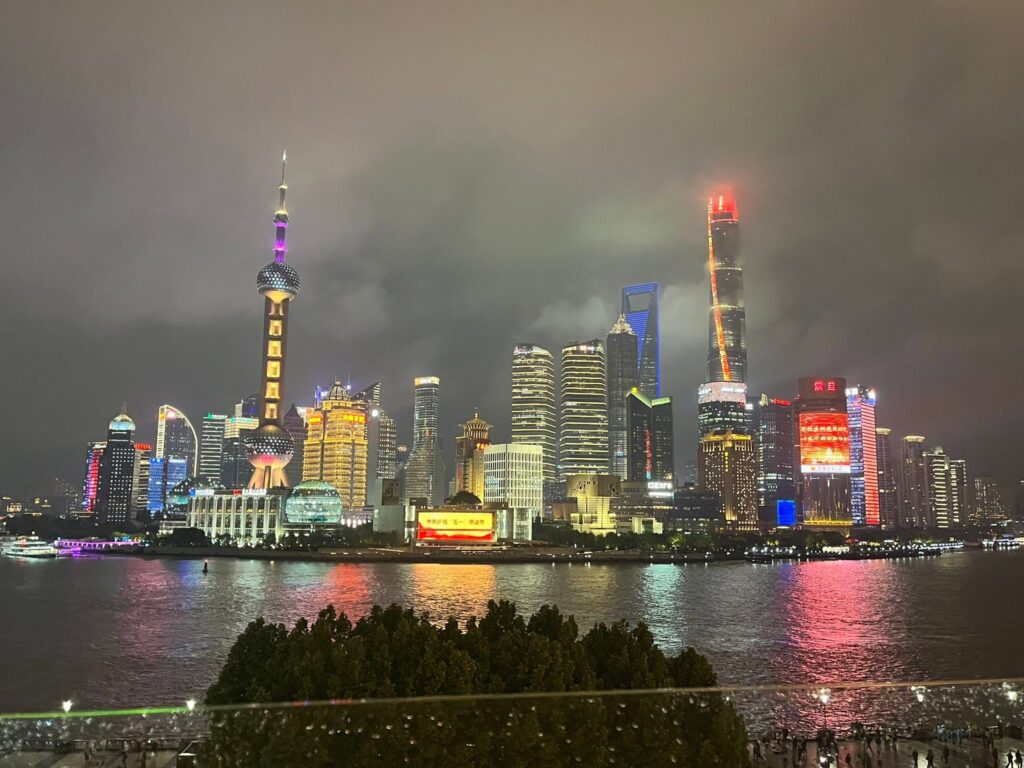
For our last night in China, we decided to splurge on a nice restaurant by the river on the Bund. The Bund is a famous 1.5-kilometer waterfront promenade along the western bank of the Huangpu River. It is celebrated for its dozens of historic colonial-era buildings sitting right across the river from the futuristic skyscrapers of Pudong.
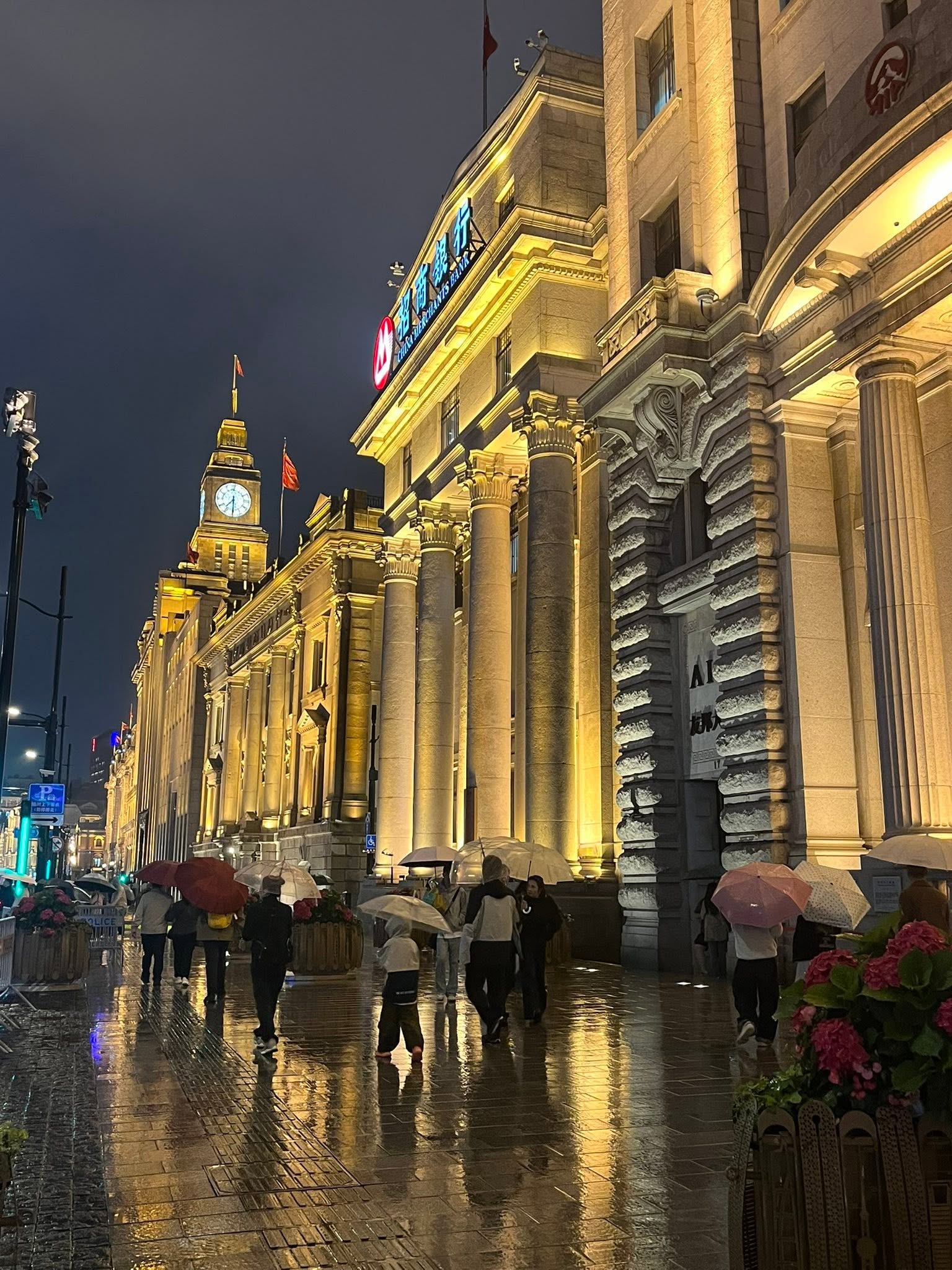
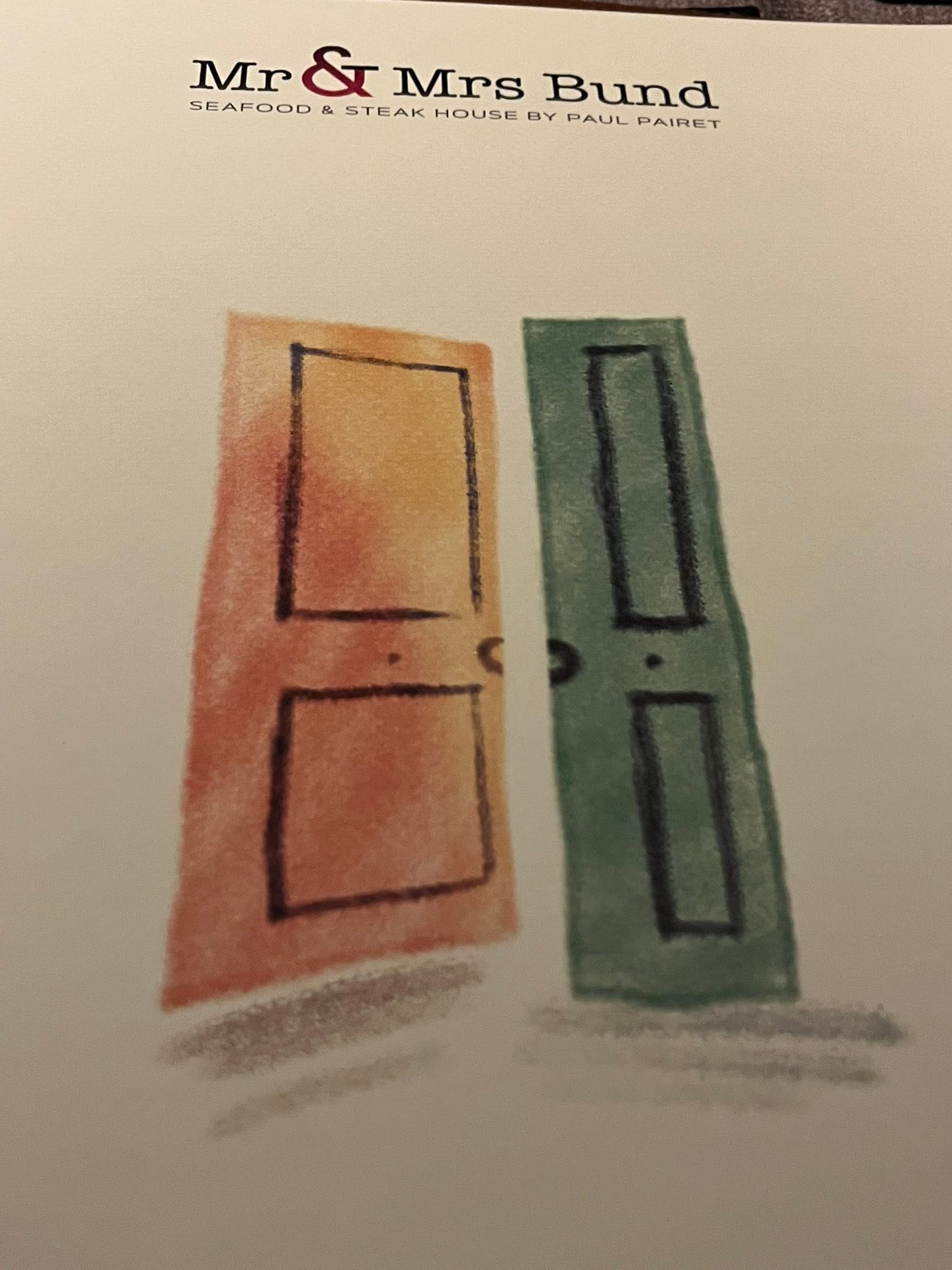
The restaurant was called Mr & Mrs Bund. We had a nice meal and great views of the skyline across the river.
Summary
I hope you’ve enjoyed hearing about my two-week tour of China. I loved it and highly recommend this trip. I was happy to have a private tour instead of going with a big group. We had a different tour guide in every location and were pleased with their knowledge and friendliness.
The food was very tasty everywhere we went. We tried many different dishes and were never disappointed.
I had heard negative things about the Chinese people, such as that they are pushy and don’t respect your personal space. I only saw this in some busy places from Chinese tourists, but it was not a big issue. I had heard they also spit in public. We did witness this public spitting a few times from older people. I guess it is their custom to do it and don’t see the offensive nature of it. Overall I thought the local people were nice and friendly.
Communication with locals (outside of the hotels) was a challenge, but most of the young people use phone translation applications to communicate. They would speak or type into the app and show us the translation in English. Although I was surprised that many young people don’t speak English, this way of conversing was very efficient.
Drop me an email if you have any questions about visiting China. My next Asian trip will be to South Korea in 2027!
If you are interested in other Asian countries, check out my below blog posts:
Click below to save to Pinterest for future reference!